Lens Reviews

Sort By: Post DateTitle Publish Date
George Schaub  |  Dec 01, 2009

There is an underlying desire in every travel or street photographer to be able to carry one lens to cover all contingencies.

Peter K. Burian  |  Aug 01, 2007

Because most consumers demand very compact, lightweight equipment, the majority of lenses are designed with a relatively small aperture: f/4 to f/5.6, for example. That makes sense because the same focal length with a wide aperture would be larger, heavier, and more expensive due to the oversized optical elements and barrel. Even so, many photo enthusiasts really appreciate an...

Steve Bedell  |  Jun 01, 2007

I 've been shooting most of my portrait work with a 28-75mm zoom, but always felt I could use something longer. And I'm about at the point where fixed focal length lenses just won't do; once you get used to the flexibility of a zoom, you're spoiled. I also like a fast lens with a relatively wide maximum aperture, as I like to get way out-of-focus...

Steve Bedell  |  Jun 01, 2007

Technical Specifications


Lens Construction: 18 Elements in 14 Groups
Angle of View: 27.9 ° - 9.5 °
Number of Diaphragm Blades: 9 Blades
Minimum Aperture: F22
Minimum Focusing Distance: 100cm / 39.4 inches
Maximum Magnification:...

Peter K. Burian  |  Nov 01, 2006

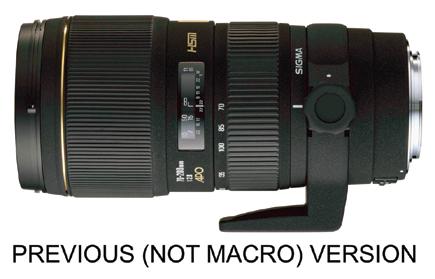
One of the favorite lenses among news photographers, a 70-200mm f/2.8 or 80-200mm f/2.8 zoom also appeals to many serious photo enthusiasts. Although large and heavy, lenses of this type offer several benefits. Their very wide maximum aperture allows for faster shutter speeds than the more typical f/4.5-5.6 zooms, great for low-light or action photography at lower ISOs (film or...

Steve Bedell  |  Dec 01, 2006

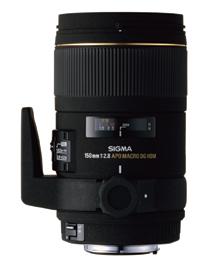
While searching for a new portrait lens I saw Sigma's APO MACRO 150mm f/2.8 on their website. But wait, you say, this is a macro lens, not a portrait lens! Here's my thinking: Any portrait photographer out there worth his light meter will gladly extol the virtues of a long, fast lens for portraiture. The reasons are simple--limited angle of view to get rid of...

George Schaub  |  Aug 01, 2008

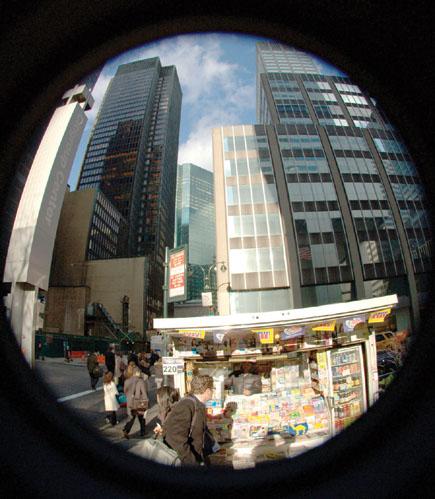
If you ever want a unique point of view try a "fisheye" lens. Like looking through a door peephole (which in fact is a "fisheye" type) this order of lens sacrifices linear correction in favor of a very wide angle of view. Originally made for creating "full sky" images when pointed straight up, they had long ago been adopted by photographers for...

Robert E. Mayer  |  Mar 01, 2010

If, like many Shutterbug readers, you have a film SLR camera plus several interchangeable lenses, you might be wondering if you can use those lenses with your new D-SLR camera of the same, or even different, brand.

Dan Havlik  |  Jul 09, 2019

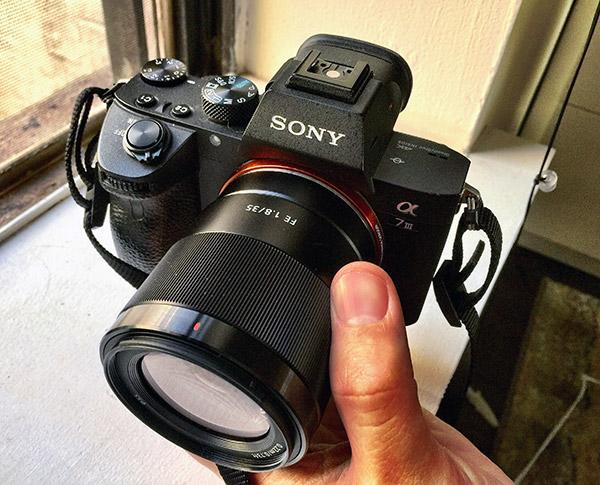
Sony just launched its latest prime lens for its mirrorless cameras: the new Sony FE 35mm F1.8 lens. We got our hands on this new Sony FE lens prior to this morning's launch and had a chance to shoot with it for a few hours. Included in this story are eight of our full resolution test images captured with the Sony FE 35mm F1.8 lens.

Joe Farace  |  Feb 26, 2016

Here are some tips I discovered when researching this month’s column. One was from my wife who uses this technique all the time—smile! And you know what, people smile back, making you appear friendly and non-threatening. The other was from Michael Archambault, who suggests you “acknowledge that street photography is not perfect.” Or as my grandfather once told me, “If you spend your whole life looking for happiness, it’ll make you miserable.”

Jon Sienkiewicz  |  Apr 11, 2025

Wanna go really wide with an affordable full-frame optic? Check out this Cookie from Laowa. Cookie? No, I think I'll call it "Jewel." Laowa has created a full-frame 15mm (110° coverage) manual focus lens that opens a myriad of creative doors for Nikon Z, Canon RF, Sony E, L-Mount and Leica M users.

Joe Farace  |  Mar 25, 2016

Every company that makes lenses usually designs a few that are ideal for portraiture. The trend these days for studio and boudoir portraits is toward fast prime lenses, while zooms remain popular for location and wedding photography. Wide-angle lenses may get you closer to the subject but perspective distortion exaggerates a subject’s nose and ears.

George Schaub  |  Jun 26, 2018

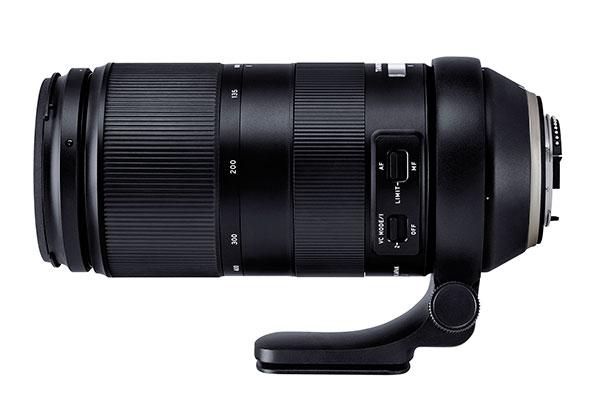
While the main body of my work has been with lenses such as the 24mm fixed, wide angles, and mainly my trusty 16-35mm zoom, I have often found myself wanting a long zoom for the scenes that present themselves along the way. It’s not that I am unwilling or just plain lazy to get closer—a long zoom, like the recently released Tamron 100-400mm, simply changes the way I see and helps me explore other visual options.

Joe Farace  |  Dec 30, 2014

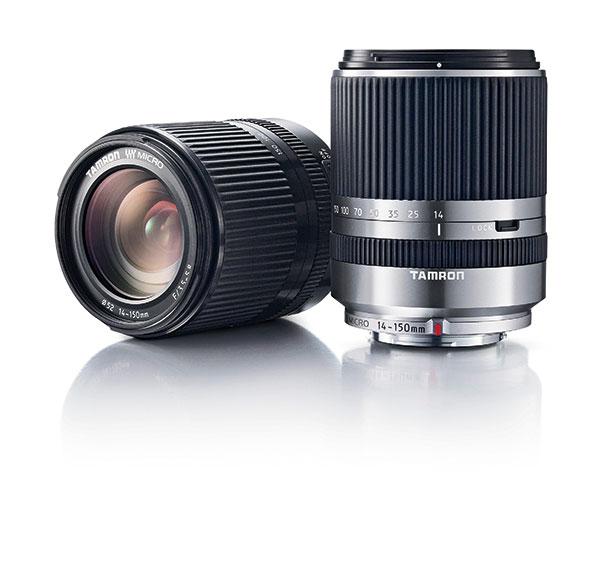
Tamron’s 14-150mm Di III is the company’s first lens designed for the mirrorless Micro Four Thirds camera system. When originally announced, this lens was supposed to feature built-in VC (Vibration Compensation) image stabilization but over the course of its development—there’s lots of in-body stabilization in this format—this feature was removed.

Jon Sienkiewicz  |  Jul 01, 2021

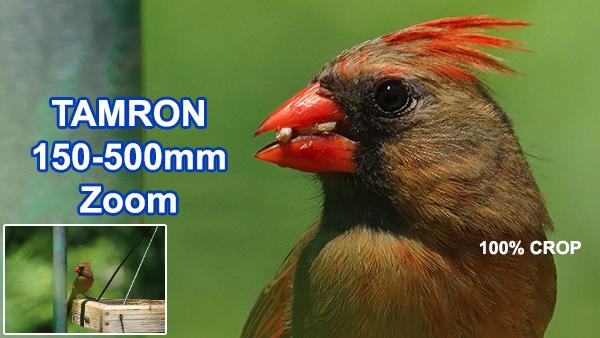
Tamron just released their new 150-500mm f/5-6.7 zoom and we received one of the first samples for review. Where would you take such a lens? We went to the NJ Audubon Center, a Somerset Patriots baseball game (they’re the NY Yankees’ Double-A minor league farm team), a nearby nature preserve and the patch of bee-attractant flowers in my back yard. Here’s our review and lots of pictures from these four venues.

Pages

X