The concept of negative space has to do with compositional balance. Negative space simply means an area of an image that is largely devoid of subject matter. In other words, it’s a blank area like the sky, an expanse of plaster, the surface of a...
When foreground elements are soft, they are visually annoying. In nature, we want to see and appreciate all of the beautiful detail and texture in the subject. When the part of the composition that is closest to thec...
While there may be times when you want to open shadows to see the details “inside,” deep texture and detail-less shadows play an important role in defining the space in a photograph. Such shadows can also take on a character orl...
Here are some suggestions for self-assignments that can aid you in getting a good handle on mastering your camera. Give each technique a full day then review the images, along with the EXIF data. As you complete these self-assignments you’ll start to make great photos every time you pick up the camera.
Most photographers dream of accomplishing two things in the publishing world: The first is having their work featured in a national publication such as Shutterbug, National Geographic, or maybe Playboy and the second is showcasing theirph...
Aviation photography is on the rise, literally and figuratively. There are many reasons for this, from the ease and small expense of getting involved to the excitement and subject matter. I think it’s also because it’s a way we can all get in touch with our own history.
How effective are the latest camera-shake compensating systems? Wonder no more
as we tell all in Peter K. Burian's in-depth Anti-Shake camera shootout
on page 80. New...
On The Cover
This month’s issue focuses on lighting, with reports on gear, techniques, and a comprehensive roundup on the wide variety of lighting equipment available to photographers today. We also have a lab report on the exciting Fujifilm X-Pro1 and special book excerpts from two of the leading lighting/software practitioners today, Kevin Kubota and Scott Kelby. Please note that with this issue our Workshop and Events listings have gone online at www.shutterbug.com.
You're in for a treat this month with our digital darkroom sampler. We
explore a variety of products from display to output, including X-Rite's
ColorMunki,Apple...
On The Cover As you can tell from our unique cover image taken by pro Don Dixon (see more of his work on page 52), this month we’re diving headlong into the creative options made possible by a range of image-processing tools, from plug-ins to graphics tablets. In addition, we have tests on the latest D-SLRs fromCano...
On The Cover Software upgrades happen as regular as clockwork these days, leaving many a photographer to wonder if the upgrades are really worthwhile. That said, this month we explore what’s new with the latest versions of Adobe’s Photoshop and Apple’s Aperture. We also provide our picks for laptops, soyo...
On The Cover
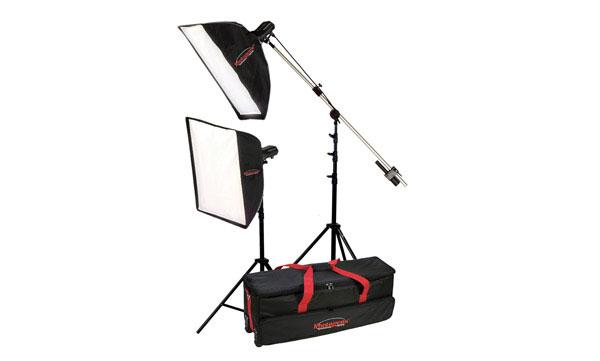
This month we are bringing you the latest image processing software updates. We are also updating you on new memory card technology as both speed and capacity are on the rise. In addition, we have a report on Ilford’s new black-and-white (silver) paper, plus lighting reports on Photoflex’s StarFire Kits and Interfit’s Super Cool-lite 455. Finally, reader Dj Boyd photographed our cover shot of a yoga session. We received her photo in response to our Picture This! assignment “From Above.” To view more readers’ submissions, see page 12.
As recently as 18 months ago, a built-in image stabilizer was a rarity in digital
cameras. It was available only in a couple of Panasonic models and one Konica
Minolta DiMAGE camera. Today, an increasing number of digicams -- from four
manufacturers -- employ some form of camera shake compensating device. And there's
even a digital SLR with a built-in Anti-Shake mechanism, the Maxxum 7D. We expect
this trend to continue with other manufacturers jumping on the bandwagon. "Sounds
great if you're into high-tech gizmos," you may be thinking, "but
is this feature really necessary?"
Photographing subjects with outrageous combinations of colors is a lot of fun. As great as complementary colors are, and as pleasing as subtlety and mood are, there’s nothing quite like color combinations that virtually knock your eyeballs out of their sockets! Combinations like orange and lime green, deep purple and red, and orange and magenta are extremely potent in drawing attention. Sometimes these juxtapositions of color are found in nature (surprisingly enough) but often they can only be found in man-made objects. One of the reasons I love photographing festivals is because the costuming is frequently shocking and outlandish.
One of the more interesting projects I’ve explored in photography is shooting birefringent crystals. Birefringence is the splitting of a light ray by a crystal into two components that are at different velocities and are polarized at right angles to each other. What this means in terms of photography is that when light passes through the crystals, you can see rainbow colors in the unique and beautiful forms that make up the crystal.