Lens News

Sort By: Post DateTitle Publish Date
Ron Leach  |  Jan 29, 2018

Nikon users love their prized Nikkor glass, which the company says is built “to the highest standards of craftsmanship to deliver images of unrivaled clarity and sharpness.” In this interesting video from the My Nikon Life YouTube channel, you’ll get a look at the optical and mechanical technology that goes into Nikkor lenses.

Ron Leach  |  Nov 18, 2020

You’re all familiar with the popular adage that, “It’s the photographer, not the camera” that’s responsible for a great image. But is this totally true or is it an inspirational myth? Today we’ll attempt to answer that question and put YOUR eyes to the test!

Vanessa Joy  |  Jan 30, 2020

"Exploring Light" is a new monthly Shutterbug column featuring tips, tricks, and photo advice from professional photographers in Canon's Explorers of Light education program

Ron Leach  |  Sep 30, 2024

There are numerous reasons why experienced landscape photographers avoid shooting wide open and prefer stopping down the aperture to f/8 or f/11— even if that means bumping up the ISO setting. So why does a German landscape pro advocate for faster glass when he rarely shoots at maximum aperture?

Peter K. Burian  |  Jun 01, 2009

Although zoom lenses are certainly versatile and convenient, they do have some drawbacks, including relatively small maximum apertures.

Joe Farace  |  Dec 16, 2016

Sports photography shares much in common with capturing images of wildlife: You’ve got an active scene captured at a distance requiring specialized equipment and knowledge of the subject’s activities while anticipating what they are going to do next…or not. Sure, you’ll need fast, long focal length lenses but you will also need camera supports and other gear that along with specialized knowledge separates the virtuosos, like Regis Lefebure (regislefebure.com), from the wannabes. Here’s a look at some of our favorite tools of the sports trade.

Stan Trzoniec  |  Sep 09, 2011  |  First Published: Aug 01, 2011
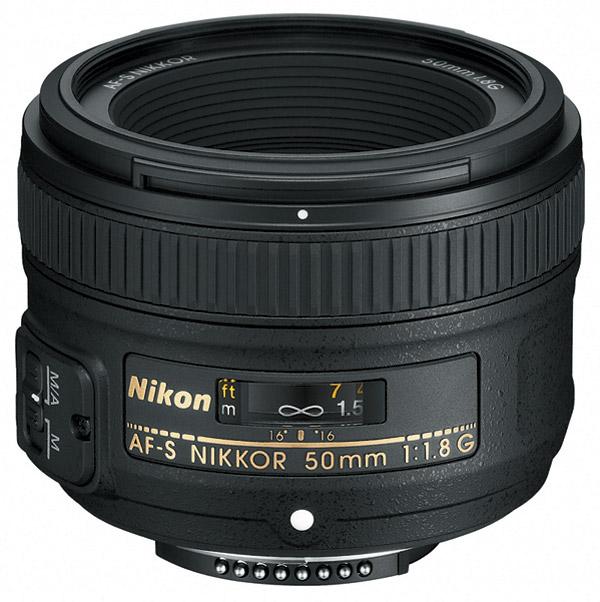
With the availability of sky-high ISOs on digital cameras and VR on slower lenses, some have argued that it’s not practical or economical to work with fast, prime lenses anymore. On the other hand, lenses like the Nikkor 24mm f/1.4G ED (list: $2200) and 50mm f/1.4G (list: $485) serve a distinct purpose for not only the obvious low-light advantages but also for the very, very shallow depth of field they can deliver.

Stan Trzoniec  |  May 16, 2012  |  First Published: Apr 01, 2012

There are two general classifications of lenses that define how you use them in the field—zooms and single focal length, the former being a variable focal length lens that has many convenient advantages, and the latter being a single focal length that, in the group we’re covering here, is what’s known as a “fast” lens. Fast doesn’t mean that it focuses quicker than its zoom cousins, though it might—it usually means that it offers a wide maximum aperture, anywhere from f/1.2 to f/2.8, and that aperture stays put, unlike some zooms where the aperture varies by going narrower as you zoom into longer focal lengths. And to help refine the group we’re covering here we’re also topping out the focal length at 50mm, which makes these lenses prime for street and low-light photography, candid and photojournalism work.

The Editors  |  Oct 24, 2015

At the PhotoPlus Expo 2015 show in New York City this week, we met up with Billy Luong from Fujifilm who showed us all the key features of the brand new Fujinon XF 35mm F/2 WR lens in this short take video.

Jon Sienkiewicz  |  Feb 16, 2017

It was portrait shooter’s paradise with two new Sony lenses this week. The 100mm STF is a veritable bokeh machine, while the FE 85mm f/1.8 is a budget-friendly, professional quality portrait lens. Sony invited a small group of editors to a private studio and assured us that we were the first journalists in the world to shoot with this new glass.

Jack Neubart  |  Aug 01, 2010

Fisheye optics are an unusual beast. The bulbous nature of the front element is one characteristic trademark, but the unique view this lens affords us is what makes it truly appealing—and at the same time challenging to work with.

My fisheye lenses have literally widened my view of the world around me and given me a new perspective on my photography. Admittedly, some...

Ron Leach  |  Nov 22, 2022

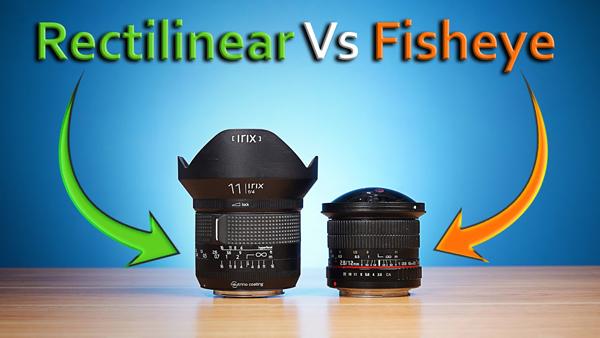
If you’re in the market for an ultra-wide lens you’ve probably noticed they’re available in two basic configurations; fisheye and rectilinear. So what’s he difference, and which type best suits your needs?

Ron Leach  |  Dec 13, 2023

If you've been following our image-processing tutorials you likely understand that this task often comprises a number of small, simple enhancements. But when taken as a whole, these seemingly minor adjustments can have a huge effect on the look of your work.

Ron Leach  |  Dec 21, 2022

It’s impossible to capture great images if your photos are consistently unsharp. There are several fixable issues that can result in soft photos, from faulty technique, incorrect camera settings, gear malfunction and more.

Ron Leach  |  Oct 16, 2023

If you're a Shutterbug reader you likely own a few lenses, or at least a couple zooms offering a variety of focal lengths. But do you really understand how the focal length you choose impacts more than just the magnification of a subject?

Pages

X