The new Nikon P7100 offers many function buttons and dials along with a large mode dial on the top to choose standard exposure modes like P, S, A and M. The camera offers a full automatic mode, scene modes and special effect modes (like B&W, sepia tone effect, “High Key” effect and more). In addition, the P7100 offers three user modes that can be saved as U1-U3 and accessed directly on the mode dial.
The Panasonic GF3 is the successor of the GF2. The new camera is 17 percent smaller and 16 percent lighter than the GF2, making it an extremely compact camera. Due to the reduction of body dimensions there are some elements missing which were part of the GF2--no accessory shoe for external flash light systems and no interface for the optional ELV that could be mounted on the GF2.
The SD1 is Sigma’s new flagship SLR system. It uses a brand new sensor with Foveon technology and a nominal resolution of 14.8 MP. This means that the camera is able to record RGB information for every single pixel. Standard digital cameras use sensors with the “classic” Bayer pattern, which means that every single pixel detects only one color information (red, green or blue) and then must undergo color interpolation.
The Sony NEX-C3 is an ultra compact CSC (compact system cameras) system with an APS-C sized sensor. The camera offers a resolution of 16 MP (megapixels), which is similar to some Sony SLT cameras like the SLT-A35. The main difference in the concept of the NEX cameras is the very compact body and the fact that the camera doesn’t work with an optical or electronic viewfinder, but only with the LCD screen on the back as viewfinder and control monitor.
The A-35 is based on the Sony SLT system, which means the camera uses a translucent mirror system. The mirror is fixed and therefore the camera doesn’t offer an optical SLR viewfinder; instead, it uses a high resolution electronic viewfinder and an LCD monitor – just like a CSC (compact system camera).The ELV of the Sony A35 has a resolution of 1.15 million RGB dots and shows a very crisp and clear image.
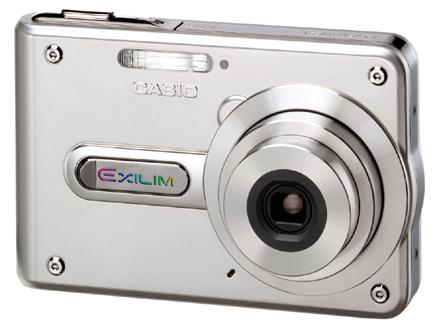
Dubbed "the world's smallest optical zoom digital camera," the Casio Exilim Card EX-S100 is business-card size at a mere 0.66" thick and just 3.46" at its longest dimension. But despite its size the EX-S100 yields excellent color files from its 3.2-megapixel chip and has a whopping...
Recently we had an opportunity to witness first hand Canon's involvement with the US National Parks, the occasion being the 90th anniversary of the founding of the National Park Service and the opening of the new Canyon Visitor Education Center in Yellowstone. As we sat through the opening ceremonies, addressed by Secretary of the Interior Dirk Kempthorne, we learned how...
The new Canon 5D Mark III has a large and handy grip on the right side. The body is a lot smaller than the new EOS-1D X because the 5D Mark III doesn’t use a “motor winder like” bottom for the rechargeable battery and therefore doesn’t offer a second shutter release button and setup dial, convenient for vertical shots. An additional battery grip is offered as an option, however.
The Canon Digital Rebel line accomplished a number of things. It broke the
$1000 DSLR price barrier, with room to spare, and as a result brought DSLR photography
into the mainstream. What followed is history, with other makers bringing forth
their "bargain" DSLR offerings, with the Rebel setting the bar.
As is their wont, Canon followed up on the Rebel with other generations of this
successful product, each one a modification that incorporated technology gotten
from more current cameras and lessons learned from past Rebel products. The
latest of these is the Canon Rebel XTi, a 10+ megapixel DSLR with a dust reduction
system and simplified operating system.
Perhaps the most versatile of all moderate tele zoom focal lengths, the 70-200mm or thereabouts range is a hallmark and standard-bearer for many optical companies. Being a constant aperture (fast) zoom, this lens opens up numerous focusing, depth of field and perhaps as important low light shooting possibilities that make it a lens most Canon photographers aspire to own. Introduced last year, we got a chance to work with one and were so impressed we thought we’d revisit it with a quick review.