Photographing children is a joy because of their innocence, the honesty in their faces, and their beauty. At different stages of their development, a photographer needs to understand how to interact with them and how to elicit the best expressions, whether they are serious, sweet, joyous, or moody.
Taking pictures of a family and doing it well is challenging. There are many things you have to think about to please both you and the people you are shooting. First, you should have soft and diffused lighting. An overcast sky works great and so does shade. Second, you should avoid on-camera flash if possible. If it is hopelessly dark and you don’t have any other lighting equipment, then on-camera flash will have to do. However, this kind of lighting is the least attractive type of artificial light we use. It is flat and dimensionless. Only if you use on-camera flash as a subtle fill light to open up shadows will it look good.
Photographers are always concerned that their pictures turn out as sharp as possible. Photography has a seemingly endless number of challenges, but sharpness is number one. No matter how incredible your photo opportunity is, if the images are not sharp, nothing else matters. The pictures will be worthless. Too often images are almost sharp, and this is particularly vexing because if only you had paid attention to one tiny detail or two, they would be perfect.
I learned a long time ago that I couldn’t rely on serendipity to get great shots of people when traveling. Once in a while I’d get lucky, but most of the time the background wasn’t perfect, the lighting wasn’t quite right, or the person wasn’t wearing clothes that told a story about the culture. In addition, I hesitate to point my camera at people without their permission. I can understand that they may feel I’m intruding on their space and their privacy, and I don’t want to do that. Grabbing shots of people without getting their permission also means that the chance of getting a model release is very small.
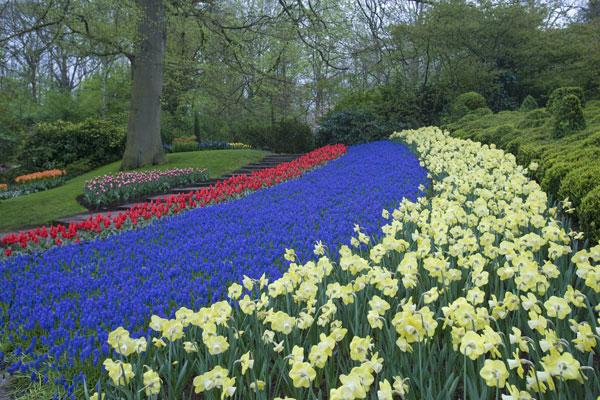
Photographing subjects with outrageous combinations of colors is a lot of fun. As great as complementary colors are, and as pleasing as subtlety and mood are, there’s nothing quite like color combinations that virtually knock your eyeballs out of their sockets! Combinations like orange and lime green, deep purple and red, and orange and magenta are extremely potent in drawing attention. Sometimes these juxtapositions of color are found in nature (surprisingly enough) but often they can only be found in man-made objects. One of the reasons I love photographing festivals is because the costuming is frequently shocking and outlandish.
One of the more interesting projects I’ve explored in photography is shooting birefringent crystals. Birefringence is the splitting of a light ray by a crystal into two components that are at different velocities and are polarized at right angles to each other. What this means in terms of photography is that when light passes through the crystals, you can see rainbow colors in the unique and beautiful forms that make up the crystal.
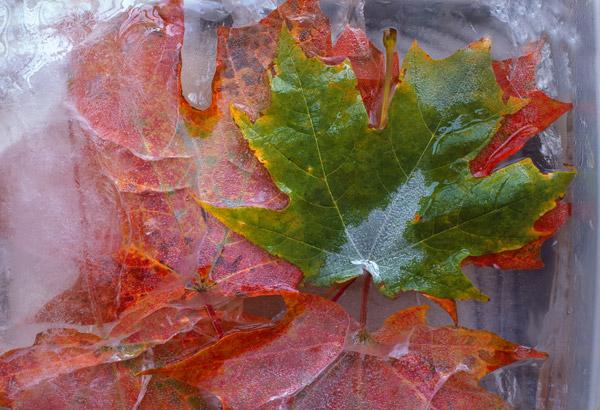
One of the ways to draw attention to a subject is to find—or set up—brightly colored objects in an environment of a muted or earth-toned background. The eye is immediately drawn to color, and this is a poignant way to make a powerful and dynamic visual statement.
Shooting in a studio intimidates a lot of photographers, but the truth is it’s not hard at all. There are a few basic lighting configurations to learn, and with the immediate feedback from the LCD monitor on the back of the camera, you can see immediately if you have the lighting, the pose, and the expression you want. In addition, you don’t need a huge space and it’s not necessary to spend thousands of dollars on lighting equipment. You can even set up a mini-studio with a $10 photoflood and a background with a white wall or a piece of black fabric.
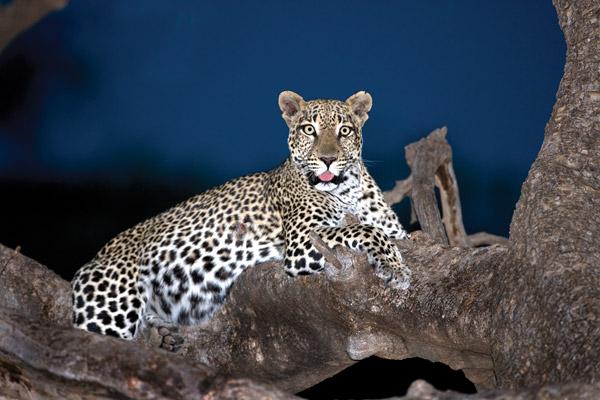
Photographers love telephoto lenses. We can’t always get close to the subjects we want to shoot, and a telephoto lens allows us to fill a significant part of the frame with them. That makes a picture with a lot of visual impact. Virtually all subjects are dramatized by the use of a telephoto—wildlife, children, sports, nature, architectural design, flowers, and more.
Photoshop is a photographer’s best friend today. It has given us unprecedented creativity and the ability to do things to pictures that heretofore were impossible. Some people claim that the emphasis has shifted away from superior picture taking, and in its place people now think “I can fix it in Photoshop.” While it is true that many problems can be corrected after the fact, good photographic skills are still required to take great images. While a full exploration of digital darkroom techniques awaits another volume of this Guide I thought I’d give you a sense of what can be accomplished with this type of after-exposure work. And while I concentrate on Adobe Photoshop techniques here there are many more programs and plug-ins that can do the job as well.