If this were a perfect world, ice cream would be good for you, celery would be fattening, and camera manufacturers would arrange the controls on all flash units in the same place. It’s too bad on all accounts.
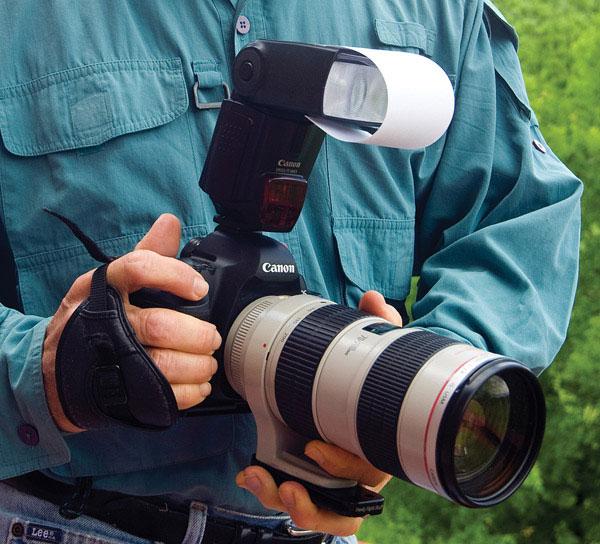
Even though portable flash units have buttons and dials in different places, the basic functions of the various features are the same. In this section, I will go over them and explain when to use them. You will probably need to consult the manual that came with your flash to identify where the features I discuss reside on your unit. Whenever you travel away from home, it’s a good idea to have this manual with you because if you don’t use a function for a while, it’s easy to forget where it is and how to use it.
Combining color with black and white is a way to focus attention on a subject or one aspect of a picture. This is similar to throwing a background out of focus so our concentration is directed to the in-focus part of an image, or placing a black background behind something so we have nothing else to look at except the subject. You make one area of a picture color and convert the rest of it to black and white, and it is a very unique way to direct a viewer’s attention where you want it.
Monochromatic color themes have been around since the inception of photography. Toning black and white prints with a sepia toner was begun at a time when photographers could only dream of color. The noxious fumes made the darkroom work memorable, to say the least. With digital technology, we can get the same look of a toned print. When I first started learning Photoshop, I translated my knowledge of the darkroom into the digital world. In other words, I learned how to create in the computer the same effects that I had been creating in the darkroom.
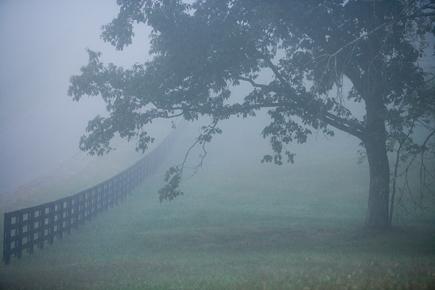
As much as I love to capture subjects with saturated color because of the powerful visual impact they offer, I also seek out the opposite end of the spectrum. Subtle and desaturated colors create impact in a very different way. There seems to be a magical quality in nature, for example, when you shoot in fog or low clouds. This is one of the reasons I like photographing at dawn and sunrise because if there is humidity in the air, this is the best time to find these conditions. The colors are so soft and muted that they are breathtaking in a quiet and contemplative way.
One of the traditional compositional guidelines that many artists and photographers adhere to is that a subject’s movement should go toward the center of the frame. You can see this method of composing an image in the photo of the frigate bird (#1) that I placed on the left side of the frame; it is flying toward the imaginary vertical center line of the image. Similarly, I placed the tall...
Below is a list of my ten favorite places to photograph in the world. There are still many places that I haven’t been, and even though I’ve been to 83 countries, as of the spring of 2010, I feel like I have hardly scratched the surface. There are so many wonderful places to shoot that in ten life times a photographer would still feel he or she needed more time. All of the places on this list offer such rich photographic experiences that you could return again and again and produce a different body of work each time. They never get old.
A vocabulary word I still remember from high school chemistry is immiscible. This refers to the fact that some liquids can’t mix together to form a homogenous solution. Oil and water are an example. When oil is mixed with water, no matter how long you stir, they will never blend together to become one liquid.
Photographing people in motion is challenging on many levels. Whether you are shooting athletes, dancers, cowboys, or workers, the same issues come into play. First, it’s hard to keep them in focus. Even with the sophisticated autofocus systems built into modern cameras, it is tough to hold focus on fast moving subjects. Second, it’s impossible to study a subject in motion and then compose the picture with deliberation and forethought. The composition constantly changes millisecond by millisecond, and that means you have to think and react quickly and hope that you captured something good. Third, exposure can change as your subject moves through areas of shade or highlights. While automatic meters do a good job in most situations, they can be fooled into over or under exposure depending on how much contrast is in the scene and how light or dark the background is relative to the subject.
Photographing small birds is extremely difficult because we can’t get close enough to them to fill a significant part of the frame and they are often so fast that it’s impossible to focus quickly enough. Autofocus is a great tool, and the AI Servo feature works sometimes, but neither can keep up with fast-flying birds.
I photograph natural subjects without manipulation when possible, but there are many instances when it is necessary to control a situation to show a subject in an artistic and beautiful light. Indeed, many times it is necessary to manage a subject specifically to make it look natural in the photo. Technical and practical issues are often present that make it virtually impossible to take the kinds of pictures we really want to take and that we can see with our eyes.