


- REVIEWS
Camera Reviews 
More Reviews Mobile Reviews Photography Reviews - GALLERIES
- VIDEOS
- BUYER'S GUIDES

Software News
Sort By: Post Date TitlePublish Date
|
Jan 07, 2014 |
First Published: Nov 01, 2013
|
Dec 31, 2013 |
First Published: Nov 01, 2013
|
Dec 06, 2013 |
First Published: Nov 01, 2013

Compact Camera NewsCompact Camera ReviewsDSLR NewsDSLR ReviewsLens NewsLens ReviewsLighting NewsLighting ReviewsPhoto Accessory NewsPhoto Accessory ReviewsPhoto Bag NewsPhoto Bag ReviewsPhoto Paper NewsPhoto Paper ReviewsPOV Camera NewsPOV Camera ReviewsPrinter NewsPrinter ReviewsSmartphone NewsSmartphone ReviewsSoftware NewsSoftware ReviewsTripod NewsTripod ReviewsVideo Camera NewsVideo Camera Reviews
|
Sep 10, 2013 |
First Published: Aug 01, 2013

|
Sep 08, 2013

|
Aug 19, 2013
 There’s a considerable difference between resizing, which means maintaining the same pixel dimensions and adapting to different document sizes at the same print resolution, and resampling, which means building additional pixels from the original file to enable printing larger documents at the same resolution. Say you have a 24MB file, obtained from an 8 megapixel digicam, that will normally fill an 8.5x11” print at 300 dpi when printing. But you just got a 13x19” printer and want to try your luck at that size, still at 300dpi. Well, for that you would need a 62MB file.
|
Jun 21, 2013 |
First Published: May 01, 2013
|
Jun 18, 2013 |
First Published: May 01, 2013
|
Jun 11, 2013 |
First Published: May 01, 2013
|
Apr 30, 2013 |
First Published: Mar 01, 2013

|
Feb 07, 2013 |
First Published: Jan 01, 2013
|
Sep 14, 2012 |
First Published: Oct 01, 2012

|
Sep 05, 2012 |
First Published: Aug 01, 2012
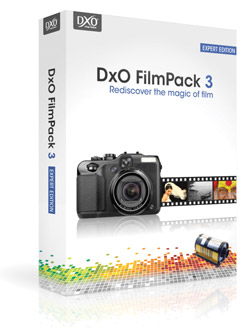 The question is—does anybody really know what a given image would look like if they shot it on Kodachrome 25, or Fuji Acros, or some obscure color negative film that even in film’s heyday was little used or appreciated? Perhaps the more pertinent question is—how many people have made photographs using film? But film references are what a number of so-called film emulation software programs use for describing presets that can be applied to a digital image. Half academic and half nostalgic, the programs use film brand names to describe saturation, contrast, color nuance, and grain structure variations that are then applied to an image. Perhaps using film names is better than poetic fantasy terms, like “misty blue dawn,” but then again entirely subjective descriptors, rather than supposedly clinical ones used in these software programs, might be just as handy for today’s photography crowd. In any case, I recently tested one such program, DxO’s FilmPack 3.1, to see if it offered up creative variations that could be used as is or as foundation images when interpreting subjects and scenes.
|
Aug 08, 2012 |
First Published: Jul 01, 2012

Pages
 FEATURED VIDEO
PHOTO OF THE DAY

Today’s photo is Shake Out by Linn Smith
eNEWSLETTER SIGNUP

Get the Latest Photo Tips, News & Reviews from Shutterbug!






| Camera Reviews Other Reviews | |
Mobile Reviews Photography Reviews Columns | |
News | |
Features | |
How-To | |
Resources |
 © 2026 Shutterbug
AVTech Media Americas Inc., USA
All rights reserved