Edited by Georg...
Sep 18, 2012
Published: Aug 01, 2012
6 comments
Every year the Technical Image Press Association (TIPA), a worldwide association of photo and imaging magazine editors, meets to pick the Best of Class in a wide range of photo categories. As the sole US member of the association, Shutterbug joins editors from Europe, Asia, and Africa in the nominating, judging, and selection process. One of the most exciting aspects of photography today is the constant advancement of technology and design, and this year’s Top Products reflect that spirit and those accomplishments, including new categories of Video D-SLR and Mobile App. Editor George Schaub joins all fellow TIPA members in congratulating those selected to receive the prestigious TIPA award. (To learn more about TIPA, please visit the website at: www.tipa.com.)
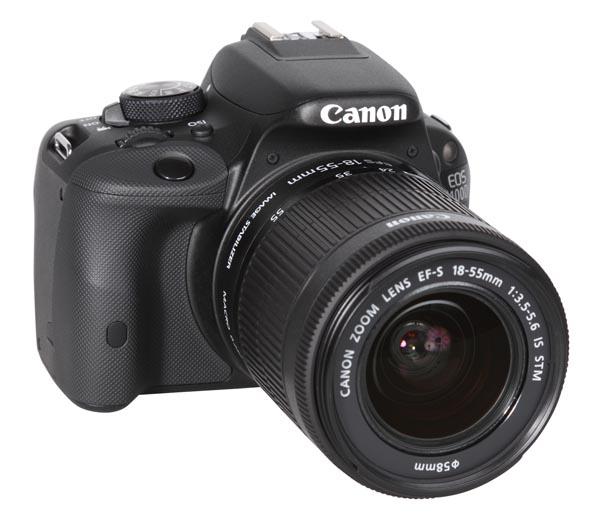
The EOS Rebel SL1 is an ultra-small SLR system; in fact it is smaller than many bridge cameras and even lighter than many other digital cameras.
Nevertheless it’s a real SLR system with Canon’s APS-C-sized image sensor, which is a little smaller than other APS-C-sized sensors made by Nikon, Sony and other manufacturers. Due to itsvery small body the grip on the right hand side is also is a bit smaller than usual and the handling of the camera is a bit tricky for photographers withlarge hands. The small body doesn’t allow for a status LCD on the top, so all information on image parameters and menu settings are shown on the LCD screen on the back.
Edited by Georg...
Jan 09, 2013
Published: Dec 01, 2012
0 comments
The Canon EOS Rebel T4i offers the same sensor resolution of 18MP as its forerunner EOS T3i, but shows a lot of improvements in handling and functionality due to a new image sensor and a new image processor. The camera is Canon’s first D-SLR with a touchscreen. This screen is very large (3”) and has a very high resolution of 1,040,000 RGB dots. It is a swivel monitor that can be flipped up- and downward and tilted to the front (for self-portraits). Even though it is a touchscreen, the whole handling of the camera (menu structure, parameter setup) is still oriented on Canon’s SLR handling scenario. In contrast to many compact cameras with touchscreen-oriented operation, the touchscreen isn’t mandatory, but it’s still helpful.
Our initial report on the Canon EOS-1D X appeared in the Image Tech section of our homepage at www.shutterbug.com and was based on a preproduction model. This is our final report based on a factory-ship model.
Edited by Georg...
Nov 07, 2012
Published: Oct 01, 2012
11 comments
The Canon SX40 HS is a compact bridge camera with an extreme zoom lens. It offers focal length settings between 24mm and 840mm (35mm film camera equivalent), which allows users to shoot nice wide-angle shots to extreme telephoto images. Adjusting the zoom lens between 24mm and 300mm is easy and allows a nearly continuous setup of the desired field of view. However, zooming between 500mm and 840mm requires more work.
The Nikon D800E contains a 36MP full-format FX sensor, a resolution normally associated with digital backs. This makes the D800E a competitor with medium format cameras made by Hasselblad or Phase One. The “E” version of this camera is contsructed without a low pass filter, used in many digital cameras to avoid color moiré but that can create a certain softening of image details. To avoid this soft look, many medium format cameras or digital backs do not utilize this filter. In cameras that use the filter, moiré effects are filtered in their raw converter software.
Edited by Georg...
Jun 13, 2012
Published: May 01, 2012
4 comments
The Fuji X10 offers a 4x zoom lens with manual zoom control. The zoom lens ring is also used as the On/Off switch. The photographer has to turn the zoom ring to unlock the lens and to start the camera, which we found to be a very handy feature. We also feel that manual zoom control allows for a more precise and fast adjustment of the focal length compared to the servo zooms of some other compact cameras.
Edited by Georg...
Sep 07, 2012
Published: Aug 01, 2012
14 comments
The HS30EXR has a surprisingly heavy and massive body and is nearly the size of an entry-level SLR system combined with a superzoom lens. The grip on the right-hand side fits perfectly into the photographer’s hand, while the left hand supports the lens system and is used to change focus and focal length manually with two large lens rings. The focal length ring has a nice rubber coating and is easy to handle, while the focus ring is very thin and is located near the body of the camera, which makes it a bit less easy to handle. Focal length adjustment is done via a mechanical regulation of the lens system, while the focusing ring adjusts via a servo system.
Edited by Georg...
Oct 09, 2012
Published: Sep 01, 2012
13 comments
The new Fujifilm X-Pro1 has a stylish, retro design with many interesting features. It is Fujifilm’s first compact system camera with Fujifilm’s new lens mount system. Fujifilm currently offers three lenses for the “X mount”: the XF18mm f/2 R, the XF35mm f/1.4 R, and the XF60mm f/2.4 R Macro. We used the 35mm lens for all our test images and the 60mm lens for the portrait test shot.
The X-S1 is Fujifilm’s newest bridge camera based on the same large EXR sensor (2/3 in) used in the company’s X-10 camera. The camera offers an extreme zoom lens (26x) for a (35mm equivalent) range of 24mm-624mm. An optical image stabilizer aids in preventing motion blur when using the extreme tele setting or shooting under low light conditions.