Shutterbug Staff

Sort By: Post Date | Title | Publish Date
Shutterbug Staff  |  Aug 24, 2006

Naneu Pro (www.naneupro.com),
a manufacturer of high quality, innovative camera, video, laptop and portable
audio cases will be unveiling its newly redesigned website on Friday August
the 11th, in an effort to help educate our visitors about the specifications
and features of our unique camera bags and cases throughout our entire spectrum
of lines of products.

...

Shutterbug Staff  |  Mar 27, 2023

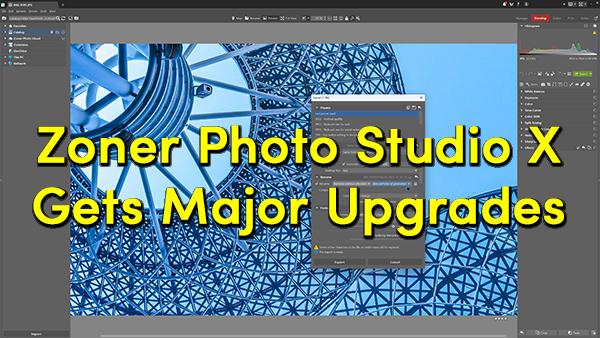
The spring 2023 update brings the largest number of improvements to Zoner Photo Studio since Version X was released in 2016. Native support for a growing list of more than 1200 lenses, much faster Raw processing times and major upgrades to the Video Module top the list of the many welcomed upgrades, but they’re not all. ZPS X now also offers full support for dual monitor setups and key improvements to Zonerama, the FREE online platform that provides users unlimited space to upload photos and videos where they’re securely stored and shared.

Shutterbug Staff  |  Feb 14, 2005

Fuji Photo
Film U.S.A. has introduced new Fujicolor True Definition 400 35mm, a premium
ISO 400 35mm color print film featuring Fujifilm's New Fine-Color Film Technology
that is said to deliver extremely accurate color and skin tone reproduction,
wide exposure latitude and precise detail for exceptional prints.


Fujifilm's True Definition 400 film with New Fine-Color Film Technology offers
the following benefits:

Natural Skin Tones

True Definition 400 provides natural skin tones with continuously smooth gradation
from highlights to shadows without washed out flash pictures.


Soft Gradation

True Definition 400 provides rich highlight-to-shadow tone reproduction that
allows for fine details to be reproduced.

High Speed and Wide Exposure Latitude

True Definition 400 is a high sensitivity ISO 400 film with wide exposure latitude
for excellent low-light performance.


Excellent Sharpness

True Definition 400 provides extremely sharp depiction of all aspects of images
including texture details.


www.fujifilm.com.


...

Shutterbug Staff  |  Mar 23, 2007

The 5 Minute Photo Loader/Viewer software now comes in two flavors. A Standard
Version is based upon the previous versions released and a new Pro Version was
designed and developed based upon feedback from users of previous versions, who
wanted more power, flexibility and marketing options in the product.


The Standard Version is primarily designed for first time onsite event photographers
that are new to onsite event photography and computer networking. The Standard
Version has less configurable options and is designed to be able to get up and
running in the least amount of time.


The Pro Version is designed for those that are more familiar with onsite event
photography, onsite printing and more familiar with computer networking. The Pro
Version has many new optional configuration options designed to give the onsite
event photographers options not previously available to them.


For more information, go to www.5MinutePhoto.com/Version4 and a PDF version of
the new manual can be found at www.5minutephoto.com/PDF/Version4Manual.pdf

...

Shutterbug Staff  |  Sep 19, 2005

Epson America Inc. has announced the the Epson PowerLite 76c. Featuring up to
2,000 ANSI lumens of brightness with XGA native resolution (1,024 x 768) in a
5.7-pound design, the PowerLite 76c is slated to sell for $1,099 (estimated street
price.) Driven by Epson's 3LCD technology, a three-chip engine design that
projects continuous color and vibrant images, the PowerLite 76c is said to display
a wide color gamut with excellent brightness and edge-to-edge consistency. In
addition, the PowerLite 76c comes with a new Instant OffTM feature for immediate
shutdown of the projector. Epson has also equipped the PowerLite 76c with new
lamp technology, E-TORL (Epson Twin Optimized Reflection Lamp), to deliver what
is said to be a superior level of brightness in a compact form factor. E-TORL
efficiently gathers and projects light to reduce light leakage and diffraction.


To get presentations up and running quickly and smoothly, the PowerLite 76c takes
only four seconds between pressing the power button and projection of the start-up
screen. And, with Epson's exclusive Instant Off feature, no cool down time
is necessary. Users can simply press the power button and unplug the power cable
immediately at the end of their presentation.


For added control, the PowerLite 76c features a "Source Search" button
which automatically identifies and displays the connected inputs and changes instantly
between sources. A 1.2x optical zoom lens enables users to easily adjust the display
size to project large images from relatively short throw distances, resulting
in a wide range of set-up possibilities. The unit's 30-degree keystone correction
ensures a high-quality display, even in less-than-ideal environments. Depending
on the presenting environment, the PowerLite 76c allows users to choose a 1,500
ANSI lumens "Low Brightness" mode to increase lamp life.


The included remote control enables PowerPoint and Keynote presentation slides
to be advanced and manipulated without using a PC. The projector also offers several
useful features for ceiling-mount projection, including top-side access for easy
lamp replacement, front-side access for air-filter replacement, easy switch to
ceiling-mount mode (inverted picture) via the remote control, and direct power-on
that is activated automatically when a room's power source is switched on.


The Epson PowerLite 76c will be available through authorized pro audio/visual,
national distribution, catalog, and direct PC dealers in October 2005. Epson's
PowerLite projectors come with a two-year limited warranty that includes three
elite technical support services -- two-year Epson PrivateLine™ availability,
two-year Road Service Program and two-year International Warranty. Through the
PrivateLine, projector owners can directly access an expedited support telephone
line (typically in about one minute) by using a phone card that is included with
the product.

Shutterbug Staff  |  Oct 21, 2005

Adobe Systems Incorporated (Nasdaq:ADBE) has announced Adobe Photoshop Elements
4.0, dubbed a significant upgrade to the No. 1 selling consumer photo-editing
software. Photoshop Elements 4.0 delivers an impressive array of new ways for
consumers to easily edit photos, show them off in creative and entertaining
ways and always have them at their fingertips. Available for Windows, Photoshop
Elements 4.0 is the software that consumers choose for quick, one-click fixes,
in addition to more sophisticated editing techniques when they need advanced
creative control.

...

Shutterbug Staff  |  Apr 11, 2008

Calumet Photographic has released another original production for its collection
of educational and instructional DVDs, The Essence of Photography with John Upton.

Shutterbug Staff  |  Aug 25, 2005

Firing at 8.5
frames per second for up to 48 full-resolution JPEG images in a burst (vs. the
same firing rate and a 40 JPEG burst for the 1D Mark II model), the new Canon
EOS-1D Mark II N camera ups the ante while retaining the superb CMOS Sensor of
the 1D Mark II model, with its convenient 1.3x lens conversion factor. Along with
its improved burst rate, the 1D Mark II N digital SLR adds a new 2.5-inch, wide-angle
view LCD/TFT monitor. Startup time on the new camera has also dropped to 0.2 seconds
(from 0.3) with the help of Canon's DIGIC II Image Processor.


The EOS-1D Mark II N camera shares with the EOS-1 series family its all-metal
body and chassis and weather-resistant construction with its shutter durability-tested
to 200,000 exposures. And perhaps best of all, the price of the new camera, $3,999,
is actually $500 less than the initial price of its predecessor.


Along with the new, 2.5-inch LCD wide-angle view display are several significant
improvements in image playback. For starters, the user can have a magnified view
from any selected AF point. Previously, magnified views took the center of the
image as the starting point, but a new menu item enables the user to select a
specific AF point and magnify the image in 15 steps with the press of a button.
Another new feature on the camera is magnified view during Quick Review. When
an image is displayed on the LCD monitor immediately after capture, the user can
immediately magnify the view to check focus right away. Other improved playback
functions include a last displayed image remembered feature and a more complete
INFO display which now shows file size and includes notations for monochrome (B/W)
and color (R/G/B) when the RGB histogram is enabled.


An improved image processing sequence and a better memory management method in
the EOS-1D Mark II N digital SLR has ramped up its burst capability with the camera
now able to shoot up to 22 RAW frames and up to 48 full-resolution JPEGs in burst.
The camera can also shoot 19 frames of RAW+JPEG (JPEG quality: 8, Picture Style:
Standard, ISO 100); and at 59 frames or better at the JPEG Middle 1 setting, 77
frames or better at JPEG Middle 2, and 135 or better at JPEG small, a substantial
increase. Additionally, the EOS-1D Mark II N digital SLR now creates new folders
automatically when file numbers reach 9999, making the new camera more responsive
in fast-moving news and sports photography situations. Photographers can even
customize the first four characters in filenames, enabling superior image organization
and camera identification capabilities.


Just like on the EOS-1D Mark II model, the EOS-1D Mark II N digital SLR lets the
user save the same image simultaneously in both the CompactFlash (CF) and SD memory
card slots, a highly effective backup mechanism. Photographers can also record
to slot one until it was full and then go to slot two as a reserve. Now, with
the EOS-1D Mark II N in RAW+JPEG mode, it's also possible to save the RAW and
JPEG images separately in each memory card. The RAW images can be saved in slot
one and the JPEGs, in any of ten quality levels, in slot two, or vice versa. Since
CF cards tend to be larger, currently, than SD cards, the RAW files will be likelier
to go on the CF card in slot one, but this is not required. The new option allows
images to be recorded separately according to usage, finally realizing a great
potential benefit of the dual slot configuration.


A new feature called Picture Styles combines processing parameters and color matrix
settings into easy settings designed to obtain the desired effect, almost like
choosing a type of film to obtain a specific result.


www.usa.canon.com.

Shutterbug Staff  |  Aug 23, 2005

The new compact
Canon EOS 5D digital SLR offers a full-frame CMOS sensor with 12.8 megapixels
of resolution and will be available in October for an estimated selling price
of $3,299. As the world's smallest and lightest full frame digital SLR, the EOS
5D model features Canon's proprietary DIGIC II Image Processor and allows users
to shoot up to 3 frames per second and record up to 60 full-resolution JPEGs and
17 RAW images in a single burst. The camera includes a new 9-point AF system with
six supplemental AF points for fast and precise focusing and a new 2.5-inch LCD/TFT
screen with 230,000 pixels that's viewable even at extreme angles.


The Canon EOS 5D digital SLR has magnesium alloy body weighing just 28.6 ounces
(810 grams. Canon describes the heart of the Canon EOS 5D digital SLR as being
its new, Canon-designed and manufactured CMOS image sensor. The sensor's 35.8
x 23.9mm size means that each pixel can be 8.2um, resulting in what Canon describes
as exceptionally low shadow noise. The sensor's low power consumption is also
said to extend battery life and lower noise. A finer CMOS production process and
optimized photodiode construction increase the light-sensitive area of each pixel
and improve dynamic range as well.


With the full-size sensor, EF lenses - even wide-angle lenses - have the same
look and feel they have with conventional SLR cameras, preserving their optical
signatures. Imaging quality in the EOS 5D is enhanced with the addition of the
DIGIC II image processor, which provides detailed and natural color reproduction
and fast image processing, including a burst performance of 60 Large/Fine JPEGs
or 17 RAW images at 3 fps. DIGIC II also enhances start-up time on the EOS 5D
DSLR, bringing it down to a lightning fast 0.2 seconds.


A new feature called Picture Styles combines processing parameters and color matrix
settings into easy settings designed to obtain the desired effect, almost like
choosing a type of film to obtain a specific result. For users who do not want
to bother with post processing, there is the Picture Style called Standard which
produces images that look crisp and vivid with the sharpness set to mid-scale
and the color tone and saturation set to obtain vivid colors. In the Portrait
setting, the color tone and saturation are set to obtain nice skin tones with
the sharpness set one step weaker than the Standard setting so the skin and hair
look softer. Under the Landscape setting, the color tone and saturation are set
to obtain deep blues and greens, the sharpness is set one step stronger than Standard
so the outline of mountains, trees and buildings look more crisp. The Neutral
setting is the same as the default setting for EOS-1 series cameras where natural
color reproduction is obtained and no sharpness is applied. This is the ideal
setting for post-processing. The Faithful setting is the same as Digital Photo
Professional's Faithful, so when the subject is photographed under a color temperature
of 5200K, the color is adjusted colorimetrically to match the subject's color
with no sharpness applied. Monochrome is the same as the EOS 20D camera's monochrome
setting and with User Defined, the user can create and save their own preferred
settings.


The Canon EOS 5D digital SLR has a new nine point AF system with six Supplemental
AF points, a new AF algorithm and a new AF circuitry. The new AF system improves
subject detection and focusing precision at the center, the most frequently used
area, and is said to significantly enhance subject tracking performance.


On the EOS 5D model, the nine AF points are concentrated at the center, but the
extreme left and right points are located in the same positions as the corresponding
AF points on the EOS-1Ds Mark II. In addition, the six invisible Supplemental
AF points, grouped around the center of the image provide highly accurate focusing
and do a great job of tracking the subject in the AI SERVO AF mode. In addition,
three AF points on the new EOS 5D model work with f/2.8 or faster lenses for enhanced
precision.


The EOS 5D model has a 2.5-inch polysilicon TFT LCD monitor with approximately
230,000 pixels. At 170 degrees, it has an exceptionally wide viewing angle. Brightness
on the monitor is also adjustable in five levels and the screen's backlight feature
uses six LED modules, as opposed to three on previous models, to helps illuminate
the 2.5-inch LCD evenly. Along with the larger monitor, the menu text is also
larger and easier to red. The full-featured INFO screen includes files sizes,
RGB histogram and AF frame displays. In addition, Quick Review images are now
enlargeable.


Because noise is difficult to see on a camera's LCD monitor, even one as large
and detailed as the EOS 5D camera, it is hard to know whether noise reduction
should be turned on or not. Thanks to a new automatic noise reduction feature
on the EOS 5D DSLR, getting rid of unwanted noise has been made even easier that
with previous models. In the C.Fn-02-1 setting, automatic noise reduction occurs
when noise is detected for exposures of 1 second or longer, regardless of ISO.
In the C.Fn-02.2 setting, full-time noise reduction for exposures of 1 second
of longer occurs regardless of whether noise is detected and regardless of ISO.
With these two options, photographers using the Canon EOS 5D DSLR can adjust the
camera's noise reduction capabilities to suit a particular situation.
...

Shutterbug Staff  |  Apr 11, 2006

Phase One has updated Capture One RAW Workflow to support more cameras, more
RAW file formats and Intel-based Macs. Capture One 3.7.4 is a Universal Mac
application designed to run natively on both Intel and PowerPC-based Mac computers.
Initial tests by the company show that the capture rate has increased by up
to 40 per cent when version 3.7.4 is run on an Intel-based Mac. Processing RAW
files with Capture One 3.7.4 is now 15 per cent faster on both Intel-based and
PowerPC based Macs. Windows users will also enjoy enhanced capture rate and
RAW processing speed with Capture One 3.7.4. Initial tests show performance
gains of up to 200 per cent in capture rate made possible by an improved high-speed
capture option in the Capture One software. Tests also show a 10 per cent increase
in the processing speed of RAW files.

...

Pages

X