We’re excited to announce the winners of the GuruShots' Street Photography Challenge! This contest celebrated the art of capturing everyday moments, unexpected stories, and the raw pulse of life on the streets.
There are times when we're out in the field and our widest lens doesn't enable us to squeeze an entire expansive vista into the frame. That's when it's time to shoot multiple images and merge them during post processing to create one spectacular ultra-wide shot.
Jon Sienkiewicz | Oct 29, 2025 | First Published: Oct 30, 2025
Just in time for Halloween, an exciting new camera filter from Cozen. This adjustable X-Ray Filter lets you peer through organic material with ease! Ogle your neighbors, check your feet for fractures and even detect Zombies!
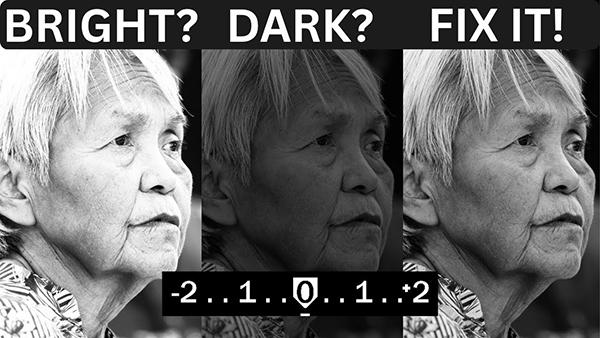
Your camera's light metering system is one of the most important tools in photography, yet some shooters fail to understand how it works. So if your images often appear too bright or unnaturally dark, this tutorial from the Hamed Photography YouTube channel is just what you need to solve this frustrating dilemma.
Today's eye-opening tutorial from expert Ken Evans is for those of you who are disappointed by your monochrome images, and is all about understanding how to view outdoor scenes in b&w. The unique video below describes how restraint, tone, and structure can be used to shape meaning within the frame.
Today's post-processing tutorial from the PHLOG Photography YouTube channel. illustrates a powerful Lightroom workflow that's guaranteed to transform how-hum landscapes into spectacular images that simply can't be ignored.
Jon Sienkiewicz | Oct 24, 2025 | First Published: Oct 25, 2025
Looking for that perfect gift for the photographer in your life—or yourself? The Click-Bit Photo Tracker uses Fuzzy Logic and IAI* to track every photo you take. I bought two—one for each arm. Here're the details of my personal experience. And BTW, in case you can't tell, this isn't an ad - it's a joke.
We've all suffered the disappointment of capturing what we thought was a spectacular photograph, only to return home, pull it up on the computer, and discover that the image is painfully soft. Maybe the problem was camera or subject movement, incorrect camera settings, or some other mistake, and other times we can't even identify the culprit.
We often turn to the globally popular Photoshop Training Channel (PTC) for practical advice on late-breaking Adobe updates and new or upgraded tools. While some of the latter may seem incidental, they can actually have a huge impact on how you go about processing your work.
When we consider the bonehead blunders photographers unwittingly commit, we usually think about gross mistakes that result in fuzzy or poorly exposed images. But the error in this story involves sharp images that we want to abort at all costs. The catastrophic bungle we're identifying is…