While photokina could be considered a distant memory, we have a number of reports yet to run that deal with products that were new to market and caught our reporter’s eye, and that in many cases are just becoming available now. Here’s a report on useful items filed by Roger Hicks that covers interesting accessories and other products he found at the show.—Editor
While a host of new digital cameras at photokina were covered in the January, 2013, issue of Shutterbug, this report focuses on some new out-of-the-mainstream cameras; new Zeiss and Schneider lenses designed to take advantage of ultrahigh-resolution sensors; and a couple of inkjet innovations that even I regarded as interesting. I say “even I” because I regard inkjet printing as being about as interesting as watching paint dry, which, after all, is what it is. Scanners will be covered under a future accessories report.
Roger Hicks’s “Pro Lighting Report” is part of our continuing series of reports from the photokina show. With a giant hall filled with lighting products, Roger reports here on what caught his eye and what he saw as the key trends at the show. We will continue with new lighting product reports in coming issues, with a special report coming out of the WPPI show held in March, and will catch up on more new products not mentioned here then. We consider lighting a key issue for all photographers and will have more tests ahead throughout the year.—Editor
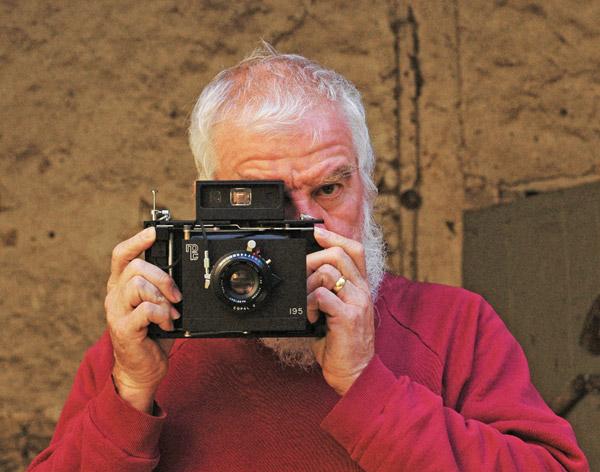
Limited production, exquisite fit and finish, and usability, too: how much more does it take to qualify a camera as a classic, or a collectible? Maybe a good dash of eccentricity; and the NPC 195 qualifies on all counts.
The fortunes of NPC (Newton Plastics Corporation) rose and fell with those of Polaroid. They were probably best known to most photographers for their Polaroid proofing backs using the late Marty Forscher’s patents for optical-fiber transfer of the image, though they also made a superb tripod head of unique design (the Pro-Head), a microscope camera, and more. They did a lot of government work, including for NASA, but a few years ago, after decades of success, they closed their doors.
It’s a dream specification. Top-flight construction; about the same weight and bulk as a professional D-SLR, though rather more convenient in shape; interchangeable lenses; camera movements; choice of ground-glass or viewfinder viewing; and a great big juicy 6x9cm format. It’s finished in beautiful Morocco-grain leather and the controls and fittings are in nickel and black-lacquered brass. It certainly sounds both desirable and usable.
If you’re a confirmed film shooter, welcome to the new all-but-universal color film. If you’re new to color film, this is the place to start. And if you shoot both film and digital, but have been neglecting your film cameras, say three Hail Kodaks and repent, or at least, don’t sin again until after you’ve tried this stuff.
The original reason for tripods was very simple. Exposures were so long that there was no alternative: no one could hold a camera still for many minutes at a time. The same remained true even when exposures dropped to a few minutes, and then to a few seconds. To this day, therefore, most people think of long exposures as the only reason for using a tripod. But there is a lot more to it than this.
It sometimes seems that there are two kinds of photographers: those who bang their cameras and lenses around mercilessly, and those who baby them. The former see themselves as rough, tough, and macho; the latter are perpetually worried about the slightest risk of damage to their precious cameras.
Neither attitude makes a lot of sense. Yes, you need to be unlucky to damage a...
There are plenty of reasons to eschew perfect sharpness. A classic application was to suppress lines and wrinkles, or just for a light, airy mood: as Tallulah Bankhead once said, “They used to photograph Shirley Temple through gauze. They should photograph me through linoleum.” Another reason is to create the sense of something half-remembered, imperfectly limned in the picture as in...