Joe Farace

Sort By: Post Date | Title | Publish Date
Joe Farace  |  Aug 26, 2014

The most important tip I would like to share about travel photography is never buy a new camera or lens before traveling to Bhutan or even Carhenge. The next most essential travel photography secret is that using your equipment has to be instinctive; when a photo op presents itself you may only have a few seconds to get a shot. There’s no time to think about what menu to use or how to turn on continuous AF, or what exposure mode you’re in. Using your camera has to be instinctive; you should see—or even anticipate—then click the shutter. It’ll make travel more fun, too.

Joe Farace  |  Aug 05, 2014

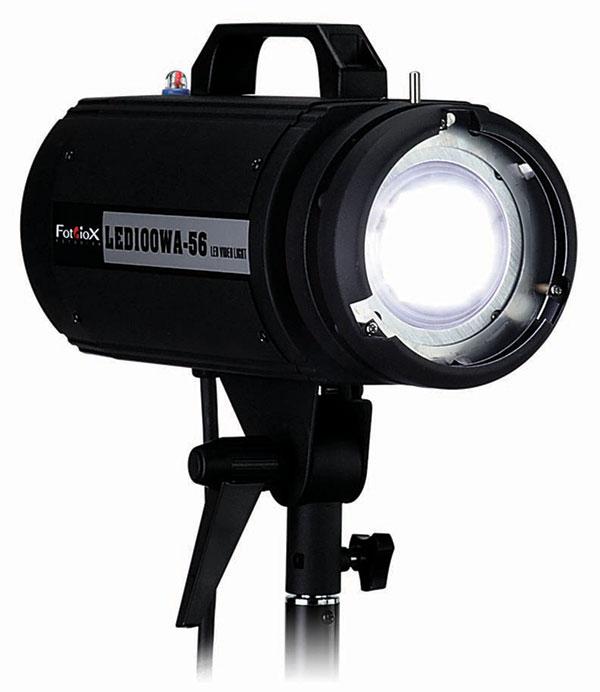
There are two kinds of portrait photographers: the first likes to shoot with “available light,” by which they mean “every light that’s available.” For some shooters, setting up five lights to make a portrait is just getting started. The second group prefers to use as few light sources as possible because there’s less gear to fiddle with, which translates into more time spent concentrating on the subject. Isn’t that what making a portrait is all about? Using fewer lights is less expensive, reduces setup time, and results in less weight to transport on location. But can you make a portrait with just one light?

Joe Farace  |  Jul 11, 2014  |  First Published: Jun 01, 2014
I received similar advice from my own father on my 17th birthday that ultimately put me on the path to a career—not a job—in photography. The photograph here was made by my friend Danny when we climbed the 897 stairs inside the Washington Monument. Inside the classy vinyl camera bag slung over my shoulder is a Kodak Brownie Hawkeye that my parents gave me for a birthday present. I modified the camera to accept close-up and yellow filters that an uncle gave me as a gift. Even then I was interested in enhancing images, and I had no idea what that might hold, but I was fascinated by computers (and robots) back then as well.

Joe Farace  |  Jun 29, 2014  |  First Published: May 01, 2014
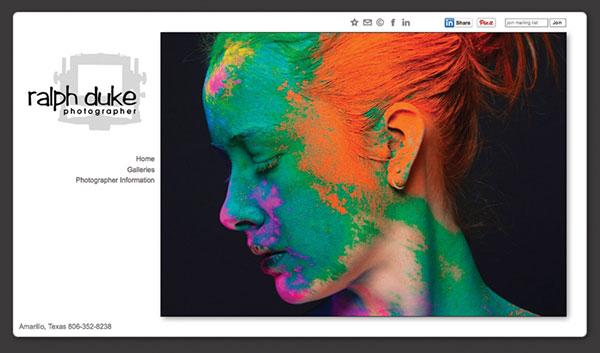
If you want the world to see your images, one of the easiest ways is with a free photoblog from Tumblr (www.tumblr.com). Free or low-cost templates give your blog the look you want. As a fan of Micro Four Thirds system cameras, I started a new blog (http://mirrorlessmusings.tumblr.com) to pick up where last year’s Picture-a-Day blog left off with a spin aimed at mirrorless photography. Using a free template, I had the blog up and running in 15 minutes, and you can, too. Tumblr is interactive so you can have a two-way conversation with admirers of your work. Don’t, as the parable goes, “hide your light under a bushel basket.” Sharing images is what makes photography the universal language and Tumblr makes it easy.
Joe Farace  |  May 09, 2014  |  First Published: Apr 01, 2014
Aside from how to pronounce my name, the main question readers ask is about the workflow I use to process image files. I find it’s convenient to work with two desktop computers, often at the same time, with a laptop computer used on the road and for testing new software. A Mac Pro handles my daily work with an iMac tasked for e-mail and research but also as a live backup when problems occur with computer number one. The iMac also runs Microsoft Windows 7 using Apple’s Boot Camp. Since my laptop is used for experimentation, and that’s where you’ll find the latest OS and imaging software, I don’t store anything critical on it.
Joe Farace  |  Mar 17, 2014
Many people think they need to travel far from home to make photographs when, chances are, if they took the time to look around they would discover that photo ops are right around the corner. That’s where self-assignments come in: for the past 30 years mine has been making images that I can walk to from my front door—like the tiny flower in my front yard I captured this afternoon. It wasn’t made for any commercial purpose and is just a way for me to appreciate and document the small things of daily life that many people take for granted. It’s personal projects like this that help us all stretch our talent, skill, and imagination. You can think of it is as a form of digital meditation.
Joe Farace  |  Apr 07, 2014  |  First Published: Mar 01, 2014
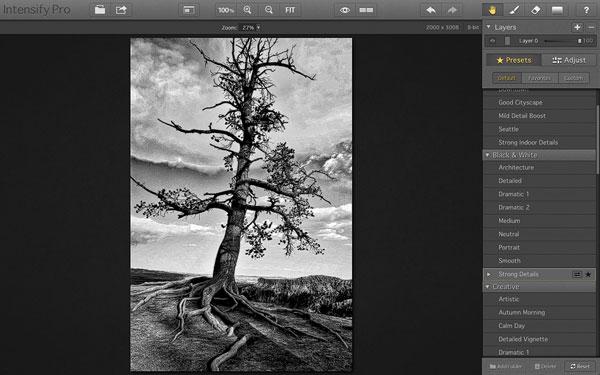
New & Updated Photoshop Actions
Remember the ASCII-art dot-matrix photos that were popular in the 1980s? PanosFX’s free ASCII-art action recreates the effect by producing images pieced together from ASCII characters. The set contains five actions that let you produce not only the classic ASCII-art effect but four modern variations as well, including Gray, Color, Color tiles, and Color tubes. The free Paperworks actions were created by Pit Hermann and let you make papercraft projects. His Pencil Stand actions let you produce (surprise) pencil stands with your photos printed on them. There’s also a set of Advent Calendar actions and Panos Efstathiadis has bundled his Paper Cube actions that let you make paper cubes with images printed on them. Mac OS and Windows versions work with Photoshop CS4 and later as well as Photoshop Elements 11 or later.
Joe Farace  |  Apr 11, 2014  |  First Published: Mar 01, 2014

First impressions: the D-Lite RX ONE To Go Kit includes a pair of Elinchrom monolights so you know it’s going to contain quality products. Then you discover that the maximum output of each light is 100 watt seconds and you start to think you’ll need more power. That’s until you’re reminded that this fully loaded two-monolight Elinchrom kit sells for less than $700. Interested now?

Joe Farace  |  Apr 15, 2014  |  First Published: Mar 01, 2014

Sigma’s 18-35mm f/1.8 DC HSM is part of their DC series of lenses designed for APS-C-sized sensors so the imaging circle is matched to the size of the sensor. For this assignment, I used a Canon EOS 60D with a 22.3x14.9mm sensor, producing an equivalent angle of view of a 28-56mm lens. Shooters of Nikon, Pentax, Sigma, and Sony cameras, the other mounts for which the lens is available, will achieve an angle of view equivalent to 27-52mm. Unlike other lens manufacturers, Sigma priced the different mounts the same ($799) so don’t feel you’re going to be paying a premium for your camera choice. Bucking a trend with camera manufacturers’ lenses, the Sigma 18-35mm f/1.8 DC HSM includes a lens hood at no extra charge.

Joe Farace  |  May 02, 2014  |  First Published: Mar 01, 2014
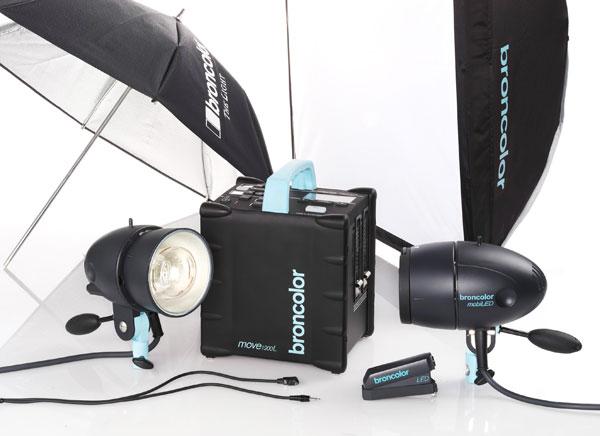
There is something quietly satisfying about working with finely crafted tools. It’s a feeling I remember having back in the film days when making photographs with my first Hasselblad 500C/M camera and one I had again while shooting with Broncolor’s Move 1200 L Outdoor Kit 2. It made creating all of the images that you see here easier and fun to shoot, and it’s in this spirit of play where creativity lives, inspiring a photographer to try new ways to make better photographs. Broncolor’s Move Kit is just that kind of lighting system.

Pages

X