


- REVIEWS
Camera Reviews 
More Reviews Mobile Reviews Photography Reviews - GALLERIES
- VIDEOS
- BUYER'S GUIDES

|
Oct 21, 2011 |
First Published: Sep 01, 2011

|
Oct 28, 2011 |
First Published: Sep 01, 2011

|
Nov 02, 2011 |
First Published: Sep 01, 2011

|
Nov 07, 2011 |
First Published: Sep 01, 2011

|
Sep 08, 2011 |
First Published: Aug 01, 2011
 Canon offers five different 70-300mm zoom lenses in its product lineup. Why so many? They obviously think this is a popular and practical focal length range and I happen to agree. I even own one of them myself—the EF 70-300mm f/4-5.6 IS USM—but the EF 70-300mm f/4-5.6L IS USM tested is the mac daddy of ’em all. Part of the reason for its high price tag ($1599) is that it’s the only one of the five lenses that is resplendent in white paint (the better for TV cameras to see), making it part of the “L” series. (See “Just For The ‘L’ Of It.”) Canon’s L lenses typically have wide apertures fixed throughout the zoom range but in this case all five lenses in this focal length range have identical f/4-5.6 apertures.
|
Oct 03, 2011 |
First Published: Aug 01, 2011

|
Oct 05, 2011 |
First Published: Aug 01, 2011
|
Aug 24, 2011 |
First Published: Jul 01, 2011

|
Sep 06, 2011 |
First Published: Jul 01, 2011
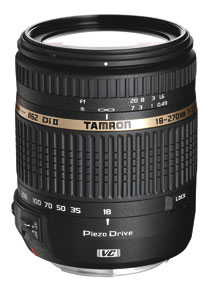 Tamron has always been a pioneer in the do-everything zoom lens category and their new AF18-270mm F/3.5-6.3 Di II VC PZD lens is no exception. Don’t be intimidated by those initials—it’s all good stuff—and I’ll get to them shortly. The 18-270mm F/3.5-6.3 is part of Tamron’s Di II family of lenses that are engineered specifically for digital SLRs with image sensors measuring 24x16mm, typically referred to as APS-C. The sensor size of the Canon EOS 50D I tested the lens with measures 22.3x14.9mm so I guess that’s close enough. The 15x zoom range of the lens provides a 35mm focal length equivalency of 28.8-432mm with the Canon EOS 50D’s 1.6x multiplication factor, but that will be slightly different for the Nikon and Sony versions that are also available. Shooting full frame? Check out Tamron’s Di lens series for 35mm film cameras or digital SLRs featuring larger (24x36mm) sensors.
Pages
 FEATURED VIDEO
PHOTO OF THE DAY

Today’s photo is Shake Out by Linn Smith
eNEWSLETTER SIGNUP

Get the Latest Photo Tips, News & Reviews from Shutterbug!






| Camera Reviews Other Reviews | |
Mobile Reviews Photography Reviews Columns | |
News | |
Features | |
How-To | |
Resources |
 © 2026 Shutterbug
AVTech Media Americas Inc., USA
All rights reserved