


- REVIEWS
Camera Reviews 
More Reviews Mobile Reviews Photography Reviews - GALLERIES
- VIDEOS
- BUYER'S GUIDES

Embrace The Unusual
Classic portrait lighting isn't always necessary for capturing interesting people pictures. |
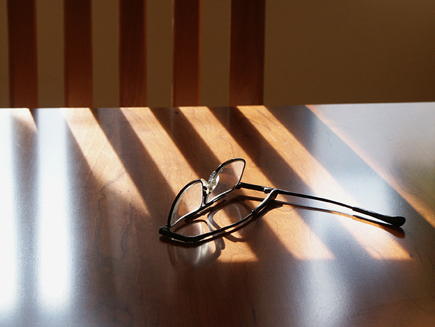
All to often, photographers themselves seem to be calibrated for normal lighting conditions--avoiding the unusual because of a lack of confidence in dealing with the unconventional. The problem with this approach, of course, is that average scenes tend to deliver average results. So the next time you go out shooting, how about making a conscious effort to locate a scene with unusual lighting, and see what you can do to make the most of it.
 |
|
|
When shooting available-light portraits, for example, it's natural to look for the soft light of an overcast day, the classic illumination from a large window, or the directional yet pleasant rays of the late afternoon sun. But you can also make some interesting people pictures with less conventional lighting. The informal portrait shown here was taken on a porch, with light streaming through the vertical panels on the outside of the building. A plus one-stop exposure compensation setting yielded this result.
 |
|
|
As you might expect, metering in tricky lighting can be, well, tricky. And while today's sophisticated cameras with multi-segment metering systems do a great job under a wide variety of conditions, it's still a good idea to bracket your exposures whenever you are uncertain about the correct setting. When shooting with a digital camera, you can check the LCD panel after you've captured the image to make sure that the scene was rendered as you envisioned it. But re-shooting a scene with a different exposure setting isn't always an option--especially when photographing action. So bracket your exposures if you want to be sure to get the shot.
 |
|
|
If your camera has a built-in spot meter, you can this tool to eliminate much of the guesswork. When shooting portraits under uneven lighting conditions, you can use the spot meter to take a reading of your subject's face. With other types of scenes, use the spot meter to read a mid-tones portion of the scene. Another way to use the spot meter is to measure the brightest and darkest parts of the scene that you consider important, and expose halfway in-between. If you are shooting with a 35mm camera, it's a good idea to use print film instead of slide film because print film has considerably more exposure latitude.
The best advice may simply be to experiment and avoid the conventional. Keep your eyes open for unusual lighting and you'll come up with some dynamic images.
| ||
|
||







 FEATURED VIDEO


Get the Latest Photo Tips, News & Reviews from Shutterbug!






| Camera Reviews Other Reviews | |
Mobile Reviews Photography Reviews Columns | |
News | |
Features | |
How-To | |
Resources |
 © 2026 Shutterbug
AVTech Media Americas Inc., USA
All rights reserved