


- REVIEWS
Camera Reviews 
More Reviews Mobile Reviews Photography Reviews - GALLERIES
- VIDEOS
- BUYER'S GUIDES

Eliminate Distracting Backgrounds
The bright blue sky used as a background for this shot contrasted nicely with the pink blossoms. |
One simple technique is to place your subject against a simple, neutral background; easy to do in the studio, but a more difficult challenge in less-controlled situations. The sky is often overlooked as a readily available backdrop when taking photographs outdoors. Shooting from a low vantage point against a bright blue sky can often provide an attractive contrast to your main subject. Colorful sunsets are also useful as backgrounds for creating dramatic silhouettes.
 |
|
|
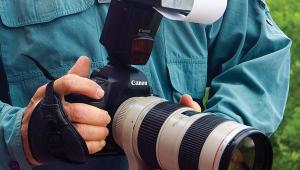
Another easy way to avoid background clutter is to fill the frame with your subject whenever possible. This approach will eliminate most of the background in your scene, along with any distractions it includes. Using a telephoto lens to move in close to your subject offers the advantage of separating your subject from the background, given the shallow depth of field inherent to long lenses. By using a telephoto lens to fill the frame with your subject, and selecting the widest aperture that conditions permit, you can render a cluttered background as a soft wash of color.
 |
|
|
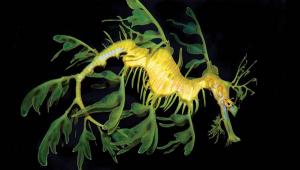
Electronic flash is also useful for controlling background distractions, particularly when creating macro images of small objects at close camera-to-subject distances. Flash illumination falls off rapidly when shooting with small apertures, and backgrounds can be easily rendered dark. You can also try using backlighting as a technique for separating your subject from an unattractive background.
Practice these simple techniques, and effective background control will soon
become second nature.
| ||
|
||







 FEATURED VIDEO


Get the Latest Photo Tips, News & Reviews from Shutterbug!






| Camera Reviews Other Reviews | |
Mobile Reviews Photography Reviews Columns | |
News | |
Features | |
How-To | |
Resources |
 © 2026 Shutterbug
AVTech Media Americas Inc., USA
All rights reserved