


- REVIEWS
Camera Reviews 
More Reviews Mobile Reviews Photography Reviews - GALLERIES
- VIDEOS
- BUYER'S GUIDES

Sigma APO 150-500mm f/5-6.3 DG OS HSM Lens; A Long Range Zoom with Image Stabilization
 |
|
|
The Sigma APO 150-50mm lens is a moderately fast, super-telephoto zoom designed to work with both APS-C and full-frame DSLR cameras. It offers quite useful close focusing (7.2 ft) and two modes of what they deem "optical stabilization" (OS.) Weighing in at 67.4 oz you always know its there, but then again this is one impressive piece of glass. I recently worked with the lens in northern New Mexico.
Having OS is what makes this lens tempting, as you can indeed shoot handheld, something that I would have previously hesitated to do with a lens of this bulk and focal length range. The OS system, according to Sigma, works in two modes. Here's a quick Sigma-supplied overview of how this works:
"Sigma's OS system consists of two types of sensors inside the lens to detect the angle and speed of vertical and horizontal camera movement. When shake is detected, a signal is sent to a special motor with instructions to shift a group of lens elements in the appropriate direction to counteract the effect of lens shake. This causes incoming light rays to be refracted so the image is returned to the center of the frame; consequently, the projected image is stable, allowing for sharper pictures."
Mode 1 is for general picture taking; Mode 2 is for vertical camera shake and is best for panning or following moving subjects. This assumes, of course, that your AF system is up to following the subject for you, which, thanks to this being an HSM lens, works quite well. It is not recommended that you use OS if the camera is mounted on a tripod. You mount it with the supplied and quite rugged tripod mount collar, which allows you to move the rig from horizontal to vertical position simply by loosening then moving then tightening the screw on the barrel collar. (I strongly recommend not using the camera tripod mount.) And do not work with a shy or flimsy support--I worked with a Gitzo G2227 carbon fiber and Gitzo G1276M ball head, and would hesitate to mount the camera and lens on anything less rugged.
 |
|
 |
|
|
I received a Canon mount test lens and worked with a 5D and 30D for checking the results with both full-frame and APS-C sensor, as this lens is of DG Sigma designation, meaning it can be used on both formats. The effective focal length range on the 30D, given the 1.6x magnification factor, is 240-800mm, safari-length, no doubt. The lens focusing and exposure worked spot-on with both bodies.
 |
|
 |
|
 |
|
|
There was a glitch, however. There was noticeable vignetting on the 5D (full frame) at all focal lengths at any aperture below f/11, becoming much less apparent at f/16 and above and quite apparent at maximum aperture. I found no apparent vignetting on the 30D at all focal lengths and apertures. I first saw this on the edges of some cloud pictures I made, and thought it might be the large lens hood (included in the lens price) or the nature of the shots themselves, but later made tests with and without the hood on a flat lit wall and got the same results.
 |
|
 |
|
|
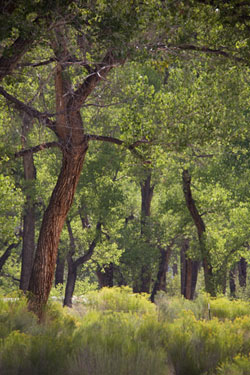
The range of the zoom is quite impressive, which belies what I first thought was a modest 3X+ ratio; somehow when you go 3X on a zoom that starts at150mm you get into some really long views. Start out at 240mm and it gets really interesting.
 |
|
|
| |||||||||
|

| ||||||||








 FEATURED VIDEO


Get the Latest Photo Tips, News & Reviews from Shutterbug!






| Camera Reviews Other Reviews | |
Mobile Reviews Photography Reviews Columns | |
News | |
Features | |
How-To | |
Resources |
 © 2026 Shutterbug
AVTech Media Americas Inc., USA
All rights reserved