


- REVIEWS
Camera Reviews 
More Reviews Mobile Reviews Photography Reviews - GALLERIES
- VIDEOS
- BUYER'S GUIDES

Jack Holowitz
A Master Photographer Using Classic Techniques
Jack Holowitz is the male half
of the incredibly talented team of Jack and Nancy Holowitz from Springfield,
Massachusetts. Nancy is known for her sensitive portraiture, and Jack
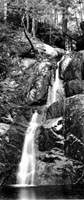
has gained a great reputation for his eye-popping black and white work
that includes nudes and landscapes. |
|||
A quiet, unassuming guy who prefers to let his images do the talking, Jack has long been a disciple of the Zone System and has taught many workshops for photographers interested in obtaining the finest possible black and white photos. And while some photographers are content to use their passion for black and white solely for their personal work, Jack has gone a step further and incorporated it into his studio work to the point where 75 percent of his work is now finely crafted black and white portrait studies. |
|||
Large, Large Format |
|||
You might ask yourself why
anyone would lug around a camera this size. (Note: He has a bigger 12x20
camera that only goes as far as he can drive.) Probably for the same reason
some photographers shoot with a 20x24 Polaroid--there's just
no other way to get the image it supplies. Even Jack admits that lugging
around a camera, tripod, film holders, and the related gear is a major
nuisance, and airport security always wants to look inside that big box
of film to see what's in it. But it's that feeling you get
when you look at the incredible result that makes it all worthwhile. A
7x17" contact print in the hands of a master like Jack is something
to behold. Now let's get to the "nuts and bolts" part
of this so we can see exactly what goes into the making of these prints. |
|||
Speaking of prints, you are
probably wondering by now how they're printed. The negative is placed
in a contact printing frame with the paper, then all is placed for exposure
under the enlarger. This method of printing also allows for dodging and
burning each print. In addition to the silver and platinum prints that
Jack makes in this manner, he now offers his prints for sale on color
photographic paper. The advent of Fuji Crystal Archive paper, with a life
expectancy of at least 100 years, allows Jack to be comfortable with this
method. A print is scanned (all photos used in this article were scanned
using a Fuji 2750 scanner), and then copies can be made from the digital
file. Silver prints are made on Ilford Warmtone fiber paper. |




| ||
|
||














 FEATURED VIDEO


Get the Latest Photo Tips, News & Reviews from Shutterbug!






| Camera Reviews Other Reviews | |
Mobile Reviews Photography Reviews Columns | |
News | |
Features | |
How-To | |
Resources |
 © 2026 Shutterbug
AVTech Media Americas Inc., USA
All rights reserved