| |
The
minimum focusing distance of 59.1" (without switching
to Macro mode) is typical for lenses of this type. It's
really quite adequate at longer focal lengths for isolating
details. (SA-5; at 250mm; f/11; Elite Chrome 100.)
Photos © 1999, Peter K. Burian, All Rights Reserved
|
|
Although many of Sigma's
new lenses incorporate the latest technology and/or premium grade optics,
this manufacturer continues to compete aggressively in the market for
affordable zoom lenses. In addition to its APO, Aspherical, and HSM
series, Sigma still offers a line of entry-level zooms, including the
AF 70-300mm f/4-5.6 DL Macro. Intended for those on a tight budget,
this lens is not only affordable but is also a competent performer.
Physical Characteristics. Incorp-orating the most useful
focal lengths, the versatile 70-300mm f/4-5.6 DL Macro is incredibly
compact and lightweight for a broad range zoom. Its non-glare, ZEN matte
finish resists scratches and provides a sure grip maximized by the wide,
rubber zoom ring. A mere 45° rotation--with a very smooth mechanism--extends
focal length from 70-300mm. There is no depth of field scale, a common
omission with rotary zoom lenses. Like most of its competitors, the
Sigma's barrel length increases at longer focal lengths, to 7.5"
at 300mm in this case.
The 1" wide, rubber focusing ring is well placed so its movement
is not impeded by your hand. Because it must rotate during AF operation,
the mechanism is not well damped, but there is a full series of legible
distance markings in feet and meters. Flip the Focus Limiter switch
from Normal to Full--only possible at 300mm--and the lens will now focus
even closer, to 37.4" instead of the usual 59.1". The zoom
ring is locked but autofocus remains available. As Sigma recommends
however, focus manually for critically precise control.
|
| |
Equipped
with all the capabilities serious outdoor and nature photographers
demand, the Sigma SA-5 is a versatile camera. It is a fine
choice for a broad variety of subjects from travel to landscape
and wildlife photography. (SA-5; at 200mm; +1EV exposure
compensation; f/11; Bogen tripod; Elite Chrome 100 at EI
200.)
|
|
Now you get increased magnification
right up to 0.5x or a 1:2 reproduction ration, also called 1/2 life-size
on the film frame. Four reproduction ratios are marked on the internal
barrel--1:3.5, 1:3, 1:2.5, and 1:2--for those who need to know the exact
level. The barrel protrudes an extra inch at maximum extension. Does the
lens now become rather front heavy? Not at all, since weight distribution
is ideal with the rear section of the barrel and much heavier than the
protruding front section. Consequently, this did not create any problem
when working with the camera on a tripod for 1/2 life-size images of small
blossoms.
Optical Construction. Because it includes two elements
of low dispersion glass, the 70-300mm f/4-5.6 APO Macro zoom is approximately
30 percent more expensive than this DL Macro model. Even so, this more
affordable lens includes a similar optical formula and extremely close
focusing ability like its APO Macro counterpart. Its one "special
low dispersion glass" element minimizes chromatic aberration and
"this lens effectively compensates for the astigmatic variations
created by focusing," so optical performance does not suffer.
Sigma also offers an optional accessory close-up lens called the Achro-matic
Macro Attachment Lens (AML). Resembling a filter with magnifying glass,
this device significantly reduces the minimum focusing distance at any
focal length. Because of the highly corrected "achromatic"
optics, image quality remains high. Although Sigma does not indicate the
maximum magnification possible with this accessory, nor the diopter rating,
you can achieve nearly a 1:1 reproduction ratio. Set the zoom to 300mm
and set focus to 37.4" and you get almost a full 1x magnification.
In practical terms, this means that a bumblebee will be rendered almost
life-size on the film frame, an impressive level of magnification.
|
| |
Though
not intended for formal architectural work, the Sigma DL
zoom was a suitable choice for buildings in travel photography.
(SA-5; +1EV exposure compensation; at 70mm; f/11; Elite
Chrome 100.)
|
|
Evaluation.
While shooting with the DL zoom--and after examining my slides--I made
the following notes:
·The Macro mode was definitely useful, making this zoom a suitable
back-up to a 180mm true Macro lens. The longer 300mm focal length required
in the extreme close focusing range was ideal in my opinion. The narrow
angle of view allowed me to exclude background clutter, framing a nature
subject against a small patch of greenery, for example.
·At 1/2 life-size (300mm) the slides are very sharp and contrasty,
comparable to those made with other fine zoom lenses with a +1.5 diopter
accessory.
·In very close focusing, peak optical performance was provided at
f/11-f/16 and at f/16-f/22 in the Macro setting at 300mm. These are the
most commonly used apertures for adequate depth of field. In either case,
the images are suitable for sharp 8x12 prints or a half page reproduction
in a magazine.
·The standard close focusing distance of roughly 5' was fine
for most subjects, reducing the need for the AML accessory. Still, the
latter is a worthwhile purchase as it allows for much closer focusing
at all focal lengths, increasing versatility. As with any lens/accessory
of this type, stop down to f/16 for the optimum in edge to edge sharpness.
This is a commonly used aperture in extreme close focus work for depth
of field considerations.
|
| |
A lightweight camera/lens is an ideal combination for shooting
quickly. The Sigma SA-5 and 70-300mm DL Macro zoom certainly
fall into this category. (SA-5; at 150mm; f/8; Agfachrome
100 RSX.)
|
|
·At more typical focusing
distances, sharpness/contrast were high from 100-200mm, especially at
f/8 and smaller apertures where the slides are truly impressive. Even
at the widest apertures, this lens is capable of image quality suitable
for an 8x12 print in this focal length range. At the longer focal lengths
central sharpness was high, but edge sharpness did benefit from stopping
down to f/8 or f/11.
·Slight pincushion distortion (bowing inward of lines near the edges
of the frame) was observed, especially at longer focal lengths. Unless
you plan to use a tele-zoom lens for formal architectural photography--highly
unlikely--this factor is irrelevant.
·Flare is well controlled. The bayonet-type lens hood (removable
for reversed storage) is very effective at focal lengths up to 200mm.
·The front element rotates when focusing (though not when zooming)
as is common with affordable zooms; adjust polarizers and special effects
filters just before tripping the shutter.
·Autofocus speed with the Sigma SA-5 was quite good, capable of
tracking vehicles traveling along a freeway. AF sound level is comparable
to that of many other independent brand (and some camera makers')
lenses. For nearly silent and super-fast AF performance, check out the
new HSM series of Sigma lenses with Hypersonic Focus Motor. (See the August
'98 issue for my review of the 70-200mm f/2.8 APO HSM for Canon
EOS, Sigma SA, and Nikon AF cameras.)
·I appreciated the Macro feature, although it would have been even
more useful at all focal lengths from 200-300mm. Still, this will definitely
entice the nature photographer--and anyone who finds that most tele-zoom
lenses do not focus adequately close.
|
|
Conclusion.
In the July '96 issue, I had tested the "APO Macro"
model of this lens. On reviewing my notes from that earlier test, I found
that my conclusions for the more expensive model were similar, but for
11x14 prints instead of 8x12 prints. If you routinely order oversized
enlargements, the extra cost of the AF 70-300mm f/4-5.6 APO Macro zoom
will be a suitable investment. But for an entry-level zoom lens with impressive
close focusing ability, the Sigma AF 70-300mm f/4-5.6 DL Macro offers
an excellent value for the price.
Technical Specifications
Construction: 14
elements in 11 groups
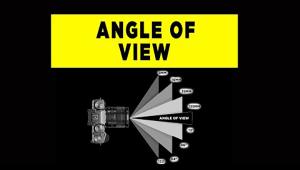
Angle of View (Diagonal): 34 to 8°
Minimum Aperture: f/22-f/32
Minimum Focusing Distance: 59.1" and 37.4"
at Macro
Maximum Magnification: 0.25x and 0.5x at Macro
Dimensions: 3"(D)x4.6"(L); 58mm filter size
Accessories: Lens hood included; optional AML available
Weight: 20.8 oz
Mounts: AF: Sigma, Minolta, Nikon D, Pentax, and Canon.
Manual Focus: Minolta MD and Pentax
|