


- REVIEWS
Camera Reviews 
More Reviews Mobile Reviews Photography Reviews - GALLERIES
- VIDEOS
- BUYER'S GUIDES

Photographing Shadows
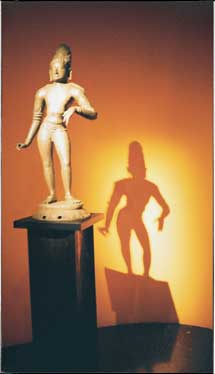
Beware the dark side, that famous sci-fi-movie "master" more than once cautioned his young protege re "The Force." But the dark side--a.k.a. shadows--is well worth the photographer's attention. While the eye is drawn to bright areas in a photograph, the interplay between bright and dark--between highlight and shadow--can make for a terrific photo. And shadows themselves can be good photo subjects. (They can also be very effective distractions--another good reason to pay attention to them when shooting!)
 |
|
|
Outdoors, the best shadows occur early and late on clear days, when the low-angle sun creates long ones. You can have the shadows loom toward the camera by shooting toward the sun, or extend from the camera by shooting with the sun behind you. Generally, shooting at an angle to the sun produces the most effective shadows, as they'll then run across the frame. Go out with your camera first thing in the morning or an hour or so before sunset, and watch the shadows as you face in different directions. When you find something that looks neat, shoot.
Shadow patterns on the ground make good photo material, but so do shadow patterns on subjects such as rocks, buildings and even people. For example, position a person under a latticework, and watch the light and shadows on his or her face (this isn't great "formal" portrait lighting, but it's a neat special effect).
 |
 |
|
|
||
You can also deliberately cast a shadow (or in scenic photography, wait for the sun to move to the right position to do it) to add interest to an otherwise too-evenly lit scene. For example, if you're photographing a rock formation, the whole formation lit evenly makes for a dull photo, but if a large foreground rock is in shadow, the whole image takes on more "snap."
While contrasty scenes can give reflected-light metering systems problems, the multi-segment metering systems in most of today's AF 35mm SLRs handle such scenes quite well. The beach photo shown here was made with an entry-level AF 35mm SLR camera in aperture-priority AE mode with multi-segment metering and no exposure compensation. But, as always in tricky exposure situations, it doesn't hurt to bracket exposures.
Actually, light--and the way it interacts with its complement, dark--is a key element in every photograph. So watch those shadows and put them to good photographic use.
 |
 |
|
|
||
Silhouettes
If powerful imagery is what you seek, try creating a silhouette. This technique allows you to dramatize a subject when the shape is more important than form or texture, or when you simply want to make a striking statement on film.
Shooting a silhouette is easy: simply position your subject in front of a bright background, and expose for the background. Any brightly colored surface works well--a glittering ocean in the late afternoon, a light-colored wall, or a glorious sunrise.
| |||||||||
|

| ||||||||













 FEATURED VIDEO


Get the Latest Photo Tips, News & Reviews from Shutterbug!






| Camera Reviews Other Reviews | |
Mobile Reviews Photography Reviews Columns | |
News | |
Features | |
How-To | |
Resources |
 © 2026 Shutterbug
AVTech Media Americas Inc., USA
All rights reserved