Nikon
D70 Digital SLR Quick Look
· 6.1 megapixel
· $999
· USB 1.1 and 2 compatible
· Feels like a 35mm camera
Further Information
Nikon USA Photography
http://www.nikonusa.com
The second digital SLR to
break the $1000 price barrier, the Nikon D70 costs $500 less than the
Nikon D100 and employs the same autofocus module and a similar 6.1 megapixel
CCD sensor. That has led some photographers to conclude that the D70
must be a "stripped down" model. In truth, the newer camera
boasts an improved processor and buffer (temporary storage bank) and
offers several other advantages. These include 7 extra Program modes,
more sophisticated Matrix metering, much faster flash sync speed, more
options for adjusting certain image parameters plus a greater burst
of depth for capturing a long series
of images.
Granted, the D100 is more rugged thanks to a metal (vs. mostly polycarbonate)
body and it offers some of its own benefits, including higher ISO levels
plus an extra flash metering mode (D-TTL). Still, the D70 is absolutely
loaded with capabilities and proved to be exceptionally responsive while
I was shooting stock photos in several cities and while documenting
a Vietnamese bride on her wedding day. More importantly, the camera
generated high-resolution images with an outstanding level of detail,
excellent sharpness, and minimal digital noise.
|
| |
The
D70's numerous conventional and digital capabilities
are intended to entice serious photo enthusiasts but this
camera can also be easy to use, making it great for taking
family snapshots. (Portrait Program and default modes; f/5.6
at 1/125 sec; Matrix metering; built-in flash; AF-S
18-70mm zoom; 97mm equivalent.)
|
|
Primary Features And
Operation
Slightly smaller and lighter than the D100, the D70 is well balanced,
comfortable to hold and offers many analog controls; all are well marked
and logically located. The viewfinder (with diopter adjustment control)
provides a clear crisp view and allows for viewing the entire screen area
when wearing eyeglasses. Anyone with previous experience with a full-featured
camera should be able to start shooting after a five minute review of
the basics in the owner's manual. But do plan to study all of the instructions
eventually, because the four part electronic menu includes dozens of choices
for controlling camera operation and the appearance of your images.
Turn the D70 on and it's ready to shoot immediately. In most conditions,
there's no apparent shutter lag: the camera sets focus and makes an exposure
almost instantly. That's great for capturing a fleeting moment or an athlete
at the peak of action, without the frustration caused by some cameras.
While autofocus in low light is not as quick, performance is better than
average, especially for subjects within the 9 ft range of the focus assist
lamp. The five point AF system is highly reliable and also versatile with
its several options including Dynamic AF with tracking focus for action
photography. When a Nikkor Silent Wave lens is mounted--such as the
AF-S DX Zoom-Nikkor 18-70mm f/3.5-4.5 G IF-ED zoom that I often used--autofocus
is not only lightning fast, but also nearly silent.
|
| |
The
D70 responds almost instantly and focuses quickly even in
low light, great for capturing the intended moment. (ISO
400 without flash; f/4; AF-S 18-70mm zoom at 29mm equivalent.)
Photos © 2004, Peter K. Burian, All Rights Reserved
|
|
The D70 is also great for continuous
shooting. A new Dynamic Buffer plus an improved LSI processing engine
make the camera faster than most other non professional D-SLRs and highly
competitive with many 35mm models. In continuous framing, you can shoot
a dozen full resolution JPEG Fine images in 4 seconds. Want to make an
even longer series of frames? Buy a high-speed CompactFlash card --such
as the 1GB SanDisk Ultra II or Lexar 80x Pro--and you can take up
to 144 shots in a sequence. (In raw capture, only four images can be made
in a single burst.)
Aside from its exceptional reliability and speed, the D70 offers maximum
value. No other sub-$1500 D-SLR offers as many capabilities and overrides.
In fact, this Nikon model includes virtually every feature that I would
want in even a professional model. It's missing only an ultrahigh speed
framing rate and a true reflex mirror lockup to minimize internal vibration
in macro photography. While the built-in flash unit is useful, the D70
provides much greater versatility in flash photography with an optional
Speedlight, especially an SB-600 or SB-800. The most valuable feature,
Advanced Wireless TTL flash, allows for holding an accessory Speedlight
off-camera (without a connecting cord), for a more pleasing lighting effect
than direct flash.
|
| |
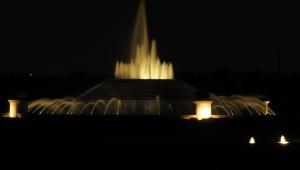
The
D70 was ideal for shooting in low light, because the images
exhibit little apparent digital noise. For the very finest
results, I used ISO 800 instead of 1600 and avoided underexposure;
the resulting 10x16" prints were excellent. (JPEG Fine
capture; ISO 800; f/4.5; Matrix metering with +0.7 exposure
compensation; AF-S 18-70mm zoom at 27mm equivalent.)
|
|
Image Quality Issues
The D70 offers two primary options for image capture: three levels of
JPEG plus raw for recording data in a proprietary (slightly compressed)
NEF file format. I generally used the full resolution JPEG Fine mode and
never experienced frustration waiting for the buffer to clear, even while
it was recording a long series of images. Hence, this mode was ideal for
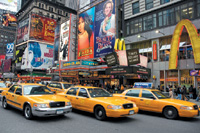
candid picture taking at the wedding and for series of taxies barreling
along Times Square in New York. In long-term use, it would also be perfect
for wildlife and action photography. Although the large Fine JPEGs are
compressed (to 3MB in a 5:1 ratio), the quality remained excellent making
them suitable for most applications.
The D70 employs a less aggressive anti-aliasing filter (to control noise
and distortion) than the D100, so it produces JPEGs that are even more
impressive. In both Fine and Normal JPEGs, artifacts are virtually invisible
at 100 percent magnification on a computer monitor. The photos appear
crisper with slightly more detail and less noticeable noise; the colored
specks are closer to monochrome. Even at ISO 1600--or during long
exposures without the Noise Reduction feature that slows processing--the
images are surprisingly clean with a very fine, tight pattern.
|
| |
 |
 |
As
these three frames--selected from a sequence of 20
images--indicate, the D70 is very fast in its continuous
framing mode and allows for taking numerous shots in a single
series. For the greatest burst of depth however, high speed--60x
or faster--CompactFlash card is necessary. (ISO 200;
full resolution JPEG Fine mode; f/4.5; SanDisk Ultra II
card; AF-S 18-70mm zoom at 27mm equivalent; image blur caused
by subject motion.)
|
|
Switching to raw capture causes the D70 to record raw, 12-bit data in
a proprietary NEF file format for the ultimate in image quality. In-camera
settings for color, white balance, exposure, sharpness, contrast etc.
are recorded, but not applied to the image. After opening a NEF file,
you can adjust some or all of these aspects, depending on the Nikon software
that you're using. Although images made in JPEG capture can also be extensively
adjusted with Photoshop or other software, the corrections are more effective
when applied before full processing and conversion to TIFF.
Evaluation: Images made in the camera's default settings--without
hue, tone or saturation overrides--exhibit accurate and vivid colors
with particularly vibrant red tones. My only complaints? The white balance
system sometimes produced images that were slightly warm and Matrix metering
tended to underexpose mid-tone scenes by a half stop. (Surprisingly, white
or other highly reflective subjects were well exposed.) For more accurate
results, use in-camera overrides or make corrections in image-editing
software, my own preferred choice for greater fine control.
Although my best JPEGs are suitable for exhibition quality 11x17"
prints, images made in raw capture are even better, exhibiting no obvious
artifacts even at 300 percent magnification. After tweaking the NEF files
and converting them to TIFFs with Nikon Capture 4 software, I increased
the file size with "Bicubic Smoother" interpolation in Photoshop
CS, applied Unsharp Mask, and made some 13x19" outputs (at 240 ppi).
My friends rated the oversized prints as "very good" or "beautiful"
and they certainly look great at the usual viewing distance of 6 ft.
The bundled PictureProject software is great as a browser and file organizer
but provides very little control over raw images and is quite slow when
you need to adjust/convert many images. After a few experiments, you may
decide to stick with JPEG capture. That would be unfortunate, because
it's worth shooting in raw capture mode when you don't need to make a
long series of images. If you appreciate the benefits, buy the optional
($99) Nikon Capture 4 software; it allows for extensive raw file manipulation
and batch processing for greater speed. A free 30-day trial sample is
included with the D70.
|
| |
Particularly
with an SB-600 or SB-800 Speedlight, the D70 provides numerous
options for advanced lighting effects. (At f/4.5 at 1/60
sec; SB-800 in wireless TTL flash; +1 flash exposure compensation;
ISO 200; AF-S 18-70mm zoom at 105mm equivalent.)
|
|
Final Evaluation
In many respects, the D70 feels and operates like a (35mm) Nikon N80,
and that is certainly a compliment. But it's even faster and offers the
additional benefits of digital imaging with a wealth of extra features.
Granted these can increase complexity, but there's no need to try all
of the options immediately. Select the appropriate ISO, Color Space, white
balance and image quality, set some exposure compensation as required,
and you'll make many great photos. Later, as your comfort level increases,
begin taking advantage of the additional capabilities, step by step, with
guidance from the owner's manual. If necessary, access the electronic
menu's Help feature while shooting, for a plain language reminder of the
purpose of any custom function.
This relatively affordable D-SLR camera would be a fine choice for a wide
range of consumers. It should certainly satisfy compact digicam users
who want greater responsiveness, versatility and image quality, but the
D70 will also entice 35mm photographers--especially those who already
own Nikon AF lenses--to the benefits of digital capture. It's one
of those cameras that will grow with its owner, expanding to meet new
needs and paying dividends for a willingness to experiment with a vast
range of user selectable features.
|
| |
When
uncompressed with Photoshop, a full resolution JPEG Fine
image expands from a 3MB file to a full 17MB. Image quality
is excellent, with high sharpness, great resolution, wide
dynamic range and rich colors (ISO 200; f/6.3; 27mm equivalent;
Hoya polarizing filter.)
|
|
A long time "eDP"
and "Shutterbug" contributor and free-lance stock photographer,
Peter K. Burian is the author of "Mastering Digital Photography
and Imaging" (Sybex, 2004) a 270 page book that provides a great
deal of practical advice on all aspects of the topic.
PROS
· Ease of basic use; many features can be accessed quickly with
analog controls
· High-speed framing rate; great burst of depth thanks to high capacity
buffer and ultra fast processor
· Images exhibit pleasing colors, high sharpness and great resolution
of fine detail; digital noise and JPEG artifacts are very well controlled
· Excellent value for tremendous versatility; pro caliber flash
features are also available with certain optional Speedlights
CONS
· The electronic menu can be daunting, with many options; some are
less than intuitive, requiring study of the owner's manual plus experimentation
· The white balance system does not always provide ideal color balance
· Some moiré (ripple or wave artifacts) appear in images
of subjects with repeating patterns
· The camera does not accept a vertical grip accessory
· Though labeled as USB 2.0, connectivity provides only USB 1.1
transfer speed
· Bundled software provides few options for raw (NEF) file adjustment
options and is slow
|
| |
The
PictureProject software can convert NEF (raw data) files
to an image format but offers only two adjustment features:
exposure compensation and a choice of several white balance
options. The optional Nikon Capture 4 software is substantially
more powerful and versatile, allowing for numerous corrections
before processing and converting a NEF file to TIFF.
|
|
Facts
· Sensor:
23.5x15.6mm CCD; 6.1Mp effective
· Lens Mount: Nikon AF; fully compatible with DX, Type G and D AF
lenses; extensive compatibility with AF Nikkor lenses (except 3D Color
Matrix and i-TTL flash); 1.5x focal length magnification factor
· Capture Formats: JPEG (8-bit) with three quality levels/sizes;
6Mp raw (NEF) format (12-bit, convertible to 16-bit) with lossless compression;
raw + JPEG Basic capture
· White Balance: Auto with 10005 pixel sensor, six manual modes
with fine-tuning, pre-set white balance and white balance bracketing available
· ISO equivalent: ISO 200-1600
· Operating Modes: Full Auto; Program with Program shift; six subject-specific
Programs; Aperture and Shutter Priority AE, Manual and Bulb
|
| |
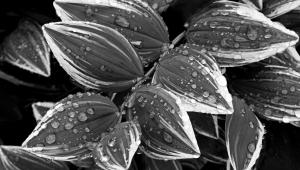
In
its default modes, the D70 produces pleasing images that
need only a bit of tweaking in Photoshop or other software.
In this case for example, I would tone down the warm color
balance, boost mid tone and shadow detail and apply a bit
of Unsharp Mask before making a print. (ISO 200; f/8 in
Landscape Program; 27mm equivalent; Hoya polarizing filter.)
|
|
· Light Metering: 3D
Color Matrix, 1005 pixel RGB sensor; center-weighted with adjustable area;
spot metering (1 percent of frame); AE Lock, Exposure Compensation and
Bracketing
· Shutter: Mechanical/CCD electronic; 30 to 1/8000 sec range; flash
sync up to 1/500 sec
· Storage: CompactFlash Type I or II (FAT-16 or 32 format) and Microdrive
· Connectivity: USB 1.1 and 2 compatible; video output
· Power: One rechargeable EN-EL3 li ion battery or three CR2 lithium
batteries; accepts optional AC adapter
· Dimensions/Weight: 5.5x4.4x3.1"; 21 oz, body only
· Street Price: $999; $1299 with AF-S 18-70mm zoom
|