Fill flash, when applied appropriately, can bring out details, enhance color, and open shadows that might not be accessible if shooting with natural light alone. Our assignment for this month’s Picture This! was to bring a touch of fill to subjects that would benefit from this “taste” of light applied to a subject or scene. In most cases readers responded by using fill to highlight natural subjects, florals, birds, and the smaller creatures that inhabit the planet. Details became vivid, colors popped, and all the delight of nature’s design came to the fore.
Caterpillar Descending
Frank Goroszko photographed at the Butterfly Pavilion at the Los Angeles Natural History Museum with a Nikon D300 and a Tamron 17-50mm lens and a +1 diopter with an exposure of f/8 at 1/125 sec at ISO 800.
© Frank Goroszko
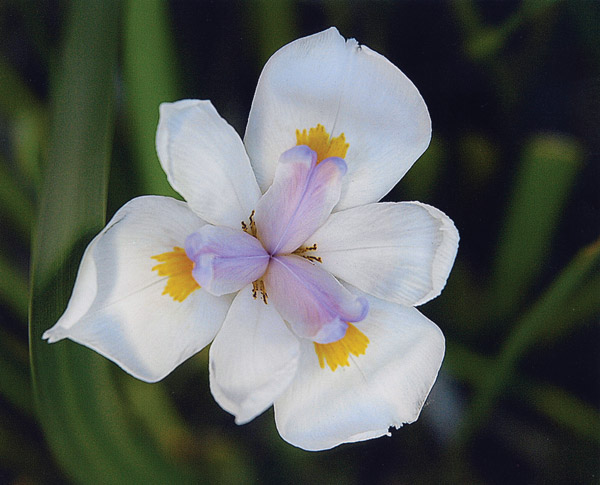
Nocturnal Bloom
Bill Allison photographed this flower with fill because, as he wrote, “this flower opens at night and closes during the day.” He shot with a Nikon D70 and a Nikkor 18-70mm lens with an exposure of f/4.5 at 1/60 sec.
© Bill Allison
Inner Light
Using diffuse side and top lighting, Raymond Fielding also diffused his fill flash to reveal the inner parts of this botanical. Exposure with a Nikon D200 and a 60mm Micro-Nikkor lens was f/32 at 6/10 sec.
© Raymond Fielding
Cluster Of Sulfur Tuft Mushrooms
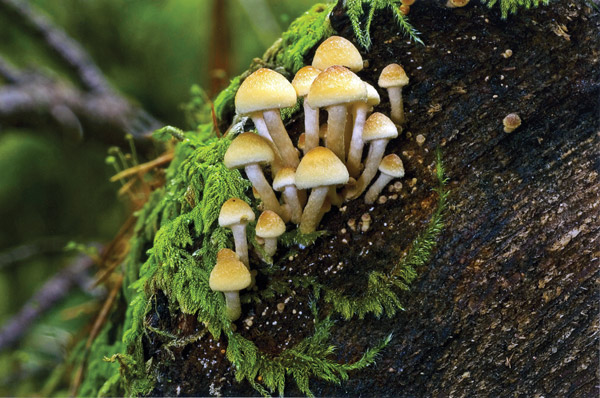
This small grouping, according to photographer Edward Matisoff, was about 2” tall, so he used his 70-180mm macro lens on a Nikon D300 to get in close. Gear included a Nikon R1C1 wireless close-up speedlight, a Sekonic L-358 meter to balance ambient and flash light, and a Manfrotto MagFiber tripod and Really Right Stuff BH-55 ball head. Exposure was f/25 at 1 second.
© Edward Matisoff
Tidal Pool
Photographed in a small tidal pool along Lake Superior in Northern Michigan, this amphibian was photographed in the light of the setting sun and a Nikon R1 close-up flash by Greg Tucker. He used a Nikon D200 and a Nikkor 70-180mm macro lens.
© Greg Tucker
Greenhouse Tableau
Fill can be used to heighten color and create rich contrast, as evidenced by this photo made in a greenhouse at Longwood Gardens, Pennsylvania, by Gerald Swede. The exposure with pop-up flash fill was f/3.5 at 1/50 sec using a Nikon D300 and a Nikkor 16-85mm VR lens.
© Gerald Swede
Delicate Droplets
Terry F. Sweatman made this shot at dawn after a light morning shower. He photographed with a Hasselblad 501c and a Carl Zeiss 80mm f/2.8 Planar T* lens, with a #3 Zeiss Proxar and 1/16 power output from a Sunpak 555 flash off-camera. Exposure on Ilford Delta 100 Pro film was f/22 at 1/250 sec.
© Terry F. Sweatman
First Snow
Julie A. Christiansen caught this glimpse of the first snow of the season with a Nikon Coolpix AW100 with a taste of fill flash to bring out all the details and light. Exposure was f/7.8 at 1/40 sec.
© Julie A. Christiansen
Rest Stop
This most curious creature stopped long enough on a flower bud to be photographed by Delon Thompson using a Canon EOS 40D and an EF 28-135mm lens and a touch of flash. Exposure was f/8 at 1/200 sec.
© Delon Thompson
Pollinator
Mike Zale wrote, “The sun’s position made the foreground too dark, so I used a small handheld flash with a long cord held high and off to the right to fill the foreground.” Exposure was with a Sony Alpha 500 and a Sony 50mm f/1.8 macro lens.
© Mike Zale
Floral Profusion
Fred Jenness photographed this spray of color and design in Venice, Florida. He used a Nikon D3000 camera and a Nikkor 18-55mm lens with fill flash on. Exposure was f/8 at 1/200 sec.
© Fred Jenness
Feeding Time
Tim Laur wrote, “This house wren mother selected an outdoor wreath (as a nest) on a neighbor’s porch. Due to shadows, fill flash was needed for details.” Exposure with a Nikon D300, a Nikkor 16-85mm lens, and a Nikon SB-600 flash was f/20 and 1/60 sec at ISO 640.
© Tim Laur
Graceful Leaves
Steven Richardson used a Sigma EF-500 DG Super Flash close up to capture this pattern of color and design by shooting from beneath this philodendron plant. Exposure with a Canon EOS 40D and a Sigma 50mm f/2.8 DG macro lens was f/22 at 1/30 sec.
© Steven Richardson
Spider Web
Using remote flash to add translucency and drama, N. Ballini made this photo with a Canon EOS 40D and a Sigma 180mm macro lens with a Sigma 2x tele-converter. Exposure was f/13 at 1/160 sec at ISO 800.
© N. Ballini
Texture And Color
Sometimes fill can be used to isolate a subject from the background, allowing the viewer to concentrate solely on the design and complexity of a single bloom. Linda Hauff made this photo using a Canon EOS Elan 7 and a Sigma 105mm macro lens on Fujichrome Velvia 100 film.
© Linda Hauff
Picture This! – Our Next Assignment
Silhouette
When contrast is high you can put away the camera or do the best you can with the lighting conditions at hand, or you can start to exploit what might otherwise be detrimental conditions and start looking for silhouettes. Winter light is ideal for this, what with the low angle of the sun in the sky, but anytime is fine when the sun is close to the horizon, as this photo made in late summer shows. Just read the highlight and let the shadows fall where they may. You can send in shots of nature, cityscapes, even portraits. This photo was made using the spot metering mode on a Nikon 1 series camera (J1) with an exposure of f/5.6 at 1/500 sec.

© George Schaub
Please Read This
It is important that you read and follow these guidelines. We need to follow
this procedure because of the large volume of images we receive. If you have
any questions, please e-mail us at: editorial@shutterbug.com.
1) Images sent to us cannot be returned. You retain complete
copyright over the images, but do grant us permission to print your image(s)
in the magazine and on our website, www.shutterbug.com.
2) Because images are not returned please send a quality print
or duplicate transparency. We will not accept or view images on CD, ZIP, or
any other electronic media.
3) Images will be selected on the basis of content and technical
quality. Please mark your outer envelope with the topic of the month (for example,
“Wide View”).
4) Enclose a short caption with the image stating camera, lens,
film and exposure, plus location. If you are submitting an image with a recognizable
person we must have a model release or signed permission from that person to
reproduce their image in the magazine and on the website.
5) Please submit no more than three photos for consideration
(4x6 up to 81/2x11).
Send your image and information to:
Picture This! Shutterbug Magazine,
1415 Chaffee Dr., Suite #10, Titusville, FL 32780.
Deadline for submission: April 15, 2012.
Images will appear in our
July 2012 issue.
Our next topic: City At Night
Deadline: May 15, 2012
Publication Date: August, 2012
Please note: We receive hundreds of submissions
for Picture This! each month and want to be sure we properly identify each image
we publish. Please be sure to attach your name and image information to the
back of each submission.
Want to see images selected for past Picture This! assignments?
Go to www.shutterbug.com and click on Picture This! in the “More Articles…”
box on the homepage.