Edited by George Schaub

Sort By: Post Date | Title | Publish Date
Edited by George Schaub  |  Jul 27, 2012

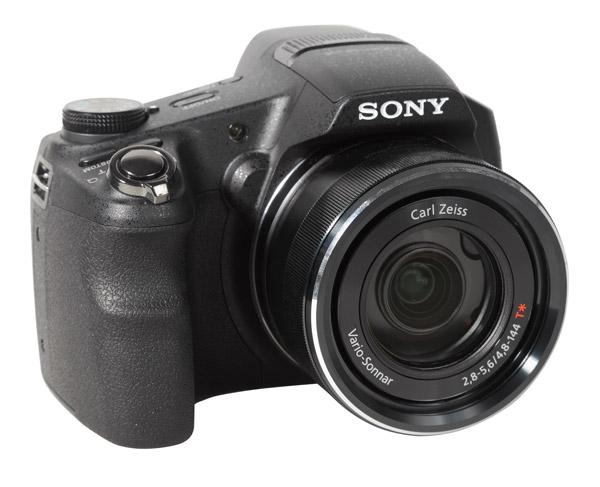
The Sony HX200V is a compact bridge camera with an SLR-like design. It offers an extreme zoom lens that is able to cover wide angle shots with a focal length of 27 mm and tele photos with an extreme tele of 810mm (35 mm film equivalent). The camera offers an integrated image stabilizer (Sony’s “Steady Shot”) to allow shooting with this extreme zoom range. This stabilizer works fine, but can’t really help if you are using the digital zoom function, which allows a 60x zoom, an equivalent of 1620mm.

Edited by George Schaub  |  Jul 30, 2013  |  First Published: Jun 01, 2013

The NEX-6 offers an APS-C-sized CMOS sensor with 16MP resolution, the Sony NEX E-mount system, a large swivel screen on the back, a high-resolution electronic viewfinder, and a Wi-Fi module for wireless data transfer or remote control. This very small system camera uses a large mode dial on the top to set up exposure modes directly instead of using the menu on the screen (unlike other NEX cameras). Directly below this mode dial there is an additional dial to change image parameters. The photographer can use this second dial and the third dial (which encircles the cursor field) to change aperture and shutter speed settings directly, which makes it as comfortable to operate as an SLR system.

Edited by George Schaub  |  May 25, 2012  |  First Published: Apr 01, 2012

The Sony NEX-7 is a compact camera with an E-mount system and an extremely high resolution (24MP). The metal body is very robust and sports a stylish retro design, which offers new features like two additional setup dials to change image parameters. These setup dials, located on the camera back and accessed using the right-hand thumb, are integrated seamlessly into the body and nearly invisible when looking at the camera from the top.

Edited by George Schaub  |  Dec 11, 2014

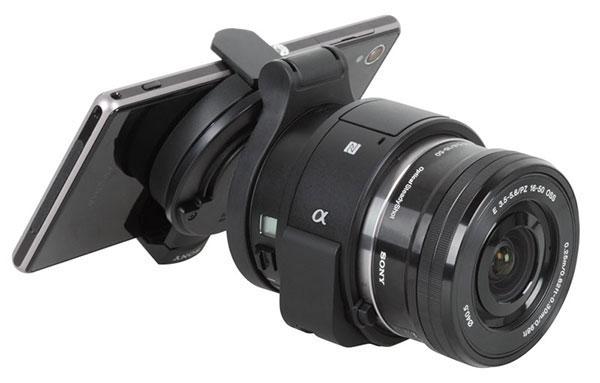
In 2013, Sony introduced two extraordinary cameras – the QX10 and the QX100. Both were based on compact cameras (WX100 and RX100 II), but didn't have “camera bodies” and LCD screens. Instead, they consisted of a lens, image sensor, image processor and a storage media system and both needed either a smartphone or tablet computer to serve as the “external camera.” The newest in the QX line is the QX1. The main camera concept is similar to the 2013 models, but the QX1 offers a large APS-C sensor with 20MP resolution and an E mount for interchangeable lenses.

Edited by George Schaub  |  Oct 08, 2013  |  First Published: Sep 01, 2013
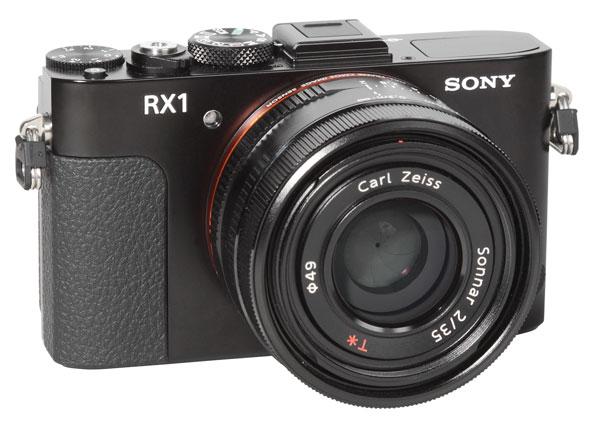
The RX1 is the first time Sony has combined a compact camera system with a fixed lens system that includes a full-frame sensor that’s nearly the size of classic 35mm film material (35.8x23.9mm). The basic camera concept combines elements of digital compact cameras with features of classic viewfinder cameras, but leaves out an optical or electronic viewfinder. In its stead Sony offers an LCD screen on the back, similar to what you’d find in an entry-level compact camera. The screen is very large (3”) and offers a very high resolution (1.28 million RGB dots). The resulting image preview and the representation of the menu structure is crisp and clear. Sony does offer an optional optical viewfinder, which is mounted on the hot shoe. Just like the camera itself, it is quite expensive. Most users will also be surprised by the battery recharger system of the RX1. It’s equipped with a USB recharger and the user is forced to recharge the battery in the camera. An external recharger and additional batteries are offered as an option.

Edited by George Schaub  |  Dec 02, 2016

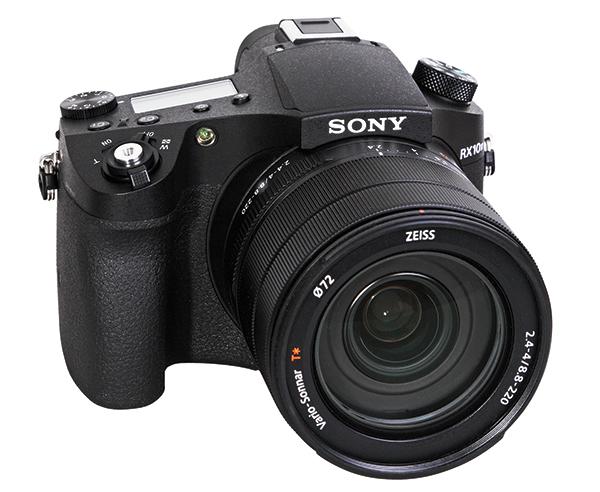
In 2015, Sony presented their second version of a high-end compact camera with a one-inch-type sensor and an 8.3x zoom that offered a lot of professional functions. This year the company announced an equivalent camera, but with an ultra-zoom lens. The new Sony RX10 III uses a one-inch-type sensor (13.2x8.8mm) with 20MP resolution. The large integral lens has a focal length of 24-600mm (35mm film equivalent). The new camera has an SLR-style body, but uses an electronic viewfinder with 2.36 million RGB dots. An LCD on the back with 1.3 million RGB dots can be flipped up- and downward.

Edited by George Schaub  |  Mar 22, 2016

The Sony RX1R II is a high-end compact camera with an integral lens that features a full-frame sensor with a very high resolution of 42MP, comparable in some ways to a classic rangefinder camera or the Leica Q system. The original Sony RX1 was one of the first cameras that offered a full-frame sensor in a compact camera and was sold in two versions: as a “standard” that used a low-pass (anti-aliasing) filter and, as the RX1R, one that was built without a low-pass filter.

Edited by George Schaub  |  Aug 31, 2017

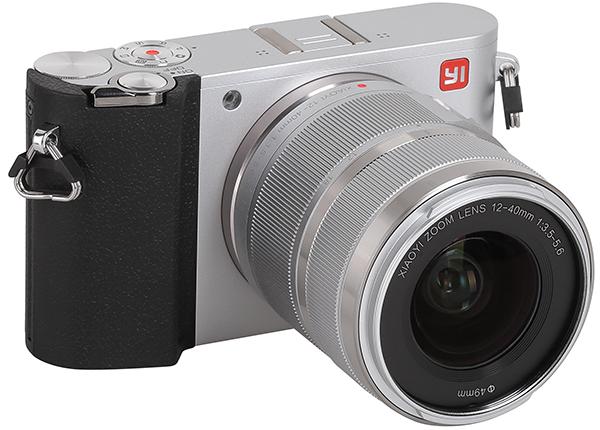
The Yi M1 is a very compact camera that offers an interchangeable lens system and is based on Micro Four Thirds sensor technology. It offers a resolution of 20MP and is able to record 4K video.

Pages

X