Jack Neubart

Sort By: Post Date | Title | Publish Date
Jack Neubart  |  Mar 01, 2004

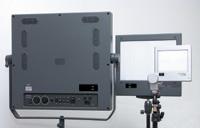
It is rare that I have so much fun using studio strobes. But such was the case with the Interfit cyberFLASH 300 ($449.99) and digitFLASH 1000 ($899.00) lights from Paterson Photographic, rated respectively at 300 and 1000 ws. And the battery-driven eFLASH...

Jack Neubart  |  Oct 01, 2007

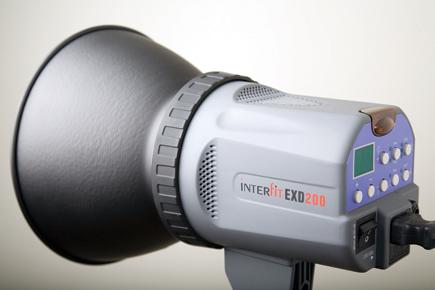
I 'll admit to it--ever since I was first introduced to the Interfit flat panel strobes a few short years back, I've become enamored of this company's products. And I still use those lights. Every year since, Interfit would introduce new lighting gear, but these newer monolights were either too big or too basic for my needs. Then along came the EXD200.

Jack Neubart  |  Dec 01, 2008

A monolight makes entering the world of studio flash photography as painless as possible. Before long you’ll find that this studio strobe will be as easy to use as your shoe-mount flash (perhaps easier) and provide undreamt of creative possibilities. Some monolights make the transition much easier. Enter the digital Interfit Stellar XD.


The Stellar XD is a...

Jack Neubart  |  Apr 25, 2018

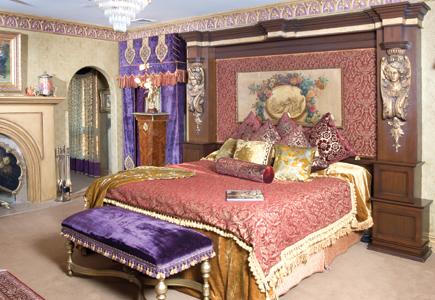
The word boudoir comes from late 18th century French, meaning “sulking place.” To the eye, and in the mind, of boudoir photographer Jen Rozenbaum, it is anything but.

Jack Neubart  |  Feb 21, 2018

We can all appreciate the beauty and mystery of a forest enshrouded by mist in the early dawn. But few of us manage to capture the haunting quality of the scene.

Jack Neubart  |  Aug 06, 2013  |  First Published: Jul 01, 2013

There are a number of new lenses, including those for “full-frame,” Micro Four Thirds, and “mirrorless” compact system cameras debuting this year, listed in alphabetical order. Here’s a sampler, with a sprinkling of filters thrown in for good measure. We’ve shown prices when available at press time—if not, check the websites of the companies for updates.

Jack Neubart  |  May 01, 2008

In a career spanning 40 years, Jeff Smith's work as an industrial and corporate photographer is well-known to many. Not too long ago we'd find him going to a job site with literally almost a half-ton of lighting gear, along with a Mamiya RZ67 and heavy lenses, not to mention countless packs of film and Polaroids. Over the years the market has shifted, technology has...

Jack Neubart  |  Aug 24, 2012  |  First Published: Jul 01, 2012
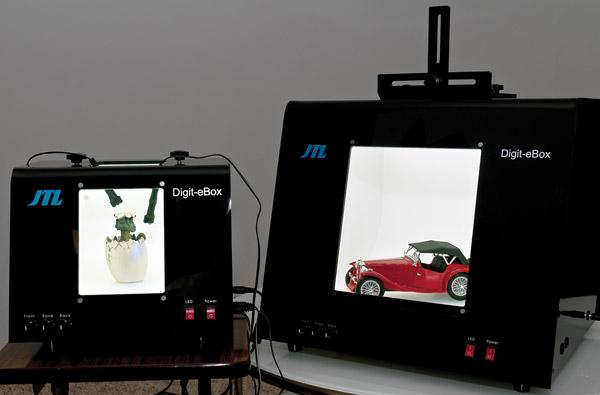
You have lots of stuff ready for sale or that needs to be catalogued, such as jewelry, watches, pottery, tableware, glassware, figurines, coins, or maybe even an old camera. So how do you photograph these items quickly and affordably, while making them look their best?


For starters, we often need soft, largely even, and, for the most part, shadowless illumination to bring out all the salient features in the item. While a light tent or other diffusion enclosure can be used, getting lighting ratios just right can prove time-consuming. Using household lighting is often unsatisfactory if you want to make the item sparkle so that it beats out any competitive offerings online, and especially if you want the pictures to reflect an air of professionalism. Besides, color balance is often an issue, made even more difficult when available fluorescent lighting is used. And if you use flash, you’ll need more than one strobe, which becomes a costly and often time-consuming proposition.

Jack Neubart  |  Jan 01, 2010

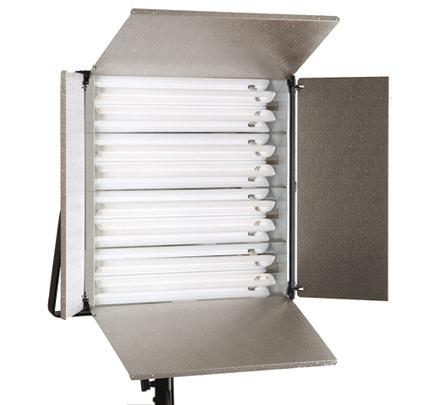
New fluorescent and LED “cool” lights are on the scene, making serious headway into the realm of digital photography. Cool lights not only save energy, but they may be better suited in a variety of situations.

Jack Neubart  |  Apr 01, 2008

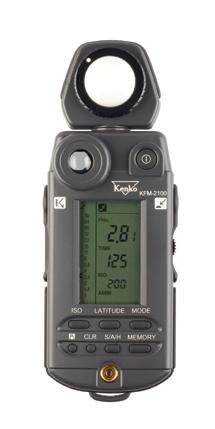
The digital camera in your hands provides you with loads of technology. It allows you to bracket automatically in a series of three or even five exposures, depending on model and user settings. But given the limited space on a memory card (notably when shooting raw at high pixel counts), the time spent to shoot all those frames, the limited buffer memory that you might fill up in...

Pages

X