Newsletter
Sort By: Post Date | Title | Publish Date
Newsletter
Jan 29, 2008 0 comments

Commentary

by George Schaub

A Look Ahead in Shutterbug

Each month we do our best to bring you a wide variety of articles and test reports
on the latest gear, technology and creative techniques. I thought I'd
take this space to let you in on what's coming in the months head in the
magazine.Incl...

Newsletter
Jim Zuckerman Sep 14, 2011 2 comments
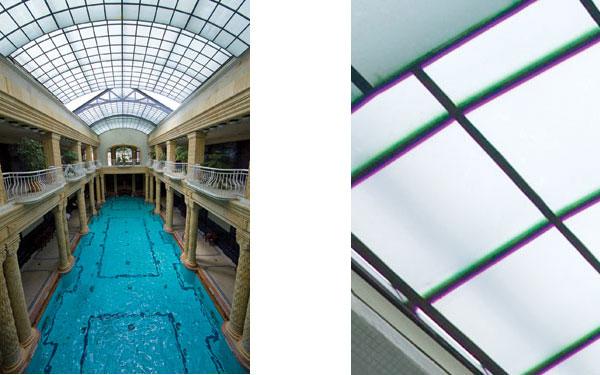
The concept of complementary colors refers to three pairs of colors that artists agree look good together and complement each other. They are based on the color wheel that arranges colors in such a way that the colors opposite each other represent the three pairs. They are red and cyan, green and magenta, and blue and yellow. This doesn’t mean that other colors don’t work together very well, but it suggests that if you use complementary color themes in your work, the images will be visually compelling.
Newsletter
Jim Zuckerman Apr 26, 2011 1 comments

I was privileged to be able to photograph a champion Gypsy Vanner horse, Romeo, with a beautiful model in period costume. I chose late afternoon about an hour before sunset to take advantage of the spectacular backlighting on the blond mane, the tail, and the feathering around the feet. For this particular photo session, I wasn’t able to shoot Romeo in an open field, and the corral fence behind him (#1) bothered me at the time but there were no other options. I knew I wanted to separate my subjects from the background at a later point in time during post-processing, but what makes this breed of horse so beautiful—the long, flowing hair—is a nightmare to deal with in composite work.

Newsletter
Ron Leach Jun 26, 2007 0 comments

Consumer Habits

By Ron Leach

One of the best ways to gauge near-term trends in the photo industry is to
take a look at what types of cameras are being purchased and what methods photographers
use to output their images. We just received an interesting report from the
Photo Marketing Association (PMA) that provides someup...

Newsletter
Dec 29, 2009 0 comments

Make Your Computer Ready For Digital Photography

Bypass The “Default Demons”

by David B. Brooks

If you have recently purchased a new computer, whether a PC with Windows or an Apple Mac, is it really ready for use as a digital darkroom, to support opening, processing and editing or printing digital photographs?

Newsletter
Shutterbug Staff Jul 26, 2005 0 comments

Corel Corporation has kicked off the "Summer of Painter" with two announcements
regarding Corel Painter IX. The Corel Painter IX 9.1 update is now available as
a free download for all Painter IX customers. The update provides customers with
new features and enhancements including:


Dual Monitor Support for Windows Customers running Windows 2000 and Windows XP
can now also experience the same level of dual monitor support enjoyed by Mac
OS X customers. Palettes, toolbars, and the toolbox can now be moved outside the
application window and dialog boxes appear on the same monitor as the active canvas.


New Art Pen Brushes Following the introduction of the Corel Painter IX Art Pen
Brush Pack this spring, Corel has introduced five additional brushes to take advantage
of the powerful realism and control of the Wacom 6D Art Pen. Customers who download
the 9.1 update will receive 10 brushes in total, which include the five brushes
previously introduced in the Art Pen Brush Pack.


Enhanced Dab Type Support for 'Rotation' Expression In addition to adding new
brushes to take advantage of the Wacom 6D Art Pen, Corel Painter IX 9.1 offers
rotation expression with the following Dab types: Circular, Captured Dab, Artists'
Oils, Camel Hair, Flat, Liquid Ink Camel Hair, Liquid Ink Flat, Watercolor Camel
Hair, Watercolor Flat, Palette Knife, Liquid Ink Palette Knife, and Watercolor
Palette Knife.


Enhanced Support for Mac OS X Tiger Corel Painter IX 9.1 now provides even better
overall performance when running on Tiger. This enhancement complements the Corel
Painter IX Spotlight plugin introduced earlier this spring that enables customers
to take full advantage of Tiger's advanced searching capabilities with their Painter
files.


To download the Corel Painter IX 9.1 update and to access a full list of included
enhancements, please visit www.corel.com/painterix/91update.


Corel has also introduced the Corel Painter Open Upgrade Program for customers
in North America and the United Kingdom. Until August 31, 2005, the Corel Painter
IX upgrade policy has been broadened to include any graphics or imaging software
package from the following companies: Adobe, Macromedia, ACD Systems, Corel (including
Corel Painter Classic, Painter Essentials, and any previous version of Painter),
Microsoft, and Apple. For a limited time, Corel Painter IX is available through
Corel and participating resellers at the upgrade suggested retail price of $229
a savings of $200 off the full suggested retail price of $429. Resellers may sell
for less. For more details, please visit www.corel.com/painter/openupgrade.
...

Newsletter
Howard Millard May 10, 2005 0 comments

Want to take one of your photos into the future? In a few steps, you can add
a cutting edge high tech look to your images with the Mosaic filter in Adobe
Photoshop or Elements. Whether you want to add this futuristic dynamism and
drama to a portrait or an object, simply follow the steps outlined here. I've
chosen to add it to a profile portrait of a young woman, but the technique can
be equally effective with objects such as a cell phone or even a shot of your
digital camera. The steps shown here are those I used in Photoshop CS, but Elements
has the same filter, as may some other image editors, perhaps with a different
name.

...

Newsletter
Nov 25, 2008 0 comments

 Create Your Own Shutterbug Cover

by Ron Leach

Have your ever pictured one of your favorite photographs  on the cover of Shutterbug Magazine? Our new MyOwnCover program is an opportunity for our readers to do just that! You simply upload one of your images into our special template template, select some textto...

Newsletter
Dec 29, 2009 0 comments

Crop & Frame For Impact

Find The Shot Within The Shot

by Jack Neubart

The moment you use the camera’s viewfinder to look at a subject, you are framing that subject. In essence, you are isolating that subject from the larger world surrounding it. And you are bringing the viewer into the scene you’ve defined...

Newsletter
George Schaub Jan 30, 2007 0 comments

CS 3 Beta..Black and White Improvements and Changes

by George Schaub

I have always enjoyed black and white printing, and have used the tools in
various versions of Photoshop to go from color to black and white. Now, with
CS3 (beta) there are even more tools to work with, some of which are improvements
or at leastrefineme...

Newsletter
Chuck Gloman Mar 15, 2012 0 comments
When shooting portraits, just setting the color balance on Automatic or one of the Temperature “modes” is not the most efficient way of capturing natural skins tones. Instead, take a manual white balance reading of your subject in the environment and then make adjustments from there.

With all of the portraits I shoot, there are a few constants: low ISO (200–400), mid range f/stop for more lens clarity (f/5.6–f/9), telephoto lens for narrow depth of field (70–120mm) and the sharpest part of the image being the subjects’s eyes. The last “given” when I shoot is to always capture the image in Raw—knowing I can easily manipulate it in editing if needed.

Newsletter
Jack Warren Apr 12, 2005 0 comments

14 tracks and looking for more, the International Speedway Cooperation (ISC)
has an ace up their sleeve when it comes to photography. Director of photography
Mike Meadows has been their primary go to guy for the past six years when the
shot had to be just right.

...

Newsletter
George Schaub Jan 04, 2005 0 comments

High scene contrast always creates difficulties for photographers, whether
shooting film or digital. The difficulty stems from the difference between the
ways the film or sensor "sees" and how the human eye sees. Our eyes
are adaptive, and can resolve large variations in brightness by the way it scans
throughout the scene and the amazing reflex of automatically restricting and
dilating the pupil to adjust to bright and dark areas before us. While light
metering systems in cameras are impressive in the way they can read light, the
fact remains that at the moment of exposure the lens on a camera records a scene
at one fixed aperture, or opening. In most situations this is no problem, as
the meter averages light values and the bright and dark areas are distributed
through the recording medium properly. But high contrast presents a problem.

A
better solution is to use the --1 contrast setting. This
allows for smoother tonal gradations and addresses the need to
control the divergent light values in this backlit scene.

All Photos © George Schaub, All Rights Reserved

...

Newsletter
Jim Zuckerman Jan 22, 2013 0 comments
It is disappointing when you travel somewhere hoping for beautiful weather, and instead of sunrise and sunset lighting, beautiful cloud formations, and comfortable temperatures, you face a rainstorm, a dull sky, or even a blizzard. While the pictures that you had in mind may not be possible, there are always great photographs that can be taken. It’s just a matter of expanding your thinking.
Newsletter
Staff Nov 18, 2012 Published: Dec 01, 2012 0 comments
On The Cover
In this issue we present lab and field tests on a variety of digital cameras, including the Nikon D800, Pentax K-01, Sony A57 SLT, Olympus OM-D, and Canon Rebel T4i. We also have studio tests of two light modifiers, plus a fascinating look at some user collectible panoramic cameras. And, be sure to read this month’s Business Trends feature on marketing your images!