


- REVIEWS
Camera Reviews 
More Reviews Mobile Reviews Photography Reviews - GALLERIES
- VIDEOS
- BUYER'S GUIDES

Sigma’s APO 70-200mm f/2.8 EX DG Macro HSM
The lens is what we are currently calling a "dual-platform" optic, offering full coverage for 35mm cameras and full-frame D-SLRs, and of course whatever multiplication factor your sensor imposes on the focal length in your D-SLR. Included is an HSM (motor) which in all cases was silent and swift throughout our tests. The quality of the build is both internal and external. Inside are two extra low dispersion and two special low dispersion glass elements, of which there are 18 in 15 groups, which contribute to reduction of chromatic aberration. There's also enhanced multi-coating that reduces ghost and flare, an important matter in digital imaging.
 |
|
|
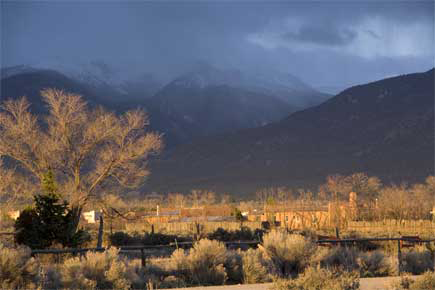
The lens was tested in all manner of light with and without a tripod mount (of which there is a collar on the lens itself) at various apertures and shutter speeds. We found that it is more than a serviceable companion for those who enjoy shooting in the tele-zoom range. We shot with a full-frame Canon EOS 5D, but could have also used it with ease on our other camera body on the trip, a Canon EOS 30D. That's one of the real attractions of the lens, the ability to switch from full frame to APS-size sensor, and carry one lens for both.
 |
|
 |
|
|
While there certainly are cheaper tele-zoom lenses in this range, few offer
this class of glass, speed, and build. We were very satisfied with sharpness
at all focal lengths, and while camera shake is always an issue at the longer
settings this is hardly the fault of the lens, but with shooting technique.
Used on a full-frame 35mm SLR or D-SLR the lens yields a comfortable range for
most travel and some sports photography. Used with a smaller sensor D-SLR you
might get up to 320mm on the long end. In either case the contrast, sharpness,
and lack of flare and color "glitches" made this a most estimable
travel companion.
For more information, contact Sigma Corporation of America, 15 Fleetwood Ct.,
Ronkonkoma, NY 11779; (800) 896-6858; www.sigma-photo.com.
 |
|
|
Equipment Used
Our tests were done with a Canon EOS 5D loaded with a new SanDisk 16GB Extreme
III CompactFlash card, the highest capacity card on which we have ever recorded
images. The card worked quickly and flawlessly, and even with the 36MB plus
files for each shot (we shot raw + small JPEG) we always felt that we had a
day's shooting ahead of us even without downloading the card. To aid in
that process we used a SanDisk Extreme III USB 2.0 Card Reader, which did the
job at about 1GB a minute (!) by our unofficial estimates into a MacBook Pro
laptop.
| ||
|
||
- Log in or register to post comments























 FEATURED VIDEO



Get the Latest Photo Tips, News & Reviews from Shutterbug!






| Camera Reviews Other Reviews | |
Mobile Reviews Photography Reviews Columns | |
News | |
Features | |
How-To | |
Resources |
 © 2024 Shutterbug
AVTech Media Americas Inc., USA
All rights reserved