


- REVIEWS
Camera Reviews 
More Reviews Mobile Reviews Photography Reviews - GALLERIES
- VIDEOS
- BUYER'S GUIDES

Delkin’s SensorScope for Cleaning Your Digital SLR Image Sensor
 The
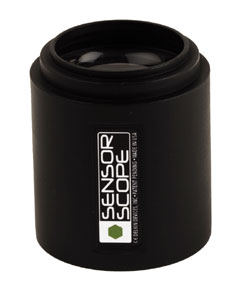
SensorScope looks like a camera lens; however, it allows you to look back into
your camera to inspect your sensor. The SensorScope is easily portable and provides
a 5x magnification lens and 4 ultra bright LED lights, which are focused to completely
illuminate the field of inspection. Although specifically designed for Canon and
Nikon DSLRs, the SensorScope may be used on any manufacturer's DSLR.
The
SensorScope looks like a camera lens; however, it allows you to look back into
your camera to inspect your sensor. The SensorScope is easily portable and provides
a 5x magnification lens and 4 ultra bright LED lights, which are focused to completely
illuminate the field of inspection. Although specifically designed for Canon and
Nikon DSLRs, the SensorScope may be used on any manufacturer's DSLR. The SensorScope system includes the new DigitalDuster cleaning kit with the SensorVac, SensorWand£ and SensorSolution.
Four different types of contaminants can show up on your DSLR camera sensor. These vary by their chemical components. The most common types of debris that show up are dry, and look like dust. This "dust" can be made up of one of four materials:
· Silica/Quartz: these hard particles such as rock or sand can easily cause scratches
· Metallic: hard particles such as metal shavings from the manufacturing of the camera
· Fiber: synthetic materials such as nylon
· Organic: pollen, skin cells, and similar material
Tougher spots may be "wet" rather than "dry". Examples
include rain drops, camera lubricant, skin oils, and saliva. Surprisingly, dust
and debris can originate from within the camera as well. When a new camera is
used for the first time, the internal mechanism movement itself may stir up
small pieces of metal, plastic, dust, fabric, and camera lubricant, which are
then drawn to the sensor.
The DigitalDuster kit handles all types of dry and wet contaminants. The SensorVac
is a battery or USB powered portable vacuum, which uses suction to draw out
abrasive particles and dust. No more canned air that just blows debris around!
The SensorVac's tip is made of ultra-fine, non-abrasive and static-free
brush filaments. These brush filaments protect against damaging the sensor screen
in case of accidental contact.
Actual cleaning contact is done with the unique SensorWand. Each end of the
flexible SensorWand has a soft lint-free and non-abrasive fabric head. One end
is used first for wet cleaning, and the other for the dry cleanup. This ensures
the photographer can complete a cleaning with just one wand, leaving no moisture
behind. A novel design feature provides additional protection against over-saturation.
Each wand head is wicked with small slots to pull excess liquid away from the
wand tip.
SensorSolution is the exclusive chemical cleaning solution included in the DigitalDuster
kit for wet cleaning. It is alcohol free and safe for check-in air travel and
air shipment. SensorSolution dries quickly without the use of methanol or any
other harsh chemicals, and effectively breaks the bond that holds many of the
tougher contaminants onto the sensor surface. With two drops of SensorSolution
and a few swipes of a SensorWand, dried raindrops, pollen, chamber lubricant,
dust, and anything else that finds its way into your sensor chamber can be easily,
effectively, and safely wiped away.
Delkin Devices begins shipping the SensorScope System and DigitalDuster kit
in early January. More information is available on Delkin's website: www.delkin.com.
Three models are available:
DigitalDuster Refill Kit - $49.99 MSRP
· 15 SensorWands
· 1 SensorSolution
· 1 cleaning guide
DigitalDuster Kit - $89.99 MSRP
· 1 SensorVac
· 12 SensorWands
· 1 SensorSolution
· 1 cleaning guide
· 1 DigitalDuster carrying case
SensorScope System - $189.99 MSRP
· 1 SensorScope
· 1 SensorVac
· 12 SensorWands
· 1 SensorSolution
· 1 cleaning guide
· 1 SensorScope carrying case
http://www.delkin.com/
| ||
|
||
















 FEATURED VIDEO


Get the Latest Photo Tips, News & Reviews from Shutterbug!






| Camera Reviews Other Reviews | |
Mobile Reviews Photography Reviews Columns | |
News | |
Features | |
How-To | |
Resources |
 © 2026 Shutterbug
AVTech Media Americas Inc., USA
All rights reserved