


- REVIEWS
Camera Reviews 
More Reviews Mobile Reviews Photography Reviews - GALLERIES
- VIDEOS
- BUYER'S GUIDES
Lou Jones; The World Of Jazz
Photos © 2004, Lou Jones, All Rights Reserved
Having the good fortune to become involved wholly with an inspiration or an
idea is pretty awesome, and as long as I have known Boston photographer Lou
Jones he has been "involved." I don't think he has ever missed
an Olympics event or turned away from his deep-rooted convictions about the
death penalty in this country, producing a moving documentary in his book Final
Exposure: Portraits From Death Row.
Then there has been music and dance, above all, the era of jazz and the outstanding
musicians who lent magic to our world in the 1950s and '60s. These are
not simply "themes" or "material," they are Jones'
world. Last year I was privileged to see his work in a setting that befit the
dignity of his subjects and hear him speak of the jazz musicians he has photographed
over the years.
 |
|
|
The setting was The Huntington House Museum, a magnificent restored mansion
set on Windsor Green in the heart of Windsor, Connecticut. (The kind of place
one would expect to see an exhibition of photographs by Julia Margaret Cameron.)
It was a beautiful space to show these musicians during their quiet, private,
and sometimes somber moments.
It is always interesting to me why a photographer chooses a particular theme
that spans almost an entire career. During his lecture someone asked Jones what
held him so closely to the theme of jazz. Being the inveterate storyteller he
is, Jones told his tale--how he wanted to carve out a niche and how he
loved music. It was the time when rock-and-roll musicians were riding high and
Jones wanted to shoot The Who and the Rolling Stones. "And," he
added, "I liked the good life of the times--you know--sex, love,
and rock-and-roll!"
 |
|
|
One day he realized that in many cases he didn't know what the performers looked like. "I would see four people playing horns up there and I didn't know who I paid my money to come to see," he says. "I needed to photograph them, to give them a face." Jones followed them, setting up times, often backstage or at rehearsals, stalking them until they would finally say yes. It was the beginning of an archival series remembering jazz musicians of the era.
Did the art directors flip out over the pictures? "Not even a wiggle out of them," Jones says. Did the magazines grab the images for editorial? "I couldn't give them away!" So Jones began supporting himself photographing for textbooks, a lucrative market in Boston at the time. But he continued to try and make his mark in the world of jazz, finally realizing that annual reports put food on the table, not the wail of a trombone no matter how his camera could almost make us hear it.
It was a labor of love.
Entering the exhibition area we face a 30" square silver print of Donal Fox, seated by his piano, his white scarf elegantly placed on his shoulders. It is a quiet, introspective portrait.
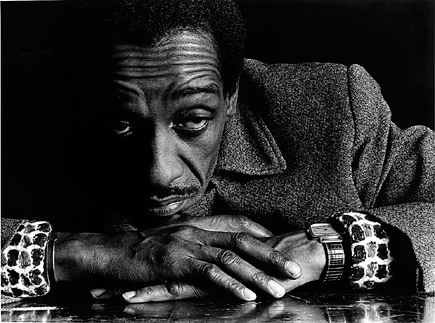
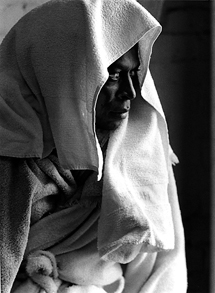
Then there's Milt Jackson, head in his hands, next to a rare image of Miles Davis, the great one swathed in towels after finishing his workout at a gym in Boston. Jones had found Davis at the gym; a fortunate fluke as someone had tipped him off that Davis was there getting in shape after his two years of semiretirement following an automobile accident.
| |||||||||
|

| ||||||||


 FEATURED VIDEO


Get the Latest Photo Tips, News & Reviews from Shutterbug!






| Camera Reviews Other Reviews | |
Mobile Reviews Photography Reviews Columns | |
News | |
Features | |
How-To | |
Resources |
 © 2026 Shutterbug
AVTech Media Americas Inc., USA
All rights reserved