


- REVIEWS
Camera Reviews 
More Reviews Mobile Reviews Photography Reviews - GALLERIES
- VIDEOS
- BUYER'S GUIDES

photokina Special Coverage; New Lenses For 35mm And Digital SLR Cameras: The D-SLR Lens Ship Comes In
 With the incredible popularity of D-SLR cameras, all manufacturers are working aggressively to expand their line of suitable lenses and we found many new models at the photokina show. As expected, most of the new products are "digital only"--designed exclusively for digital cameras with APS or Four Thirds size sensor--some are multi-platform lenses. The latter are suitable for any D-SLR or 35mm SLR with the suitable mount for greater versatility; however, they tend to be larger (and hence, heavier) because they must project a larger image circle. The more noteworthy trend though is the increasing number of lenses with mounts to suit newer D-SLRs.
Four Thirds Mount Lenses
Since the introduction of the Panasonic Lumix and Leica D-SLRs, there's greater interest in lenses employing the Four Thirds mount, previously used only by Olympus. (For information on all such lenses, visit www.four-thirds.org/en/.) Sigma was already making seven of its lenses with the pertinent mount and has increased that series with four additional models. The 18-50mm f/2.8 EX DC Macro zoom is discussed later, in the standard zooms section, since it is an entirely new product available in a broad variety of mounts. A much longer zoom but relatively compact (45 oz, 77mm filter), the APO 135-400mm f/4.5-5.6 DG lens ($590, street) features super multilayered coatings plus one aspherical element and three pieces of SLD (Special Low Dispersion) glass and rear focusing for fast AF performance. A removable tripod collar is included as a standard accessory.
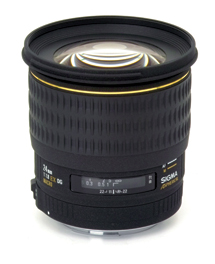
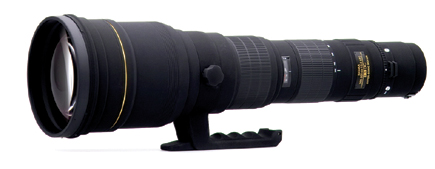
The other two Four Thirds mount Sigma products are more specialized. Boasting an incredibly wide maximum aperture, the 24mm f/1.8 EX DG Aspherical Macro (18.3 oz, 77mm filter size) will be highly suitable for low-light photography ($340, street). This should be a high-performance lens thanks to multilayered coatings, two aspherical elements, and a floating focus system said to provide high image quality at focusing distances from 18cm to infinity. One of the most impressive lenses at the photokina show, the APO 300-800mm f/5.6 EX DG HSM super telephoto zoom ($6999, street) is huge and heavy (13 lbs) as you would expect considering the wide, constant maximum aperture. This one features the latest anti-flare strategies, two ELD (Extra Low Dispersion) glass elements plus the fast/silent ultrasonic HSM focus motor that allows for full-time manual focus override. Because the focal length conversion factor is 2x with the Four Thirds mount cameras, this zoom provides the equivalent of 600-1600mm focal lengths. That's great for some sports and wildlife photography but definitely calls for a large/rigid tripod.
 |
 |
||
|
|
||
 |
|||
|
|||
Available from both Panasonic and Leica (for any Four Thirds mount camera), the Leica D Summilux 25mm f/1.4 ASPH incorporates a Panasonic Mega OIS stabilizer system said to provide a three shutter speed step advantage over non-stabilized lenses. In addition to an incredibly wide aperture, this lens features a floating focus system, an aspherical element, four pieces of low dispersion glass plus extensive use of multilayered coatings. The combination should effectively correct distortion, aberrations, light falloff, and flare for performance that "meets Leica's lofty standards." Made by Panasonic as part of a joint venture with Leica, this D Summilux lens is quite large (77mm filter size) and heavy (18.5 oz) for a 25mm lens, and it's likely to be very expensive. (Price not yet set.)
 |
|
|
Zeiss And Sony "Alpha" Lenses
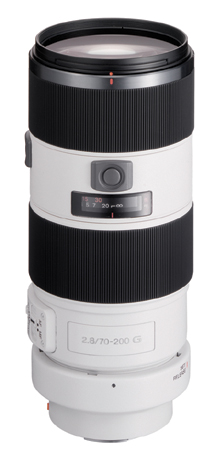
When Sony first announced their Alpha A100 camera in June 2006, the company pledged to expand its line of lenses with additional Sony G models as well as some Carl Zeiss ZA lenses in Alpha/Maxxum mount. The company has started delivering on that promise by introducing numerous G-series lenses at photokina; most seem to be re-badged and re-styled Maxxum lenses but with upgraded firmware and other Sony technology. There are far too many to mention, but the most significant in the G-series includes a multi-platform 300mm f/2.8 ED and 70-200mm f/2.8 ED, the digital-only 18-200mm f/3.5-5.6 zoom, plus a 1.4x and a 2x tele-converter.
 |
 |
||
|
|
||
 |
|||
|
|||
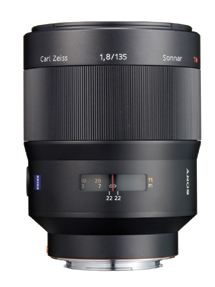
By the time you read this, the first three of the Carl Zeiss ZA (Zeiss Alpha) lenses should also be shipping; they certainly won't be inexpensive, although prices were not yet available at our press time. Full specifications had not yet been published either, but the first products will be the Planar T* 85mm f/1.4 ZA, the Sonnar T* 135mm f/1.8 ZA, and the (digital-only) Vario-Sonnar T* DT 16-80mm f/3.5-4.5 ZA zoom. These all feature the exceptional Zeiss T* multilayered coatings, rugged construction, and optical performance of the level expected with Carl Zeiss lenses. The two prime lenses are multi-platform so they are fully compatible with Maxxum 35mm SLRs as well as Sony or Maxxum digital SLRs.
 |
 |
||
|
|
||
 |
|||
|
|||
| |||||||||
|

| ||||||||
- Log in or register to post comments



























 FEATURED VIDEO



Get the Latest Photo Tips, News & Reviews from Shutterbug!






| Camera Reviews Other Reviews | |
Mobile Reviews Photography Reviews Columns | |
News | |
Features | |
How-To | |
Resources |
 © 2024 Shutterbug
AVTech Media Americas Inc., USA
All rights reserved