


- REVIEWS
Camera Reviews 
More Reviews Mobile Reviews Photography Reviews - GALLERIES
- VIDEOS
- BUYER'S GUIDES

Photographing Beautiful Skies Page 2
 |
|
|
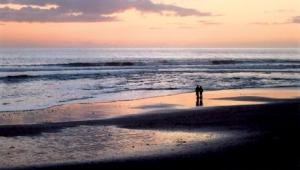
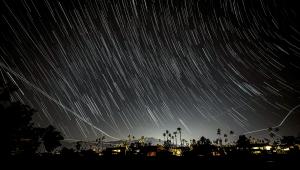
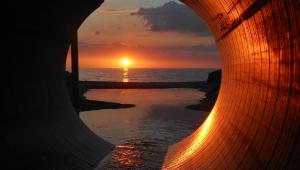
Don't put your camera away
as soon as the sun goes down. Sometimes the most colorful time occurs at twilight,
just minutes after the sun has set. This fleeting time between daylight and
total darkness is known as the "Magic Hour" by many photographers.
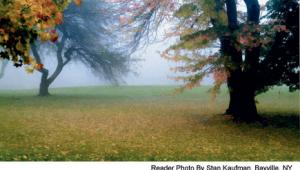
Stormy skies can provide a lot of drama in your pictures, but capturing them
on film or memory card can be challenging. The most striking photo opportunities
usually occur as the storm approaches or leaves. Sunlight breaking through dark
clouds or creating bright rim lighting around the clouds' edges is especially
beautiful, if you're fortunate enough to encounter this.
 |
|
|
To further saturate colors in the
sky, try experimenting with a polarizing filter to dramatize blue skies against
white, fluffy clouds. A fluorescent (FLD) or sunset filter can punch up colors
in a sunrise or sunset. You may not be able to attach filters to your compact
camera lens' front element, but you can hold them in front of your lens.
Try one or more of these filters, in addition to photographing the scene with
no filter at all.
Readers are encouraged to submit photos to our monthly Point & Shoot Homework
Assignment feature. Please see the table of contents for the location of the
entry coupon, which lists topics and more details.
| |||||||||
|

| ||||||||
- Log in or register to post comments





























 FEATURED VIDEO



Get the Latest Photo Tips, News & Reviews from Shutterbug!






| Camera Reviews Other Reviews | |
Mobile Reviews Photography Reviews Columns | |
News | |
Features | |
How-To | |
Resources |
 © 2024 Shutterbug
AVTech Media Americas Inc., USA
All rights reserved