


- REVIEWS
Camera Reviews 
More Reviews Mobile Reviews Photography Reviews - GALLERIES
- VIDEOS
- BUYER'S GUIDES

Long Lenses On The Cheap
Long lenses are wonderful photographic tools. Their longer-than-"normal" focal lengths magnify everything, allowing you to get "close-ups" of subjects you can't (or don't want to) approach closely. The shorter long lenses (those in the 85--120mm range, for 35mm cameras) are ideal for portraits, because they produce a good head size at a distance that produces pleasing perspective. The super-long ones (300mm and up) are the workhorses of pro wildlife and sports photographers. Unfortunately, the really long lenses can be quite expensive.
Most 35mm SLR manufacturers offer telephoto zoom lenses that actually cost much less than their single-focal length telephotos, and thus are great for the budget-minded long-lens fan. My first long lens was a 200--400mm zoom that cost 1¼3 what a 400mm fixed-focal length lens cost. The "bargain" tele zooms aren't as sharp as high-end fixed focal-length telephotos, but they'll serve you well when you're on a tight budget.
Fortunately, you don't have to acquire a horribly expensive long lens to get some nice long-lens shots. Here are a few tips.
1. Fine-Grain Lens Extender
If it's sharp and you use a fine-grain film (or have enough megapixels, with a digicam), you can crop into an image made with any lens to get a "telephoto" effect, and a bigger image of your subject. Cropping into the image after shooting produces the same effect as shooting it with a longer focal length in the first place. Of course, cropping into the image, film or digital, increases grain (or pixelation, with digital images) and reduces sharpness. But assuming the original image is very sharp (mount the camera on a tripod if you plan to use this technique, and focus carefully), and you use a very fine-grained film or a digital camera with lots of megapixels, this is a quick way to effectively at least double the focal length of any of your lenses without buying any additional gear.
 |
||
|
||
 |
||
|
2. Tele-Extender
A tele-extender (also known as a tele-converter) is a tube that mounts between camera body and lens and increases the focal length of the lens. The most popular tele-converters are the 1.4x and 2x strengths, the 1.4x increasing the focal length of the attached lens 1.4x (i.e., a 100mm lens becomes a 140mm lens), and the 2x doubling the focal length of the attached lens (a 100mm becomes a 200mm).
Besides increasing the focal length of all your lenses, a tele-converter offers the benefit of maintaining the attached lens' minimum focusing distance. If you attach a 300mm lens that focuses down to 4.9 feet to a 2x tele-converter, you get a 600mm lens that focuses down to 4.9 feet.
Of course, there are drawbacks to tele-converters, too. First, they reduce the amount of light transmitted by one stop for the 1.4x, by two stops for the 2x. Thus, a 300mm f/4 lens becomes a 420mm f/5.6 lens when attached to a 1.4x tele-converter, and a 600mm f/8 lens when attached to a 2x converter. The second drawback is a loss of image sharpness. But if you use a quality converter that was designed specifically for the lens (or lens type) in use, the loss of sharpness will be minimal.
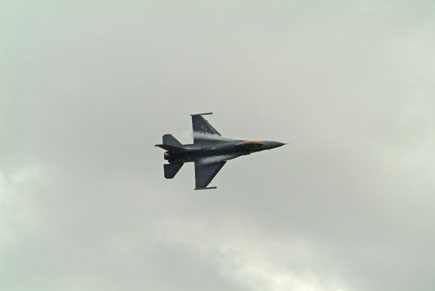
It takes a lot of practice to get the hang of using long lenses to photograph action subjects such as birds in flight. The first time you bring the camera to your eye and try to acquire the target in the finder, you'll find it very difficult. But stick with it; you will become good at it if you put in the practice.
| |||||||||
|

| ||||||||
- Log in or register to post comments



















 FEATURED VIDEO



Get the Latest Photo Tips, News & Reviews from Shutterbug!






| Camera Reviews Other Reviews | |
Mobile Reviews Photography Reviews Columns | |
News | |
Features | |
How-To | |
Resources |
 © 2024 Shutterbug
AVTech Media Americas Inc., USA
All rights reserved