Until
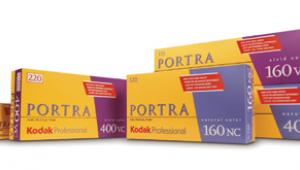
recently, all of Kodak's professional color print films were marketed
under the Portra logo, understandable because portrait and wedding photographers
make up the primary market for such products. That changed earlier this
year, when the company announced the new Ultra Color 100UC; at the same
time, Kodak re-branded Portra 400UC as Ultra Color 400UC. Very similar
in most respects--including extra high saturation--the two products
offer great consistency, producing a nearly identical look that's
important in professional applications. I was unable to determine why
Kodak dropped the Portra designation for 400UC. Perhaps portrait photographers
found that Portra 160VC and 400VC--with a less punchy but still "vivid"
color rendition--adequately met their needs for rich hues and tones.
In any event, both new films employ the same advanced technology. They
incorporate what Kodak calls Color Precision and human-eye spectral sensitivity
for vibrant but accurate colors and attractive flesh tones; advanced T-GRAIN
emulsions for fine grain even in large prints; high-performance dye couplers
for great sharpness; and "triple-coated blue" emulsions for
consistent color and skin reproduction when overexposed or underexposed.
As well, they're said to produce optimal results in not only prints,
but also in film scans, an important quality in this digital era.
|
| |
In
spite of the very high color saturation, both Ultra Color
films produce images with "clean" neutral tones
and accurate, pleasing skin tones. Consequently, they're
more useful for people pictures than some other "color
intensified" films. (Ultra Color 100; Canon EOS-3
with 18-125mm zoom at f/11; electronic flash.)
Photos © 2004, Peter K. Burian, All Rights Reserved
|
|
According to Kodak, the Ultra
Color films are particularly suitable for fashion, advertising, editorial,
commercial, travel, and nature photography. During the test period, I
used both products to shoot nature, travel, and action subjects as well
as a Vietnamese bride in traditional regalia. My test rolls were processed
and printed by a lab using a digital printer, equipment that's b9eing
adopted by most photofinishers. Other labs, employing conventional printing
systems and different brands of paper, may produce different results,
but any high-quality photofinishing should work well with these Kodak
films.
Many of my prints are beautiful, exhibiting a stunning color rendition
that should appeal to a broad range of photographers, both professionals
and hobbyists. Although we can publish only a few of the photos, this
review is based on an examination of numerous prints including a broader
variety of subject matter, plus feedback from other photographers who
viewed all of my 4x6" prints and enlargements. If the illustrations
do not seem to exactly match the written analysis of each film's
characteristics, rely on the text as the accurate representation of the
prints.
|
 |
 |
| |
Nature
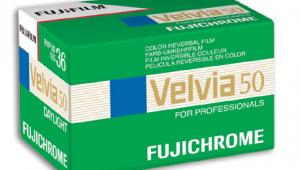
photographers who shoot slide films often use Fujichrome
Velvia or Ektachrome 100VS for their rich, vibrant color
rendition. If you prefer print film, try the Ultra Color
products with their intense but accurate rendition of most
hues and tones, "clean" whites, high sharpness,
impressive resolution, and micro-fine grain. (Ultra Color
400.)
|
|
Grain And Color Qualities
While the Kodak GOLD 100 and GOLD 400 MAX films are well-known for punchy
color rendition, the Ultra Color pro films offer advantages in color saturation,
granularity, and sharpness. In terms of grain structure, these films are
impressive and very similar: 8x12" prints appear identical. At a
normal viewing distance of 4 ft, grain is invisible in both prints; even
under close scrutiny, the pattern is incredibly smooth and tight. According
to Kodak's specs, 100UC is slightly superior, with a print grain
index number that's about 10 points lower (finer) than the index
for 400UC. The difference is minimal and most viewers are unlikely to
notice a difference even in an 11x14" print.
Prints from both films exhibit brilliant reproduction of colors, with
particularly deep, rich reds and striking yellows and greens. As with
any film, use a polarizing filter outdoors (to cut glare) for the deepest
color rendition. Although the colors are vibrant and bold, most viewers
did not consider them to be artificial or garish. There's only one
drawback: reds appear to be oversaturated; that was a problem in only
a few of my images of tulips (in those prints, some detail is lost in
the deepest reds). In spite of the "ultra" color saturation,
skin tones are pleasing and faithful to the subject as expected from emulsions
that include some portrait film technology. More importantly, gray and
white tones are accurately rendered; even difficult colors--like
some blues in the blossoms of flowers--are true to the original.
Overall, the ISO 100 and 400 prints offer very high visual appeal, appreciated
by most viewers.
|
| |
Scans
of 100UC films exhibit the familiar Ultra Color characteristics
as discussed in the text. Even under high magnification,
grain is barely visible, making this film ideal for oversized
prints from high-resolution scans. (Original image made
with Canon EOS-3 and EF 70-200mm f/4L lens at f/8; 2800dpi
scan, cropped slightly.)
|
|
In order to confirm that Ultra
Color films are optimized for scanning, I made some 2800dpi scans of well-exposed
ISO 100 and 400 negatives, using only the autoexposure and autofocus feature
of a Minolta DiMAGE Scan Elite II. The results are quite pleasing in all
respects. Scans from Ultra Color 400 are slightly grainier, but the pattern
is very tight and fine. For even better results, I made some additional
scans, setting a slightly lower contrast and brightness level in the Minolta
software. After applying Auto Levels and Unsharp Mask in Photoshop CS,
I was able to make superb 8.5x11" prints at 300dpi, using the HP
photosmart 7960, an eight-color printer that generates gorgeous outputs
especially on the HP Premium Plus Glossy photo paper. Use a scanner with
higher resolution and you should be able to make oversized prints of similar
quality with a large format printer such as the Epson Stylus Photo 2200
or Canon i9100.
|
| |
The
400UC film is more "grainy" 100UC, most noticeable
in out of focus mid-tone areas in images viewed at high
magnification or in oversized prints. However, the pattern
is very fine and tight, so it's not objectionable
and the grain does not obliterate intricate detail. (Small
portion of an image from a 2800dpi scan enlarged.)
|
|
Exposure Latitude And
Contrast
In my estimation, these films have a fairly wide exposure latitude. Very
good--though contrasty--prints can be made from negatives that
were overexposed by almost two stops. For the best results, however, do
not overexpose 400UC by more than one stop or 100UC by more than a half
stop. Although some color print films benefit from generous exposure,
for finer grain and richer colors, Ultra Color 100 film is not typical
in this respect. When it comes to underexposure, the slow film can tolerate
more than its fast counterpart: at least a full stop vs. about a half
stop without adverse effects. Negatives that are underexposed to a much
greater extent exhibit obvious grain and low contrast while shadow areas
are a bit "smoky" instead of a rich, dark black.
|
| |
In
order to determine the underexposure latitude of 400UC film,
I made a series of images at various exposure levels in
a dark cathedral. One stop of underexposure produced negatives
that made for excellent prints like this one. By two stops
under, the results were less impressive (as discussed in
the text) but few photographers using pro films are likely
to make such a serious error.
|
|
Combined with accentuated color
effects, moderately high contrast makes these films perfect in the flat
lighting of an overcast day for a snappy effect; they're also ideal
under soft illumination in studio photography. That same attribute is
less desirable on sunny days where a scene includes bright highlight areas
and dark shadow areas. In such conditions, avoid overexposure that would
exaggerate the contrast or blowout highlight detail. Use flash with nearby
subjects to fill in shadows for more even illumination, and your prints
should be very pleasing.
Sharpness And Resolution
When it comes to sharpness, the ISO 100 film excels; it reproduced my
subjects as if they were etched on the emulsion--the finest details
are very well-defined. This characteristic is useful for many subject
types, particularly scenes with a great deal of intricate detail: nature
close-ups, landscapes, architecture, groups of people, and most travel
subjects. The ISO 400 film is certainly sharp as well, and offers high
resolution, but for the ultimate in image quality, I would recommend Ultra
Color 100.
Do note however, that 100UC may be too sharp for close-up (head and shoulder)
portraits except for individuals with perfect complexions. Other subjects
will benefit from a "softer" more flattering look to disguise
any imperfections, lines, or wrinkles. Switch to 400UC for slightly lower
sharpness or use a soft focus filter when appropriate. If you digitize
your ISO 100 negatives, consider using a blurring tool or the Healing
Brush in Photoshop, for more flattering results in close-up portraits.
|
| |
In extremely harsh lighting, Kodak's Portra films
(with lower contrast) produce more pleasing results than
Ultra Color 100 or 400. Reserve these Ultra Color films
for use in softer illumination or for subjects that benefit
from the higher contrast for a more "punchy"
effect. (Ultra Color 400.)
|
|
Final Evaluation
There's another professional print film designed for high color
saturation, Agfa's Ultra 100; my review of that product ran in our
November 2003 issue (page 110) and is available in the archives at: www.shutterbug.com.
Billed as "the most color-intensive negative film," Agfa's
Ultra 100 produces an even more dramatic effect than Kodak's Ultra
Color 100 and 400, but it's different in several respects. The skin
tone rendition of the Agfa film is not quite as pleasing; it's also
more contrasty than either Kodak Ultra Color film (useful in flat light)
and exhibits more noticeable grain, visible in large prints. If you appreciate
intense hues and tones, try both brands to determine which you prefer,
in both soft and contrasty lighting, with various types of subjects.
|
| |
To take full advantage of the 100UC film's high sharpness
and resolution potential, I used an L-series Canon pro lens,
the "best" f/stop (f/11), and a tripod to prevent
any blur from camera shake. The resulting 35mm negatives
are suitable for making large prints of surprisingly high
sharpness, enhanced by snappy contrast. (Canon EOS-3 with
EF 70-200mm f/4L USM lens; Manfrotto tripod; cable release.)
|
|
Although Kodak's Ultra
Color films are "premium priced," it's worth paying
extra for these films because Kodak does not make similar products in
the more affordable consumer line. If you're a discriminating photographer,
keep several rolls handy for serious work with subjects that will benefit
from a dramatic color reproduction. To maximize the imaging potential
of either Ultra Color film, use a high-quality lens and thoughtful shooting
techniques for maximum sharpness; try to make accurate exposures; moderate
the contrast level with fill flash, a reflector, or a diffuser screen
when appropriate. Finally, patronize a lab with high standards of quality
control in processing and in print making. Keep these tips in mind and
the Kodak films will reward your professionalism with impressive pro-caliber
results.
Ultra Color films are available in 35mm format and in 120 and 220 rolls.
For additional information on these and other Kodak products, visit www.kodak.com.
A free-lancer stock photographer
and long-time "Shutterbug" and "eDigitalPhoto"
contributor, Peter K. Burian is the author of "Mastering Digital
Photography and Imaging," a highly-rated 270 page book that contains
a great deal of practical advice on all aspects of the topic.
|