| |
The
new films definitely produce rich, vivid, brilliant, and
"clean" colors as the Kodak engineers intended.
While the older E100S provides the most accurate tonal
rendition of the current Ektachromes, the "hyper-saturated"
effect will attract many photo enthusiasts and stock shooters.
(EOS-1N; EF 70-300mm f/3.5-4.5 IS zoom; 540EZ flash; Elite
Chrome 100EC.)
Photos © 1999, Michael Smith, All Rights Reserved
|
|
Although the current Ekta-chrome
Elite Chrome 100 and the E100 series films are the best emulsions Kodak
has ever produced, some photographers had been hoping for an even more
highly saturated chrome. Well, Kodak has responded with two films, intended
for those who want "hyper color saturation": the Ektachrome
E100 VS (Vivid Satura-tion) and its consumer counterpart, Elite Chrome
100EC (Extra Color). Boasting the "most vivid, saturated colors
available today in a 100 speed film, with brilliant and dramatic hues,"
they are sure to win many converts.
Do note that these two products are essentially identical, but E100
VS is a pro film, released only at its aim point: when it meets all
manufacturer's specifications. Speed, color balance, contrast,
"pushability," reciprocity characteristics, etc. are at
the optimum point, and the film should be refrigerated at 55°F until
used. Elite Chrome 100EC (like all Ektachrome consumer films) is released
before its aim point, and is intended to age in stores, camera bags,
and homes. For professional applications, E100 VS may be a better choice
at least for those who want to be certain of consistency and "ideal"
results.
|
| |
While
the "professional" E100 VS may be preferred
for commercial applications, its sibling, Elite Chrome 100EC,
is an excellent choice for travel, landscape, and nature
photography. Photo enthusiasts who want bold, brilliant
colors will be highly satisfied with that more affordable
film. (EOS-1N; EF 70-300mm f/3.5-4.5 IS zoom; Elite Chrome
100EC.)
|
|
Technical Specifics.
Before discussing my evaluations of these films, let's consider
the information provided by Kodak; the following is summarized from press
releases and technical data for both films.
· The high color saturation was accomplished with their proprietary
Color Amplifying Technology, ensuring vivid, saturated colors with a new
emulsion layer that expands the color palette and increases saturation
while maintaining a neutral gray scale. The new layer contains a unique
combination of ultra-fine, sub-microscopic silver halide crystals and
causer crystals which release chemical components during processing to
enhance color saturation.
· T-Grain technology is employed in all three color recording layers
(cyan, magenta, yellow) to deliver sharp ultra-fine detail, "an
unsurpassed level of sharpness in a 100 speed film."
|
| |
Photo
taken with Canon EOS-3 camera and Tamron 28-300mm zoom lens.
Aperture priority at f/8. (Model: Christine Cloutier.)
|
|
· The diffuse granularity
rating for the new films is RMS 11, very slightly higher than the RMS
10 for E100S and Elite Chrome 100 and still indicative of ultra-fine grain.
Kodak no longer publishes data on "Resolving Power."
· The film's magenta and cyan color records are triple-coated
with fast, mid, and slow layers to deliver very fine image structure.
· A one-stop push processing capability is claimed for E100 VS but
this is not mentioned in the information provided on Elite Chrome 100EC.
· No compensation for reciprocity failure is required for exposures
from 1/10,000 sec to 10 sec with E100 VS. Such information is not provided
for Elite Chrome 100EC.
|
| |
This
photo was taken with a Contax G2 camera and 35mm Zeiss lens.
Metered with a Sekonic L-508 in incident mode. The camera
was set for auto bracketing in 1/2 step increments, and
this photo is from the 1/2 step over series. (Model: Karie
Dietz.)
|
|
· Kodak recommends Ektachrome
E100 VS Professional for "nature, scenics, wildlife, food, jewelry,
and any subjects that call for brilliant, dramatic colors." The
information for Elite Chrome 100EC indicates that it will produce "spectacular
nature, landscape, and outdoor slide images." {Note that Elite Chrome
100EC has a very slightly warmer color balance than E100 VS, although
the difference is extremely subtle.}
· Elite Chrome 100EC is available in 35mm format, and E100 VS in
all formats up to 8x10" sheets.
In my meeting with Kodak reps, they also said that E100 VS retains true
colors, highlight and shadow detail, and nice skin tones. They emphasized
the value of a true ISO 100 film, for higher shutter speeds and smaller
apertures for greater depth of field. This may be an important factor,
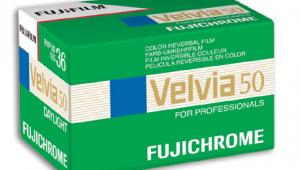
as the primary competitor for these films--Fujichrome Velvia--is ISO 50,
and often rated at ISO 40 by some photographers.
Test Parameters. I tested both new Ektachromes while shooting travel stock
in Toronto, Ontario and during two trips to San Diego, California. I noted
no difference between the sample batches of E100 VS and Elite Chrome 100EC,
so I will make no differentiation in this report. As previously mentioned
however, E100 VS Professional is more likely to exhibit ideal characteristics
when purchased at the retail level.
|
| |
For
this photo I used a Canon EOS-3 camera and Canon EF 28-135
IS lens. The camera was set for aperture priority at f/8.
(Model: Karie Dietz.)
|
|
Test subjects included a broad
variety, ranging from Mexican folkloric ballet dancers; pure white Spanish
missions; the Point Loma lighthouse; animals at the zoo; spring flowers;
the striking architecture of Balboa Park; the colorful homes of Southern
California; the San Diego skyline; the multi-hued Palazzo at Horton Plaza;
and the extravagantly beautiful Hotel Del Coronado with its trademark
red roofs. While examining the 25 rolls under a 10x loupe, I made the
following evaluations.
Observations. I had always rated the existing E100S and
E100SW films in the "high color saturation" category, but
some photographers want even more punchy colors. Well, they will get that
with E100 VS and EC. All colors are bright, bold, vivid, and rich, as
well as "brilliant." (At identical exposures, tones tend not
to be as dark as those of Velvia.) Greens are beautiful, reds are stunning,
blues are almost "electric," and yellows and pastels are gorgeous.
Even in the richest red tones, subject detail is maintained, confirming
that saturation is not excessive. Overall color balance--similar to E100S--is
very slightly warm, although the blues in shadows tend to become pronounced.
|
| |
Viewed
on its own, the Kodachrome 64 is certainly pleasing but
Ektachrome E100SW
|
|
Grain is very fine, much finer
than the specs would indicate. When pushed a stop, however, it does become
more prominent, but maintains a smooth pattern. For more extensive pushing,
I would use Ektachrome E200 which is optimized for use at much higher
"Exposure Indices" with extended processing. In terms of contrast
(moderately high) and definition of fine detail (very good) the new films
are comparable to E100S. Sharpness is even higher, a meaningful achievement
as the E100S already met professional expectations in this regard.
|
| |
A
much newer film, does produce richer colors while maintaining
fidelity to the subject. The latest Ektachrome, E100 VS
|
|
Frankly, for ideal skin tones
as in portrait photography, I would stick to E100S, but with Mexican dancers,
I did use E100 VS to reproduce their multicolored costumes with maximum
saturation. I found the flesh tones pleasing, though some viewers considered
them a bit too saturated and not as accurate as with the less colorful
Ektachromes. For landscapes, flowers, colorful travel artifacts, nature,
and other outdoor stock photography, the new films would be my first choice.
While some purists still insist on the understated Kodachrome 64 palette,
most photographers--as well as photo buyers--want higher color saturation.
E100 VS and Elite Chrome 100EC will certainly satisfy this group.
Conclusion. While shooting in San Diego, I photographed
several subjects with various films in addition to the new Ektachromes:
Kodachrome 64, Ektachrome E100SW (Saturated Warm), and Elite Chrome 100
as well as Fujichrome Velvia. The latter is Fuji's contender in
the super-saturated category that Kodak has entered with E100 VS and Elite
Chrome 100EC. The results produced by the two brands do differ: Velvia
exhibits higher color contrast, incredible sharpness, and ultra-fine grain
while the new Ektachromes respond with higher ISO for greater versatility,
more accurate skin tones, and colors that are not as dark as those of
Velvia at identical exposures. Among the viewers of my slides, there was
no clear preference for either brand, so try both yourself to determine
which best meets your demands for vivid color rendition.
|
| |
Offers
"amplified" color saturation while retaining
clean whites and other neutral tones.
|
|
On an unscientific Color Satura-tion
scale of one to 10, I would rate Velvia and the new Ektachromes as a 9,
Kodachrome 64 as a 5, and E100SW and Elite Chrome 100 as a 7.5. Ekta-chrome
E100 VS/Elite Chrome 100EC are definitely more "punchy" than
their predecessors, and some photographers will feel the colors are exaggerated.
Still, whites, grays, and flesh tones remain "clean" without
any apparent color caste.
Kodak does not intend these new films as "all-purpose" emulsions
for every application or for every photographer, but their amplified color
rendition makes them crowd pleasers. If you're among photographers
who want rich, bold, brilliant colors--at least for some of your work--you
now have another problem-solving tool to achieve specific, desired effects.
Whether you're a photo enthusiast who loves the three-dimensional
effect of a projected image, a digital imaging hobbyist who scans slides,
or a stock photographer who wants to impress photo buyers, you'll
definitely want to consider E100 VS or Elite Chrome 100EC.
|
| |
While
highly saturated colors are important to numerous photographers,
E100 VS and Elite Chrome 100EC also offer extremely high
sharpness. With a 10x loupe, one can easily read the finest
lettering in the sign at the right side of the frame. (EOS-1N;
Tamron AF 20-40mm zoom; E100 VS.)
|
|
Since I am primarily a glamour
photographer, when I evaluate a new film my biggest concern is how it
renders flesh tones. I was anxious to try out the new Ektachrome E100
VS, which was said to offer greater color saturation without too much
contrast, so I photographed several models with this film under a variety
of lighting conditions.
As you can see from this photograph, when your model has darker skin tones
or a really full tan like Christine this film's extra color saturation
can produce really striking skin tones and excellent overall color. Note
in particular that the whites are still very neutral, which is also important.
I bracketed my exposures when first using the new film and determined
that the rated ISO of 100 was right on for exposures in bright sunlight.
I found Ektachrome E100 VS' performance with pale skin to be a somewhat
mixed bag. For this fashion photo of Karie in open shade I wanted the
reflections in the glass doors to really pop, and I thought the extra
saturation would provide just the look I wanted. Also, photos taken in
open shade can look flat and dull with some films, and I wanted to see
if the new VS version of Ektachrome would improve this look. I think it
does, and very well. When shooting these photos I set the camera for 1/2
step auto bracketing, and the photos taken at 1/2 step over looked the
best to my eye.
|
| |
Elite
Chrome 100EC and E100 VS reproduce all colors with "amplified"
saturation with reds and blues particularly stunning. Latitude
is a tad better than average for a slide film, roughly 1/2
stop over and 1/2 stop under the correct exposure. (EOS-1N;
EF 70-300mm f/3.5-4.5 IS zoom; Elite Chrome 100EC.)
|
|
Mixed sun and shade can be
very tough for any transparency film to handle. Often you lose either
the highlight detail or the shadow detail. The new film handled this situation
well by not losing detail in either, but with a model having a fair complexion
the film surprised me by tending to go very red in the shadow areas. This
photo was taken in a grassy clearing, so reflected light coming to the
shadow areas was mostly bouncing off of grass and dirt, so the redness
of the shadows is even more surprising. I do not find this extremely objectionable
in this particular photograph, but will be very careful in the future
if I want to photograph a fair skinned model under this sort of lighting.
In summary, I will certainly use Kodak's new E100 VS for my photography
in the future when I am in need of the special look it can give. I will,
however, be very careful to pay attention to the lighting conditions and
the model's complexion.
|
|
|