| |
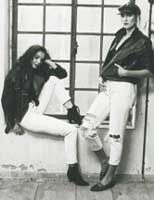
Photo 1.
Photos © 1999, Tom Fuller, All Rights Reserved
|
|
Here I go again dating myself,
but I remember going through packs of Kodak Athena, a double-weight
contact paper with a lovely brown-black image. Actually, the tone varied
daily from warm to neutral depending upon the condition of my fledgling
technique and oxidized chemistry, but the manufacturer said it was a
"warm-tone paper, suitable for portraits." I also liked
the stuff for two very pragmatic reasons--it was cheap, and so slow
that it wouldn't fog too badly in my not-so-dark closet darkroom.
Every serious printmaker has a favorite paper, although many would be
hard pressed to tell you exactly why. Paper can be categorized by weight,
base type, surface, image tone, speed, and other objective criteria,
but the reasons for its desirability can be subtle. To one photographer
it might be a certain image tone, to another the surface sheen, while
to someone else the way the emulsion responds to a specific toner is
what matters. Perhaps the most common, and certainly most important,
reason is simply being able to produce consistently good prints by having
learned the fine points of the paper. As photography is a science and
an art, its materials become as individual as the images made with them.
|
|
To edify those just starting
out in the darkroom, as well as to nudge those who may have dozed off
in it, this month we present a roundup of current warm-tone paper offerings.
Every emulsion has a tone to its image, that is how blue or brown the
black areas will be after normal processing. Cold-tone papers are often
used for commercial and industrial photography, neutral-tone papers for,
well, just about anything, with warm-tone generally reserved for portraits
and landscape. Of course, one photographer's cold-tone is another's
neutral, and a high-profile ad might be printed on the warmest paper available
for effect, so be sure to try many and find the one best suited for your
images.
In reading the brief specs for each manufacturer remember that paper comes
in resin coated or fiber based, the former requiring much shorter washing
time, and single, medium, double, or premium weight, the first having
the feel of a sheet of typing paper and the last that of a book cover.
Contrast grade indicates the suitability of the paper for printing different
negatives, with a grade 1 used to make a normal print from a bold, high-contrast
negative and grade 4 used to print a weak, low-contrast negative. Also,
the contrast of many papers can be varied from grade 0 to 5, usually in
1/2 grade increments, by changing the color of the enlarger light source
with yellow or magenta filters. As with film, speed indicates how sensitive
the paper is to light and helps in comparing printing exposure times.
|
|
Range is a logarithmic indication
of how "broad" the image will be on the paper in shades of
gray at a given grade, with a high number indicating a wide range with
gentle transition. Papers come in a choice of surfaces from high gloss
to deep matte in many different sizes, and although only off-the-shelf
sheet sizes are listed, many manufacturers offer special sheet sizes,
rolls (for machine printing), and even custom sizes by special order.
Unless otherwise indicated, all papers can be developed in standard regular
or warm-tone paper developers, the latter giving the most pronounced effect
with many, and can be handled under an amber (Kodak OC or equivalent)
or red (Kodak No. 1) safelight.
Finally, keep in mind that the subtleties of image tone may not come through
accurately in magazine reproduction, and that any paper must be used for
its unique qualities to be fully appreciated. Space limitations prohibit
us from running examples of every paper listed, but one representative
print from each manufacturer is included. As the final image in a black
and white print depends upon many factors, the following examples are
intended only as a starting point. Happy printing.
|
|
Photo 1. Agfa--Portriga-Rapid.
Type: fiber-based enlarging; base: double weight, baryta coated without
white toner; contrast: graded; 2 (normal) and 3 (hard); speed: grades
2 and 3, P250; range: grade 2, R120; grade 3, R90; surface: glossy; sizes:
5x7" to 20x24".
Insignia. Type: fiber-based enlarging; base: single and double weight,
baryta coated with white toner; contrast: graded; 1, 2, 3, and 4; speed:
all grades, P250; range: grade 1, R150; 2, R120; 3, R90; 4, R70; surface:
glossy; sizes: 5x7" to 20x24".
Multicontrast Classic. Type: fiber-based enlarging; base:
single and double weight, baryta coated; contrast: filtered, variable
grades 0-5; speed: grades 0-31/2, P160; grades 4 and 5, P80; range: grade
0, R140; grade 2, R100; grade 5, R55; surfaces: glossy (SW/DW), fine-grain
matte (DW); sizes: 5x7" to 20x24".
Although Agfa's fiber-based papers are traditional black and white
materials with a baryta layer between the emulsion and base to separate
the two for improved definition and denser blacks, the short exposure
times afforded by the high emulsion speed makes them among the fastest.
Multicontrast Classic is protected against friction fogging and mechanical
damage by two emulsion top coats, Insignia and Portriga-Rapid by one.
Single weight base weight is 185g/m2, double weight is 283g/m2.
|
|
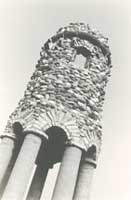
Photo 2. Bergger--Prestige
CB And CM. Type: fiber-based enlarging; base: double weight (CB), premium
weight (CM), baryta coating; contrast: graded; 2, 3, and 4; surface: glossy;
sizes: 8x10" to 20x24".
Prestige Variable CB And CM. Type: fiber-based enlarging;
base: premium weight, baryta coating; contrast: filtered, variable grades
0-5; surfaces: glossy (CB), semimatte (CM); sizes: 8x10" to 20x24".
Replacing the Guilleminot line of papers, French-made Bergger fiber-based
papers retain the same characteristics long appreciated by traditional
printers. Designed by the former chief chemical engineer for Guilleminot
& Boespflug, these new materials feature a substantial 300g/m2 base
(in premium-weight versions) and are said to have a 20 percent higher
silver content than competitive offerings. The base is very bright and
the emulsion readily accepts selenium toner.
Photo 3. Cachet--Expo WA. Type: fiber-based enlarging;
base: double weight, chamois colored; contrast: graded; 2 and 3; speed:
grade 2, P200; grade 3, P150; range: grade 2, R100; grade 3, R80; surface:
deep matte; sizes: 8x10" to 20x24".
Multibrom WA-VCFB. Type: fiber-base enlarging; base:
double weight, chamois colored; contrast: filtered, variable grades 0-5;
speed: grades 0-2, P200; grade 3, P150; grades 4 and 5, P100; range: grade
0, R115; grade 2, R100; grade 5, R50; surface: deep matte; sizes: 8x10"
to 20x24".
Multispeed WA-VCRC. Type: resin-coated enlarging; base: medium weight,
chamois colored; contrast: filtered, variable grades 0-5; speed: grades
0-2, P200; grade 3, P150; grades 4 and 5, P100; range: grade 0, R140;
grade 2, R100; grade 5, R50; surface: matte; sizes: 8x10" to 20x24".
Cachet Multibrom WA-VCFB arrives at "warm" in a unique way.
The base is tinted a creamy chamois and then coated with a neutral-tone
emulsion for a rich warmth that does not sacrifice deep blacks. The paper
accepts selenium very well and, because of its matte surface, is an excellent
medium for handcolorists. Because it is not supercoated, Expo WA also
tones easily. Multispeed WA VCRC is the resin-coated version of VCFB WA.
Cachet's MultiMatch paper system allows printers to move quickly
between resin-coated and fiber-based products. After making a print on
convenient and less expensive resin-coated paper, a matching print can
be produced on one of the fiber-based products using the same exposure
and processing data.
|
|
Photo 4. Centennial--Printing-Out
Paper. This charming, English-made contact printing paper is the last
surviving "POP," a century-old design in which the image appears
without chemical development as exposure progresses. The normal image
tone is reddish-brown, but it can be widely varied by post-exposure toning.
The gelatin chloride emulsion has a fine-luster glossy surface and is
coated on a double-weight fiber base. This UV-sensitive paper is exceptionally
slow, requiring exposures of a minute or more in direct sunlight, but
can be safely handled under moderate incandescent room light. Fixing and
washing is required to make the image permanent.
Photo 5. Forte--Fortezo Elegance. Type: fiber-based enlarging;
base: double weight, baryta coated; contrast: graded; 1, 2, 3 and 4; range:
grade 1, R120; 2, R110; 3, R90; 4, R70; surfaces: glossy, semimatte, fine-grain
semimatte, satin; sizes: 5x7" to 20x24".
Hungarian-made Fortezo Elegance is a silver rich, chlorobromide paper
with long tonal range capability and the ability to withstand wide exposure
and development variations without fog or contrast crossover. The even
distribution of fine-grain silver halide responds well to most toners,
and the hardened emulsion is ideally suited for tropical use where higher
than normal processing temperatures may be encountered. The combination
of Zonal Pro Factor One and Zonal Pro Vara Soft creates a very effective
split-development system for accurate tonal control.
|
|
Photo 6. Ilford--Multigrade
FB Warmtone. Type: fiber-based enlarging; base: double weight, baryta
coated, warm white; contrast: filtered, variable grades 00-5; speed: grades
00-3, P100; grades 4 and 5, P50; range: grade 0, R160; grade 2, R110;
grade 5, R50; surfaces: glossy, semimatte; sizes: 5x7" to 20x24".
Multigrade RC Warmtone. Type: fiber-based enlarging; base: medium
weight, warm white; contrast: filtered, variable grades 00-5; speed: grades
00-3, P125; grades 4 and 5, P64; range: grade 0, R160; grade 2, R110;
grade 5, R50; surfaces: glossy, pearl; sizes: 5x7" to 20x24".
Multigrade FB Warmtone is designed for enlargers with a tungsten or tungsten-halogen
light source. It can also be used with cold light heads designed for VC
papers, but pulsed-xenon sources may produce a lower contrast range. This
paper is tray processed in the same way as other FB papers, with Multigrade
and Bromophen developers producing the warmest results. Multigrade FB
Warmtone is receptive to a wide range of toners such as Kodak Brown Toner,
Agfa Viradon, and selenium. The cadmium-free emulsion is coated on a 255g/m2
base. Multigrade RC Warmtone is the RC equivalent, coated on a 190g/m2
base. Both are suitable for printing chromogenic negatives such as Ilford
XP2 as well as regular black and white negatives.
Kodak--P-Max Art RC. Type: resin-coated enlarging; base: heavy
weight, white with optical brightener; contrast: graded; 2 and 3; speed:
P400; range: grade 2, R115; grade 3, R90; surface: double matte; sizes:
8x10" to 20x24".
|
|
Photo 7. Ektamatic
SC. Type: fiber-based enlarging; base: single weight, white with optical
brightener; contrast: filtered, variable grades 0-5; speed: grades 0-3,
P200; grade 31/2, P160; grades 4 to 5, P100; range: grade 0, R160; grade
2, R120; grade 5, R80; surfaces: glossy, semimatte; sizes: 4x5"
to 16x20"; developer: Kodak SII Activator, Ektamatic S30 Stabilizer.
Panalure Select RC. Type: resin-coated enlarging; base:
medium weight, white with optical brightener; contrast: graded; low, medium,
and high; speed: grade L, P1000; grade M, P800; grade H, P500; surface:
glossy; sizes: 5x7" to 16x20".
Kodak P-Max Art RC has an excellent emulsion "tooth," making
it a good choice for handcoloring with oil paints, liquids, or dry dyes,
pastels, and pencils. The developer-variable neutral to warm-black image
tone also makes it an excellent choice for a wide variety of fine-art
uses. A developing agent incorporated in the emulsion shortens developing
time with automated processors or conventional trays. Kodak P-Max Art
RC dries fast with minimum curl.
Kodak Ektamatic paper is designed for use with stabilization chemistry
in a motorized processor and is intended for medical, news, and proofing
applications where the shortest dry to dry time is desired. Stabilization
processing produces a warm image tone, but the paper can be tray processed
in conventional chemistry for a neutral-black image. Stabilized prints
keep only for a limited time, but fixing and washing makes them permanent.
(See my review of the Adorama Quick Print Auto Processor in the August
'97 issue for a run-down on stabilization processing.)
Kodak Panalure Select RC is designed for making black and white enlargements
from color negatives, and provides a gray-tone rendering that is very
similar to that produced with black and white negatives and conventional
paper. It is optimized to give best tonal rendition when exposed with
tungsten or tungsten-halogen lamps without filtration. Because of its
panchromatic sensitivity, the paper must be handled under a dim Kodak
No. 13 amber safelight. Kodak Panalure Select RC can also be used to print
black and white negatives.
|
|
Photo 8. Luminos--Classic
Series. Type: fiber-based enlarging; base: see below; contrast: graded;
21/2 only; speed: P160; surfaces: see below; sizes: most standard sheet
sizes.
Classic Charcoal R is a premium-weight paper with a warm ivory base tint
and the surface characteristics of an artist's watercolor paper.
The emulsion responds well to toning and image tone manipulation with
various developers. The paper offers an excellent surface for handcoloring
with oil, pastels, pencil, and many other media. Classic Tapestry X is
identical to Charcoal R except for a heavier texture that resembles an
artist's canvas. This surface is popular with handcolorists working
with heavy oils.
Classic Glossy is a double-weight paper with a warm ivory base tint and
a traditional glossy finish that can be enhanced by ferrotype drying.
Classic Pearl is the same emulsion with a lustrous stipple finish. As
with Charcoal R and Tapestry X, the image tone can be manipulated in development
and the paper surface retouched or handcolored.
Archival R is a medium-weight paper designed for exhibition and museum
mural work. It also takes well to toning and handcoloring, and is ideal
for wet mounting.
Photo 9. Oriental--Hyper Seagull. Processed in RA-4 color
chemicals, this new resin-coated paper produces monochrome prints from
color or black and white negatives. By adjusting the color filters of
the printer or enlarger, image tone can be varied from neutral black to
deep sepia. Hyper Seagull is currently available only in long rolls for
machine printing, but sheet sizes may be offered. Oriental, whose regular
black and white papers are widely respected by fine-art printers, is planning
to reintroduce a conventional black and white process warm-tone paper
in the near future.
Sterling--Signature. Type: fiber-based enlarging; base: double
weight; contrast: filtered, variable grades 0-5; speed: grades 0-3, P40;
grades 4 and 5, P20; range: grade 0, R150; grade 3, R85; grade 5, R50;
surface: glossy; sizes: 8x10" to 20x24"; safelight: deep red
(Kodak No. 2).
|
|
Photo 10.
Premium F. Type: fiber-based enlarging; base: double weight; contrast:
graded; 1, 2, 3, 4, and 5; speed: grades 1-3, P350; grade 4, P250; grade
5, P100; range: grade 1, R130; 2, R105; 3, R85; 4, R65; 5, R50; surfaces:
glossy, silk, luster; sizes: 8x10" to 20x24".
Premium F Lith. Type: fiber-based enlarging; base: double weight, baryta
coated with white toner; contrast: graded; 2 only; speed: P450; surface:
semigloss; sizes: 8x10" to 20x24"; safelight: deep red (Kodak
No. 2).
Signature is a low-speed variable contrast paper ideally suited for high
quality exhibition work by virtue of its clean, warm tones, bright whites,
and deep blacks. It is fully compatible with existing variable contrast
filter systems, as well as color and VC black and white enlargers. This
quality Indian-made paper is available only in glossy but gives a semigloss
appearance when dried matte.
Premium F is a general-purpose paper with a silver chlorobromide, cadmium-free
emulsion. Its image tone can be altered by choice of developer, with Amidol
formulas giving blue-blacks, Metol yielding neutral-blacks, and Hydroquinone
producing warm-blacks. As the paper can be safely heat dried, the F surface
can be ferrotyped to a high-gloss finish.
Premium F Lith is a high-speed, silver chlorobromide paper specially designed
for creating surrealistic warm-tone art prints with modified lithographic
development. The paper produces a grade 2 continuous-tone image when used
with standard paper developers, although the image tone can be varied
from neutral-black to warm brown-black depending upon developer. Contrast
can be lowered by pre or post-exposure flashing.
Manufacturers/Distributors
Agfa Photo Division
100 Challenger Rd.
Ridgefield Park, NJ 07660
(201) 440-2500
fax: (201) 440-6703
www.agfaphoto.com
Cachet/Fappco
3701 W Moore Ave.
Santa Ana, CA 92704
(714) 432-7070
fax: (714) 432-7102
www.onecachet.com
Chicago Albumen Works (Centennial)
PO Box 805
Housatonic, MA 01236
(413) 274-6901
fax: (413) 274-6934
Eastman Kodak Company
343 State St.
Rochester, NY 14650
(800) 242-2424
(716) 724-5629
www.kodak.com
Ilford Photo
W 70 Century Rd.
Paramus, NJ 07653
(800) 631-2522
(201) 265-6000
fax: (201) 265-3443
www.ilford.com
International Supplies (Oriental)
945 W Hyde Park Blvd.
Inglewood, CA 90302
(800) 999-1984
(310) 672-9090
fax: (310) 672-3030
www.orientalphotousa.com
Lotus View Camera/North America
(Bergger)
5955 Palo Verde Dr.
Rockford, IL 61114
(815) 282-9876
fax: (815) 282-0902
www.lotusviewcamera.at/
Luminos
25 Wolffe St.
Yonkers, NY 10705
(800) 431-1859
(914) 965-4800
fax: (914) 965-0367
www.luminos.com
Satter/Omega, Inc. (Forte)
4100 Dahlia St.
Denver, CO 80216
(800) 525-0196
(303) 399-7493
fax: (303) 322-8152
www.omega.satter.com
Sterling Papers
2847 Ruby View
San Jose, CA 95148
(800) 295-3740
phone/fax: (408) 528-1953
|