


- REVIEWS
Camera Reviews 
More Reviews Mobile Reviews Photography Reviews - GALLERIES
- VIDEOS
- BUYER'S GUIDES

In the Fast Lane with Robert Kerian Page 2
 |
|
|
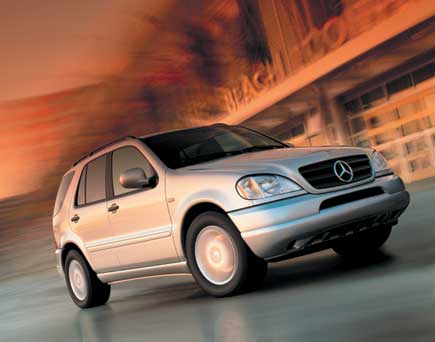
He continued to work on his portfolio, and landed his first advertising job
with Volvo about four years ago: "It was the launch of the new V70,"
he exclaims. From there, he got more advertising jobs while doing photography
for Racer, "doing everything from portraits to specialty shots on Indy
cars." (Kerian credits Eddie Adams with teaching him how to do portraiture.)
Kerian's Gear
Kerian recalls the time he was almost hit by a car while doing trackside photography.
Understandably after this incident, he became "gun shy," and concentrated
on shooting race-car driver's portraits and "setup shots."
Then came the advent of Pocket Wizard, a wireless remote triggering device distributed
by Mamiya, which utilizes a transmitter that can fire a camera as far as a half-mile
away. Kerian uses both Pocket Wizard Plus and Multi-Max, which eliminates the
need for a separate transmitter and receiver setup. "It gives photographers
a lot of freedom to do things we didn't use to do," Kerian comments.
"One trigger can fire up to 10 cameras set up in various positions."
 |
|
|
Pocket Wizard also allows photographers to trigger strobes remotely via its
radio triggering device. And according to Kerian, Multi-Max allows him to do
techniques like rear-curtain sync. "It's really suited to race-car
photography, and is extremely reliable," he emphasizes. "It hasn't
let me down once!"
He shoots with the 35mm Canon EOS-1v, as well as the medium-format GX680 Fuji
camera with fixed-focal-length lenses ranging from 50mm--500mm. Kerian
says he also uses Contax and Mamiya's 645 systems.
He says he's getting more involved with digital imaging, but maintains,
"I still like to have film in front of me." His film preferences
are Fuji Velvia ISO 50, "my primary film," and Kodak EPP (for cross-processing).
He also uses Fujichrome Provia 100F and Kodak Ektachrome E100VS slide films,
and Fuji NPS 160 print film "when the contrast ratio is really high."
Kerian uses a Polaroid scanner for his 35mm film, or sends it out to a service
bureau.
 |
Good and Hardworking
He recently returned from a trip to Europe, where he photographed the Monaco
Grand Prix and Le Mans 24-hour race in France, as well as the Moto GP motorcycle
race in Italy. He says he did rig shots on a motorcycle job for Buell, a division
of Harley-Davidson. Kerian has also completed a historic piece on a Ferrari
race car driven by legendary Canadian six-time Grand Prix winner Gilles Villeneuve
(who was killed in a crash in 1982).
As for his future plans, he quips, "I want to take over the auto advertising
world." But--more modestly--he says that he wants to be respected
in the industry for doing good work. He discusses his desire to teach automotive
photography one day, and has already given a presentation to students at his
former school, Art Center. "I'd also like to teach underprivileged
kids about photography," he says, adding that the greatest challenge may
be finding passionate students.
Kerian credits his mother with giving him a lot of support while he was struggling.
"Without her and my dad, I'd be working at McDonald's,"
he says. His advice to hopeful beginners? "People should keep taking pictures--a
career could happen!" And to those who seriously want to make photography
a career, he stresses, "It better be your passion--it's very
competitive, difficult, and constantly changing." He quotes Eddie Adams,
who once told him, "It's one thing to be good, but a hardworking
photographer will get better results." Kerian also thanks his assistants
and support staff: "It's difficult to do this type of photography
without good support behind you."
To see more of Robert Kerian's images, visit www.robertkerian.com.
| |||||||||
|

| ||||||||
- Log in or register to post comments
















 FEATURED VIDEO



Get the Latest Photo Tips, News & Reviews from Shutterbug!






| Camera Reviews Other Reviews | |
Mobile Reviews Photography Reviews Columns | |
News | |
Features | |
How-To | |
Resources |
 © 2024 Shutterbug
AVTech Media Americas Inc., USA
All rights reserved