"If we don't change
direction soon, we'll end up where we are going."--Professor
Irwin Corey
If there is one constant
theme running through the complaints I hear from photographers contemplating
becoming involved with digital imaging it is that there is too much
change. I hear some of these same grumbles from people already working
with digital media. I believe that it isn't the never-ending parade
of new product introductions that bugs them, but the pace of these changes.
Just about the time you think you finally got a handle on all these
digital doo-dads, along comes something new to add confusion and indecision
to the direction you thought you were heading. Believe me I understand;
sometimes it seems that when it comes to new digital imaging hardware
and software, we are traveling at warp speed to, who knows where.
Many years ago I remember
advising a young wedding photographer to switch to 220 film instead
of the 120 she had been using. The thought of making this one small
change freaked her out, but after her employer gave her a few 220 backs
to use on her Hasselblad and she shot one wedding with them, she was
hooked. "I wished I had done this sooner," she later told me.
It is like that with removable
media or digital film for digicams, too. The PC card begat CompactFlash
and then SmartMedia came along and everybody was happy with them. Then
Sony tossed their Memory Stick into the mix and things started to heat
up with the announcement at this year's PMA show that more and more
companies were beginning to use the Secure Digital (SD) memory card.
The SD card, jointly developed
by Matsushita Electric Industrial Company a.k.a. Panasonic along with
SanDisk and Toshiba, was designed with a flexible architecture and high
capacity to accommodate all kinds of digital data including music, PowerPoint
presentations, video, and (yes) JPEG image files. Unlike Smart-Media,
which seems to have plateaued at 64MB, SD cards have the potential to
offer a maximum capacity of 4GB--although you can't purchase that size
yet--which should be enough camera image storage for most of us.
I often refer to SmartMedia
cards as Wheat Thins, because that's what they look like to me, but
what about these small SD cards? Well, they're tiny and they used to
be expensive. All that changed when Panasonic announced recent price
cuts in the suggested minimum price of their SD cards. For example,
a 16MB card has a SMP of $39.95 making it less expensive than a typical
Smart-Media card of identical capacity. So as you can see, not all change
is bad.
Plug-In Of The Month
Andromeda Software has won more Plug-in-of-the-Month ratings than any
other company, and they now offer a multi-platform, Photoshop compatible
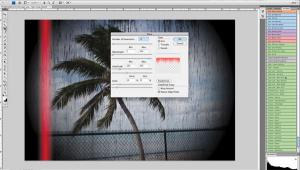
plug-in called EtchTone. Beginning with a gray scale or color photograph
or illustration, EtchTone combines a black and white etching pattern
with your original image to create a continuous tone screen that produces
a classic old printing look. Depending upon the effect desired, the
filter will either overlay or blend the etch into your color or black
and white photograph and convert it into a gray scale image. The dialog
box for Andromeda's EtchTone Filter features sliders and pop-up windows
that let you produce the right amount of etch for your finished image.
Controls are provided for tweaking the original image's sharpness, brightness,
contrast, as well as varying the mix of original image and the etching
pattern. A preview window in the EtchTone dialog box includes navigation
and zoom function to view the amount of etchtoning up to 1:1. Andromeda
Software suggests that is a useful tool for product illustrations, but
I think it's a fun plug-in for adding a weathered, old-fashioned look
to your photographs. For more information about EtchTone and all of
the rest of Andromeda's amazing collection of plug-ins, visit their
web site at: www.andromeda.com.
Color Checker For
Digicams
Many photographers own or are familiar with the Macbeth Color Checker
card that can be extremely useful when testing film emulsions or working
with film when color is critical. Now, Gretag-Macbeth offers ColorChecker
DC for digital cameras. Much like the original, the DC version provides
a method for making visual comparisons between a color standard and
the output of your digital camera. The chart can also be used along
with GretagMacbeth's ProfileMaker professional color management software
to create an ICC (International Color Consortium) profile for the digital
camera and ensure consistent color reproduction from image capture to
output.
The DC chart appears similar
yet is different from the original. It is letter-sized and corresponds
to an aspect ratio of 2:3, although not every digicam's imaging chip
matches that ratio. The chart includes 237 color patches representing
177 colors. These colors originated in GretagMacbeth's Munsell lab and
are highly saturated, lightproof matte swatches. To expand the gamut,
glossy swatches of blue, green, yellow, magenta, cyan, black, and white
are also included on the card. ColorChecker DC comes in a mondo cool
case, something the original lacked. Visit GretagMacbeth's web site
at: www.gretagmacbeth.com.
Digital Video
Apple Computer's (www.apple.com)
$49 iMovie software that's preinstalled on every new iMac DV, iBook,
PowerBook, and Power Mac G4 computer has created a renaissance in desktop
video by offering an editing tool that almost anybody can use to create
presentations and DVDs. This interest in producing desktop movies has
produced more interest and more products aimed at this market. Interactive
Solutions' MovieWorks Deluxe 5.1 is a suite of five multimedia tools
that lets users produce web movies in QuickTime or AVI format, as well
as videos, slide shows, and multimedia presentations. Users can incorporate
analog or digital video along with photographs, graphics, animation,
narration, and music. New features added to Version 5.1 include the
ability to link to web pages and PDF documents as well as auto-load/auto-start

when the presentation is distributed on CD. The Windows version now
includes a QuickTime effects library, adding over 150 visual transitions,
plus scrolling text that was previously only available in the Macintosh
version. MovieWorks Deluxe 5.1 works with any Power Macintosh running
Mac OS 8.1 or newer or a 200+ MHz Windows computer running Windows 95,
98, or 2000, Windows NT or Windows Me. At $149, MovieWorks Deluxe is
affordable enough so that anybody interested in video can dive right
in. Which brings me to a question: How many Digital Innovations readers
are interested in digital video? I'd like to hear from you (jfarace@juno.com)
to know if this is something you would like to see more of in future
columns.
File Translation
Essentials
One of the most important utilities for Mac OS users who work cross-platform--and
that's most of us--is DataViz's MacLinkPlus Deluxe. Now this most indispensable
of file utilities has been optimized for Mac OS X to take advantage
of the new operating system features. MacLinkPlus Deluxe 13 includes
support for the latest versions of Microsoft Word and Excel, as found
in both Office 2001:mac and Office XP for Windows. The software has
a new "Aqua" interface to match OS X and lets Macintosh users open,
view, and convert files back and forth between a variety of Windows
and Macintosh applications. This latest version provides access through
OS X's Dock and provides increased stability in its protected memory
environment. You can also install it on Mac OS 8.1 or later systems
and open, view, translate, decode, and decompress files--even if they
don't have the application that created the file. The program performs
flawlessly on my blue and white Power Macintosh G3 running OS 9.04.
For MacLinkPlus Deluxe 12 users contemplating the move to OS X, the
application runs in Classic mode. The retail price for MacLinkPlus Deluxe
is $99.95. Upgrades from previous versions, including versions bundled
with Mac OS 7.5, 8.0, and 8.1, are $39.95. If you purchase the upgrade
direct from DataViz, you will receive a free copy of Aladdin Systems'
iClean software, which can eliminate Internet clutter, such as cookies,
cache, and history files that clog disk space and threaten online privacy.
For more information, visit the DataViz web site at: www.dataviz.com.
Print Me!
Those creative Canadians at ACD Systems International have released
FotoSlate, a plug-in for their ACDSee digital imaging viewer, browser,
and management application. FotoSlate lets you combine multiple images
onto standard paper sizes to produce multiple-image print layouts with
just a few mouse clicks. It lets you drag thumbnails from your image
list on the left-hand side of the screen into each template, while providing
a real-time preview of what the finished layout will look like. It includes
more than 450 photo layout templates that allow captions so that you
can include technical or personal information. The templates are available
in contact sheet and album styles as well as portrait or landscape page
layout. You can recall and edit saved templates as well as include file
information in printouts.
FotoSlate's printing software
includes tools that let you modify the presentation of images as well
as edit pictures before inserting them into your templates. These tools
include zoom, shrink to fit, rotate, flip, color and light levels, crop,
blur, sharpen, despeckle, sepia, and colorize. Once you've dragged a
picture into a template, a right-click lets you shrink or rotate as
well as use ACDSee's built-in image editor. When you modify an image,
the changes are only applied within FotoSlate--your original image file
is not altered. Image files supported include 40 popular graphic file
formats including Multipage TIFF. You can download a demo version to
try it yourself from www.acdsystems.com/english/products/fotoslate/index.htm.