Newsletter
Sort By: Post Date | Title | Publish Date
Newsletter
Staff Aug 17, 2011 Published: Sep 01, 2011 1 comments
September CoverOn The Cover
This month we are bringing you the latest image processing software updates. We are also updating you on new memory card technology as both speed and capacity are on the rise. In addition, we have a report on Ilford’s new black-and-white (silver) paper, plus lighting reports on Photoflex’s StarFire Kits and Interfit’s Super Cool-lite 455. Finally, reader Dj Boyd photographed our cover shot of a yoga session. We received her photo in response to our Picture This! assignment “From Above.” To view more readers’ submissions, see page 12.

Newsletter
Ron Leach Jul 19, 2011 3 comments
The next time you find yourself frustrated by a difficult photo assignment, consider the challenges faced daily by Tara Miller—winner of the 2011 CNIB Eye Remember National Photographer Contest. Miller is a legally blind, professional photographer from Winnipeg, Manitoba who doesn’t let her disability stand in the way of her passion for creating beautiful imagery.
Newsletter
Jim Zuckerman Jul 18, 2011 1 comments
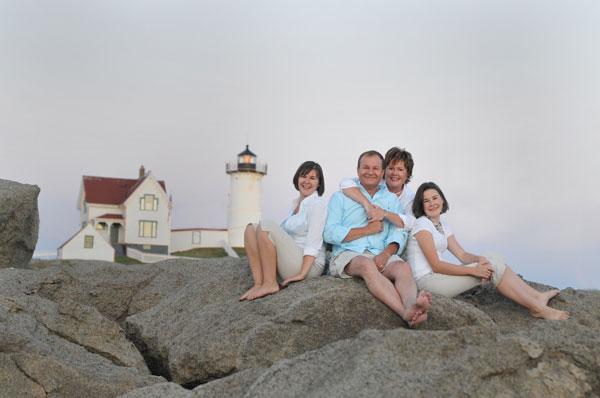
Taking pictures of a family and doing it well is challenging. There are many things you have to think about to please both you and the people you are shooting. First, you should have soft and diffused lighting. An overcast sky works great and so does shade. Second, you should avoid on-camera flash if possible. If it is hopelessly dark and you don’t have any other lighting equipment, then on-camera flash will have to do. However, this kind of lighting is the least attractive type of artificial light we use. It is flat and dimensionless. Only if you use on-camera flash as a subtle fill light to open up shadows will it look good.
Newsletter
Jim Zuckerman Jul 18, 2011 0 comments
I learned a long time ago that I couldn’t rely on serendipity to get great shots of people when traveling. Once in a while I’d get lucky, but most of the time the background wasn’t perfect, the lighting wasn’t quite right, or the person wasn’t wearing clothes that told a story about the culture. In addition, I hesitate to point my camera at people without their permission. I can understand that they may feel I’m intruding on their space and their privacy, and I don’t want to do that. Grabbing shots of people without getting their permission also means that the chance of getting a model release is very small.
Newsletter
Jim Zuckerman Jul 18, 2011 1 comments
There are many situations that you will encounter in your travels domestically as well as internationally where picture taking is prohibited. It’s a constant problem. One of the things I’ve learned over many years is that permission can often be granted to allow you to take the pictures you want. It just takes time, perseverance, sometimes money, and always luck.
Newsletter
Ron Leach Jun 20, 2011 0 comments
As photographic technology and market trends continue to evolve at a rapid rate in our digital era, many of the latest advancements occur in the professional arena before filtering down to prosumer and amateur photographers. One such sector in a constant state of change is the photo printing and output market. InfoTrends, a leading worldwide market research and consulting firm for the digital industry, recently released an interesting study examining how these advancements influence customer preferences and create new revenue opportunities for photographers who recognize these shifts and adapt accordingly.

Newsletter
Jim Zuckerman Jun 16, 2011 Published: Jun 28, 2011 0 comments
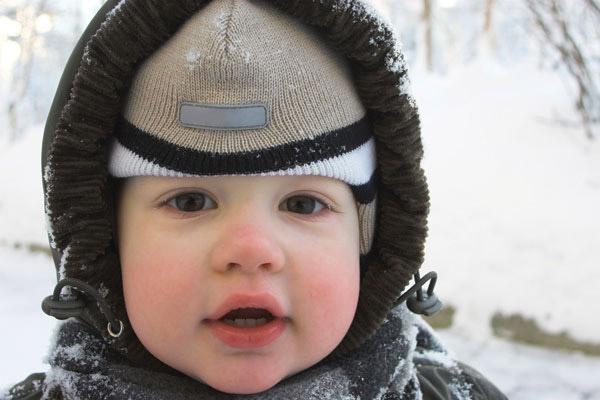
Photographing children is a joy because of their innocence, the honesty in their faces, and their beauty. At different stages of their development, a photographer needs to understand how to interact with them and how to elicit the best expressions, whether they are serious, sweet, joyous, or moody.
Newsletter
Jim Zuckerman Jun 16, 2011 Published: Jun 28, 2011 1 comments
Photographing people in motion is challenging on many levels. Whether you are shooting athletes, dancers, cowboys, or workers, the same issues come into play. First, it’s hard to keep them in focus. Even with the sophisticated autofocus systems built into modern cameras, it is tough to hold focus on fast moving subjects. Second, it’s impossible to study a subject in motion and then compose the picture with deliberation and forethought. The composition constantly changes millisecond by millisecond, and that means you have to think and react quickly and hope that you captured something good. Third, exposure can change as your subject moves through areas of shade or highlights. While automatic meters do a good job in most situations, they can be fooled into over or under exposure depending on how much contrast is in the scene and how light or dark the background is relative to the subject.
Newsletter
Staff Jun 16, 2011 Published: Jul 01, 2011 1 comments
July CoverOn The Cover
With summer upon us, we’ve dedicated this issue to nature and outdoor photography. No one exemplifies exploring the outdoors better than Josh Miller, who shot our cover photo of Elves Chasm while he was rafting the Colorado River at the Grand Canyon. To see more of his adventurous photos, see page 132. We also take an in-depth look at the top photo backpacks and sling bags as the importance of these traveling accessories cannot be overstated. Finally, we review the latest and greatest photo gear, from software to lighting equipment.

Newsletter
Jim Zuckerman Jun 16, 2011 Published: Jun 28, 2011 4 comments
After you buy a good camera that allows you to change lenses, it will become obvious to you that it is not the camera that enables you to be creative in photography. It is the lenses. The features on your camera, like fast auto focus, a large LCD screen, accurate Metering modes, and various custom functions are all important, but it is the lenses that have everything to do with the artistry of the images you take.
Newsletter
Shutterbug Staff May 31, 2011 1 comments
June Cover Welcome to our travel and location photography special. This month we present photo journeys that take you to towns big and small as well as trails and rails in the US and across the globe. We also have an informative insider’s report from pro photographers who expose business tips that you need to know in order to make travel photography a successful endeavor. In addition, we tested a range of products that you’ll want to take on the road this summer, including the Calumet Genesis 300 B monolight, the Nikon D7000, and the Tamron 18-270mm VC lens.
Newsletter
Ron Leach May 31, 2011 0 comments
While browsing through my archives recently, I rediscovered a fascinating 1944 magazine piece in which several artists, photographers and educators offered their views and expectations of photography after World War II. The article, which appeared in Popular Photography, gave new meaning to the famous Winston Churchill quote “The farther backward you can look, the farther forward you are likely to see.”
Newsletter
George Schaub May 31, 2011 1 comments

Imagine yourself walking into a room where there are numerous objects covered with small mirrors. The mirrors follow the form and shape of the objects. The walls of the room have a slot that goes continuously around the entire room. Behind the slot is a light that shines into the room and that travels the entire distance, from wall to wall. As the light travels it passes through numerous color filters built into the slot. The light reflects off the mirror facets on the objects. You can also move throughout the room and observe the objects and the light by standing with the light coming in over your shoulder, from the side or even standing behind the objects as the light hits them.

Newsletter
Howard Millard May 31, 2011 8 comments

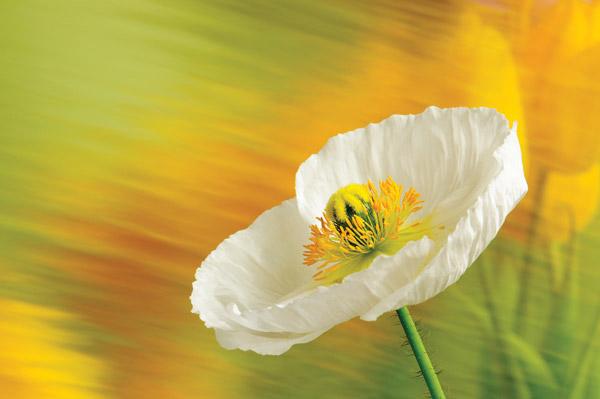
In this article I’ll show you how to add dramatic movement to your images, as well as rich color and strong graphic design to create a striking impression. This is a trick you can do in Photoshop CS2, CS3, CS4 and CS5.

Newsletter
Chuck Gloman May 31, 2011 0 comments

Backlight is light that comes from behind the subject, whether it’s an artificial source or the sun. In the following examples, I decided to use the sun as my only light source, placed behind the subjects and guided by reflectors both natural and man-made.